Thursday, October 25, 2018

White House belatedly begins planning for 5G with memo asking for policy recommendations

The White House has issued a memorandum outlining the need for a new national wireless connectivity strategy; the document doesn’t really establish anything new, but does request lots of reports on how things are going. Strangely, what it proposes sounds a lot like what the FCC already does.

The memorandum, heralded by a separate post announcing that “America Will Win the Global Race to 5G,” is not exactly a statement of policy, though it does put a few things out there. It’s actually more of a request for information on which to base a future policy — apparently one that will win us a global race that began years ago.

In fact, the U.S. has been pursuing a broad 5G policy for quite a while now, and under President Obama we were the first country to allocate spectrum to the nascent standard. But since then progress has stalled and we have been overtaken by the likes of South Korea and Spain in policy steps like spectrum auctions.

After some talk about the “insatiable demand” for wireless spectrum and the economic importance of wireless communications, the memo gets to business. Reports are requested within 180 days from various Executive branch departments and agencies on “their anticipated future spectrum requirements,” as well as reviews of their current spectrum usage.

The Office of Science and Technology Policy is asked to report in the same time period on how emerging tech (smart homes and grids, for instance) could affect spectrum demand, and how research and development spending should be guided to improve spectrum access.

Another report from the Secretary of Commerce will explain “existing efforts and planned near- to mid-term spectrum repurposing initiatives.”

270 days from today the various entities involved here, including the National Telecommunications and Information Administration and the FCC, will deliver a “long-term National Spectrum Strategy” that hits a number of targets:

  • Increase spectrum access, security and transparency
  • Create flexible spectrum management models, including standards, incentives, and enforcement mechanisms
  • “Develop advanced technologies” to improve spectrum access and sharing
  • Improve the global competitiveness of U.S. “terrestrial and space-related industries” (which seems to encompass all of them)

It’s not exactly ambitious; the terms are vague enough that one would expect any new legislation or rules to accomplish or accommodate these things. One would hardly want a spectrum policy that decreased access and transparency. In fact, the previous administration issued spectrum memos much like these, years ago.

Meanwhile this fresh start may frustrate those in government who are already doing this work. The FCC has been pursuing 5G and new spectrum policy for years, and it’s been a particular focus of Chairman Ajit Pai. He proposed a bunch of rules months ago, and just yesterday there was a proposal to bring Wi-Fi up to a more compatible and future-proof state. It’s entirely possible that the agency may have to justify and re-propose things it’s already doing, or see those actions and rules questioned or altered by committees over the next year.

FCC Commissioner Jessica Rosenworcel was not enthusiastic about the memo.

“We are ripping up what came before and starting with a new wireless policy sometime late next year. But the world isn’t going to wait for us,” she said in a statement provided to TechCrunch. “Other nations are moving ahead with strategies they are implementing now while we’re headed to study hall — and in the interim we’re slapping big tariffs on the most essential elements of 5G networks. If you stand back and survey what is happening, you see that we’re not expediting our 5G wireless leadership, we’re making choices that slow us down.”

Whether this new effort will yield worthwhile results, we’ll know in 270 days. Until then the authorities already attempting to make the U.S. the leader in 5G will continue doing what they’re doing.


from RSSMix.com Mix ID 8176981 https://techcrunch.com/2018/10/25/white-house-belatedly-begins-planning-for-5g-with-memo-asking-for-policy-recommendations/
http://www.gadgetscompared.com
from Tumblr http://ikonografico.tumblr.com/post/179429487041
via http://www.gadgetscompared.com

Fleksy’s keyboard grabs $800k+ via equity crowdfunding

The dev team that’s now engineering the Fleksy keyboard app has raised more than $800,000 via an equity crowdfunding route.

As we reported a year ago, the development of Fleksy’s keyboard has been taken over by the Barcelona-based startup behind an earlier keyboard app called ThingThing.

The team says their new funding raise — described as a pre-Series A round — will be put towards continued product development of the Fleksy keyboard, including the core AI engine used for next word and content prediction, plus additional features being requested by users — such as swipe to type. 

Support for more languages is also planned. (Fleksy’s Android and iOS apps are currently available in 45+ languages.)

Their other big push will be for growth: Scaling the user-base via a licensing route to market in which the team pitches Android OEMs on the benefits of baking Fleksy in as the default keyboard — offering a high degree of customization, alongside a feature-set that boasts not just speedy typing but apps within apps and extensions. 

The Fleksy keyboard can offer direct access to web search within the keyboard, for example, as well as access to third party apps (in an apps within apps play) — to reduce the need for full app switching.

This was the original concept behind ThingThing’s eponymous keyboard app, though the team has refocused efforts on Fleksy. And bagged their first OEMs as licensing partners.

They’ve just revealed Palm as an early partner. The veteran brand unveiled a dinky palm-sized ‘ultra-mobile’ last week. The tiny extra detail is that the device runs a custom version of the Fleksy keyboard out of the box.

With just 3.3 inches of screen to play with, the keyboard on the Palm risks being a source of stressful friction. Ergo enter Fleksy, with gesture based tricks to speed up cramped typing, plus tried and tested next-word prediction.

ThingThing CEO Olivier Plante says Palm was looking for an “out of the box optimized input method” — and more than that “high customization”.

“We’re excited to team up with ThingThing to design a custom keyboard that delivers a full keyboard typing experience for Palm’s ultra mobile form factor,” adds Dennis Miloseski, co-founder of Palm, in a statement. “Fleksy enables gestures and voice-to-text which makes typing simple and convenient for our users on the go.”

Plante says Fleksy has more OEM partnerships up its sleeve too. “We’re pending to announce new partnerships very soon and grow our user base to more than 25 million users while bringing more revenue to the medium and small OEMs desperately looking to increase their profit margins — software is the cure,” he tells TechCrunch.

ThingThing is pitching itself as a neutral player in the keyboard space, offering OEMs a highly tweakable layer where the Qwerty sits as its strategy to compete with Android’s keyboard giants: Google’s Gboard and Microsoft-owned SwiftKey. 

“We changed a lot of things in Fleksy so it feels native,” says Plante, discussing the Palm integration. “We love when the keyboard feels like the brand and with Palm it’s completely a Palm keyboard to the end-user — and with stellar performance on a small screen.”

“We’ve beaten our competitor to the punch,” he adds. 

That said, the tiny Palm (pictured in the feature image at the top of this post) is unlikely to pack much of a punch in marketshare terms. While Palm is a veteran — and, to nerds, almost cult — brand it’s not even a mobile tiddler in smartphone marketshare terms.

Palm’s cute micro phone is also an experimental attempt to create a new mobile device category — a sort of netbook-esque concept of an extra mobile that’s extra portable — which looks unlikely to be anything other than extremely niche. (Added to its petite size, the Palm is a Verizon exclusive.)

Even so ThingThing is talking bullishly of targeting 550M devices using its keyboard by 2020.

At this stage its user-base from pure downloads is also niche: Just over 1M active users. But Plante says it has already closed “several phone brands partnerships” — saying three are signed, with three more in the works — claiming this will make Fleksy the default input method in more than 20-30 million active users in the coming months. 

He doesn’t name any names but describes these other partners as “other major phone brands”.

The plan to grow Fleksy’s user-base via licensing has attracted wider investor backing now, via the equity crowdfunding route. The team had initially been targeting ($300k). In all they’ve secured $815,119 from 446 investors.

Plante says they went down the equity crowdfunding route to spread their pitch more widely, and get more ambassadors on board — as well as to demonstrate “that we’re a user-centric/people/independent company aiming big”.

“We are keen to work and fully customize the keyboard to the OEM tastes. We know this is key for them so they can better compete against the others on more than simply the hardware,” he says, making the ‘Fleksy for OEMs’ pitch. “Today, the market is saturated with yet another box, better camera and better screen…. the missing piece in Android ecosystem is software differences.”

Given how tight margins remain for Android makers it remains to be seen how many will bite. Though there’s a revenue share arrangement that sweetens the deal.

It is also certainly true that differentiation in the Android space is a big problem. That’s why Palm is trying its hand at a smaller form factor — in a leftfield attempt to stand out by going small.

The European Union’s recent antitrust ruling against Google’s Android OS has also opened up an opportunity for additional software customization, via unbundled Google apps. So there’s at least a chance for some new thinking and ideas to emerge in the regional Android smartphone space. And that could be good for Spain-based ThingThing.

Aside from the licensing fee, the team’s business model relies on generating revenue via affiliate links and its fleksyapps platform. ThingThing then shares revenue with OEM partners, so that’s another carrot for them — offering a services topper on their hardware margin.

Though that piece will need scale to really spin up. Hence ThingThing’s user target for Fleksy being so big and bold.

“We’re working with brands in order to bring them into any apps where you type, which unlocks brand new use cases and enables the user to share conveniently and the brand to drive mobile traffic to their service,” says Plante. “On this note, we monetize via affiliate/deep linking and operating a fleksyapps Store.”

ThingThing has also made privacy by design a major focus — which is a key way it’s hoping to make the keyboard app stand out against data-mining big tech rivals.


from RSSMix.com Mix ID 8176981 https://techcrunch.com/2018/10/25/fleksys-keyboard-grabs-800k-via-equity-crowdfunding/
http://www.gadgetscompared.com
from Tumblr http://ikonografico.tumblr.com/post/179426011801
via http://www.gadgetscompared.com
Google Maps takes on Facebook Pages with new ‘Follow’ feature for tracking businesses

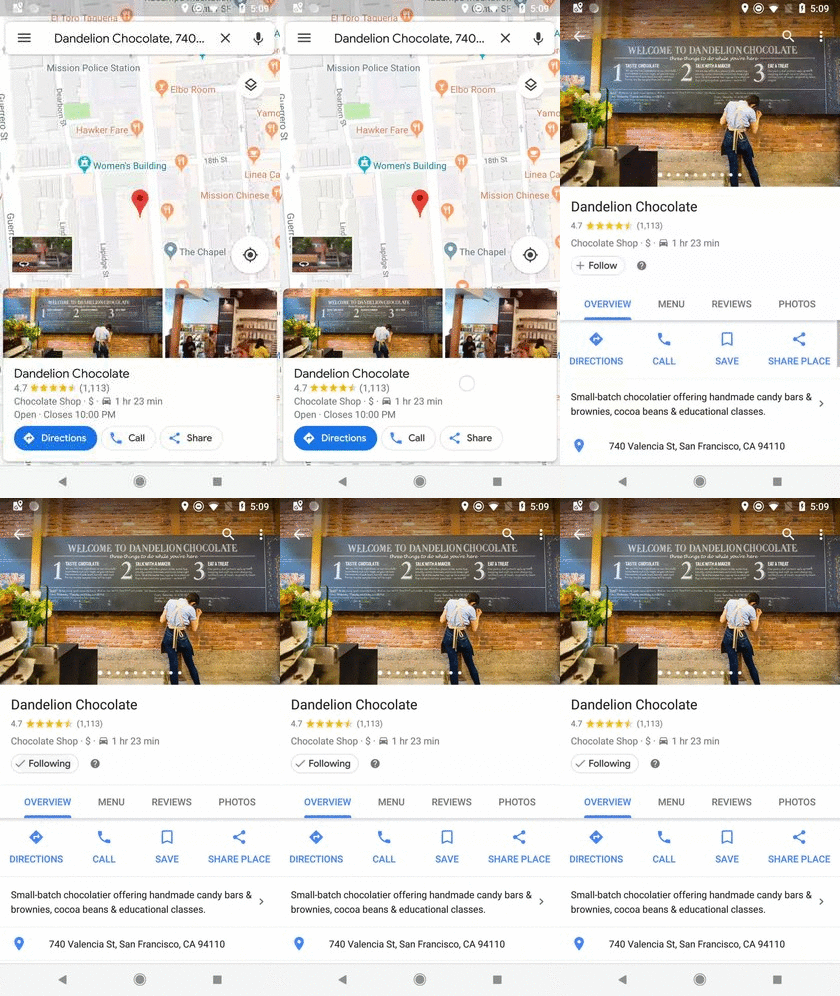
Google Maps has been steadily rolling out new features to make its app more than just a way to find places and navigate to them. In recent months, it’s added things like group trip planningmusic controls, commuter tools, ETA sharing, personalized recommendations, and more. Now, it’s introducing a new way for users to follow their favorite businesses, as well – like restaurants, bars, or stores, for example – in order to stay on top of their news and updates.

If that sounds a lot like Google Maps’ own version of Facebook Pages, you’re right.

Explains the company, once you tap the new “follow” to track a business, you’ll then be able to see news from those places like their upcoming events, their offers, and other updates right in the “For You” tab on Google Maps.

Events, deals and photo-filled posts designed to encourage foot traffic? That definitely sounds like a Facebook Page competitor aimed at the brick-and-mortar crowd.

Businesses can also use the Google Maps platform to start reaching potential customers before they open to the public, Google notes.

After building a Business Profile using Google My Business which includes their opening date, the business will then be surfaced in users’ searches on mobile web and in the app, up to three months before their opening.

This profile will display the opening date in orange just below the business name, and users can save the business to one of their lists, if they choose. Users can also view all the other usual business information, like address, phone, website and photos.

The new “follow” feature will be accessible to the over 150 million places already on Google Maps, as well as the millions of users who are seeking them out.

The feature has been spotted in the wild for some time before Google’s official announcement this week, and is rolling out over the next few weeks, initially on Android.

The “For You” tab is currently available in limited markets, with more countries coming soon, says Google.


from RSSMix.com Mix ID 8176981 https://techcrunch.com/2018/10/25/google-maps-takes-on-facebook-pages-with-new-follow-feature-for-tracking-businesses/
http://www.gadgetscompared.com
from Tumblr http://ikonografico.tumblr.com/post/179422832191
via http://www.gadgetscompared.com

Xiaomi opts for sliding camera and no notch for new bezel-less Mi Mix phone

Xiaomi has announced the newest version of its bezel-less Mi Mix family, and it doesn’t sport a notch like its Mi 8 flagship. Indeed, unlike the Mi 8 — which I called one of Xiaomi’s most brazen Apple clones — there’s a lot more to get excited about.

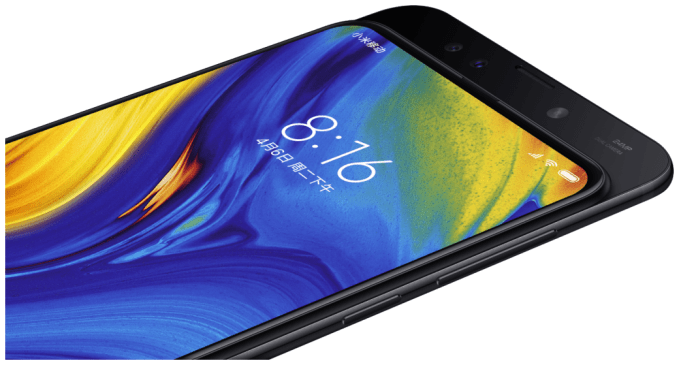
The Mi Mix 3 was unveiled at an event in Beijing and, like its predecessor, Xiaomi boasts that it offers a full front screen. Rather than opting for the near-industry standard notch, Xiaomi has developed a slider that houses its front-facing camera. Vivo and Oppo have done similar using a motorized approach, but Xiaomi’s is magnetic while it can also be programmed for functions such as answering calls.

That array gives it a claimed 93.4 percent screen-to-body ratio and a full 6.4-inch 1080p AMOLED display. The slider, by the way, is good for 300,000 cycles, according to Xiaomi’s lab testing.

The device itself follows the much-lauded Mi Mix aesthetic with a Snapdragon 845 processor and up to 10GB in RAM (!) in the highest-end model. Xiaomi puts plenty of emphasis on cameras. The Mi Mix 3 includes four of them: a 24-megapixel front camera paired with a two-megapixel sensor and on the back, like the Mi 8, a dual camera array with two 12-megapixel cameras.

Xiaomi has also snuck an ‘AI button’ on the left side of the phone, a first for the company. That awakens its Xiao Ai voice assistant, but since it only supports Chinese don’t expect to see that on worldwide models.

The 10GB version — made in partnership with Palace Museum, located at the Forbidden City where the device was launched — also packs 256GB of onboard storage and is priced at RMB 4,999, or $720. That’s in addition to a ceramic design that Xiaomi says is inspired by the museum… better that than a fruity-sounding U.S. company.

That’s the special model, and the more affordable options include 6GB + 128GB for RMB 3,299 ($475), 8GB +128G for RMB 3,599 ($520) and 8GB + 256GB for RMB 3,999 ($575). The company also plans to introduce a 5G version in Europe sometime early next year.

Xiaomi said the phones will go on sale in China from 1 November, there’s no word on international availability or pricing right now.


from RSSMix.com Mix ID 8176981 https://techcrunch.com/2018/10/25/xiaomi-mi-mix-3/
http://www.gadgetscompared.com
from Tumblr http://ikonografico.tumblr.com/post/179419693086
via http://www.gadgetscompared.com

LG retains confidence in its mobile business despite continued losses

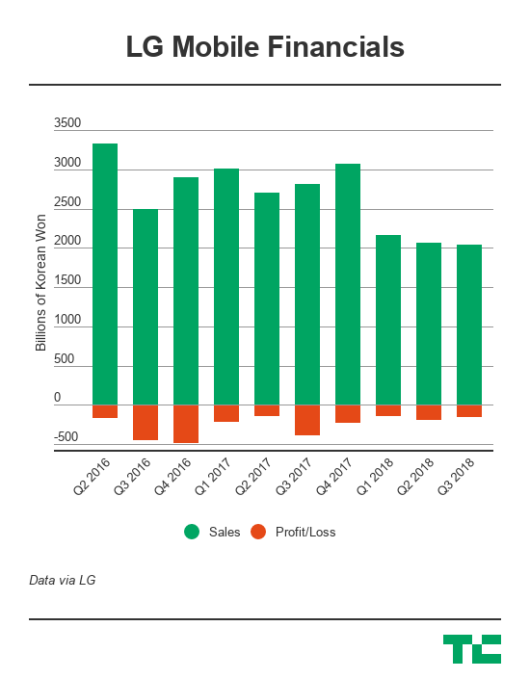
LG remains confident that it can turn the corner for its serially unprofitable mobile business despite the division racking up a loss of over $400 million this year so far.

The Korean company as a whole is having a good year. Following a record six months of profit and revenue in the first half of 2018, the group saw Q3 revenue jump 2.7 percent sequentially to reach 15.43 trillion KRW, or $13.76 billion. Operating profit rose by 45 percent year-on-year to reach 748.8 billion KRW, that’s $667.7 million.

The company’s home entertainment business is the standout performer generating total sales of 3.71 trillion RKW ($3.31 billion) and a 325.1 billion KRW ($289.9 million) profit, with LG Mobile second in terms of revenue. But, the mobile division continues to bleed cash. This time around in Q3, its losses were 146.3 billion RKW, that’s $130.5 million.

That betters large losses for Q3 2016 and 2017 — 436.4 billion KRW and 436.4 billion KRW, respectively — but it means that LG’s mobile division has lost the company $410 million in 2018 so far. But, as the chart below shows, LG has a long way to go before its mobile business stops hurting the group’s overall bottom line and restricting its otherwise impressive growth as a company.

The company played up its performance with a claim that it had weathered challenging global markets — where Chinese brands are competing hard and mobile saturation is weakening consumer demand — by “significantly reduced its operating deficit as a direct result of its business plan and its stronger focus on mid-range products.”

LG recently outed its new V40 ThinQ, a flagship smartphone that packs no fewer than five cameras, and it is optimistic that its launch will boost sales in the final quarter of the year. More widely, it said that the cost-cutting strategy implemented with the appointment of new LG Mobile CEO Hwang Jeong-hwan last November will see it continue to “consolidate and implement a more profitable foundation.”

That strategy has focused around mid-range devices and emerging markets, where LG believes it can offer strong value for money that’ll appeal to consumers in the market for a deal. That explains why mobile division sales are down this year but, crucially, the division is bleeding less capital. Whilst that strategy has helped stem losses, it remains to be seen whether it is the right one to turn the unit profitable.


from RSSMix.com Mix ID 8176981 https://techcrunch.com/2018/10/25/lg-retains-confidence-in-its-mobile-business/
http://www.gadgetscompared.com
from Tumblr http://ikonografico.tumblr.com/post/179413716786
via http://www.gadgetscompared.com
Wednesday, October 24, 2018

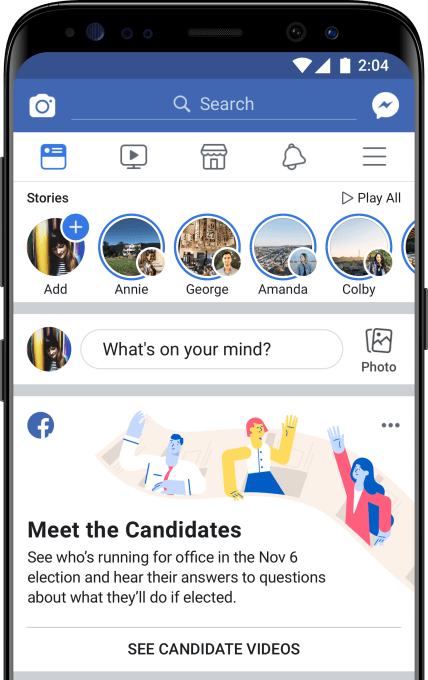
Facebook launches Candidate Info where politicians pitch on camera

Facebook wants to make YouTube-style monologue videos the new way for politicians to talk straight with their constituency. Today, Facebook launches Candidate Info, featuring thousands of direct-to-camera vertical videos where federal, state and local candidates introduce themselves and explain their top policy priority, qualifications and biggest goal if they win office. Elizabeth Warren (D – MA Senate), Scott Walker (R – WI Governor) and Beto O’Rourke (D – TX Senate) have already posted, and Facebook expects more candidates to jump in shortly.

These videos will soon be available as part of an Election 2018 bookmark in the Facebook mobile app’s navigation drawer. And starting next week, the clips will begin appearing to potential constituents in the News Feed.

Facebook tells me these videos will make it easier for people to learn about and compare different candidates. The effort extends the Town Hall feature Facebook launched in 2017 that offers a personalized directory of candidates they could vote for. Candidate Info will similarly only show videos from politicians running in elections relevant to a given user, so if you’re in California you won’t see videos from the Texas senate race between O’Rourke and Ted Cruz. But you can still find their videos on their Facebook Pages.

With the mid-terms fast approaching, Facebook is trying to do everything it can to protect against election interference by foreign and domestic attackers, offer transparency about who bought campaign adsconnect users to candidates and encourage people to register and vote. With fake news that spread through the social network thought to have influenced the 2016 election, and ill-gotten Facebook user data from Cambridge Analytica applied to Donald Trump’s campaign ad targeting, Facebook is hoping to avoid similar problematic narratives this time around.

You can see some examples of Candidate Info videos below from O’Rourke and Wisconsin Governor Scott Walker.


from RSSMix.com Mix ID 8176981 https://techcrunch.com/2018/10/24/facebook-candidate-info/
http://www.gadgetscompared.com
from Tumblr http://ikonografico.tumblr.com/post/179402627191
via http://www.gadgetscompared.com

Italian consumer watchdog hands down €15M in fines to Apple and Samsung for slowing devices

Italy’s Autorità garante della concorrenza e del mercato, roughly equivalent to this America’s FTC, has fined Apple and Samsung a total of $15 million for the companies’ practice of forcing updates on consumers that may slow or break their devices. The amount may be a drop in the bucket, but it’s a signal that governments won’t always let this type of behavior fly.

The “unfair commercial practices” are described by the AGCM as follows:

The two companies have induced consumers – by insistently proposing to proceed with the download and also because of the significant information asymmetry of consumers vis-a-vis the producers – to install software updates that are not adequately supported by their devices, without adequately informing them, nor providing them an effective way to recover the full functionality of their devices.

Sounds about right!

In case you don’t remember, essentially Apple was pushing updates to iPhones last year that caused performance issues with older phones. Everyone took this as part of the usual conspiracy theory that Apple slows phones to get you to upgrade, but it turns out to have been more like a lack of testing before they shipped.

Samsung, for its part, was pushing Android Mashmallow updates to a number of its devices, but failed to consider that it would cause serious issues in Galaxy Note 4s — issues it then would charge to repair.

The issue here wasn’t the bad updates exactly, but the fact that consumers were pressured into accepting them, at cost to themselves. It would be one thing if the updates were simply made available and these issues addressed as they came up, but both companies “insistently suggested” that the updates be installed despite the problems.

In addition to this, Apple was found to have “not adequately informed consumers about some essential characteristics of lithium batteries, such as their average duration and deterioration factors, nor about the correct procedures to maintain, verify and replace batteries in order to preserve full functionality of devices.” That would be when Apple revealed to iPhone 6 owners that their batteries were not functioning correctly and that they’d have to pay for a replacement if they wanted full functionality. This information, the AGCM, suggests, ought to have been made plain from the beginning.

Samsung gets €5 million in fines and Apple gets €10 million. Those may not affect either company’s bottom line, but they are the maximum possible fines, so it’s symbolic as well. If a dozen other countries were to come to the same conclusion, the fines would really start to add up. Apple has already made some amends, but if it fell afoul of the law it still has to pay the price.


from RSSMix.com Mix ID 8176981 https://techcrunch.com/2018/10/24/italian-consumer-watchdog-hands-down-e15m-in-fines-to-apple-and-samsung-for-slowing-devices/
http://www.gadgetscompared.com
from Tumblr http://ikonografico.tumblr.com/post/179395886926
via http://www.gadgetscompared.com