Wednesday, November 14, 2018

Jam City signs mobile game development deal with Disney

Mobile gaming company Jam City is announcing a multi-year deal to create mobile games based on Pixar and Walt Disney Animation characters and films.

As part of the agreement, Jam City is taking over development of the match-three puzzle game Disney Emoji Blitz, which launched in 2016. Jam City says that everyone at Disney’s Glendale game studio who’s affected by this will be offered new jobs at the company to continue working on the title.

The first new game, meanwhile, will be based on the upcoming sequel to “Frozen” (that’s right, there’s going to be a “Frozen 2”), though the companies aren’t revealing any details, like the type of gameplay or the release date.

“While our licensing business for Disney Animation and Pixar games has grown over the last year and we have several top developers creating Disney games, this deal with Jam City represents a significant long-term opportunity for our games business and for the future slate of Disney and Pixar games,” said Kyle Laughlin, Disney’s senior vice president of games and interactive experiences, in a statement.

Jam City was founded in 2009 by Chris DeWolfe (who previously cofounded and served as CEO of MySpace) and former Fox executive Josh Ygaudo. It was initially focused on social games and was known as MindJolt before becoming the Social Gaming Network (named after a company it acquired) and then rebranding again two years ago as Jam City.

While Jam City has created its own games like Cookie Jam and Panda Pop, it’s also been releasing titles based on well-known franchises and intellectual property, such as “Snoopy Pop” and “Marvel Avengers Academy.” Earlier this year, it launched “Harry Potter: Hogwarts Mystery,” a game that allows players to enroll in J.K. Rowling’s famous school for wizards and features the voices of several actors from the films.


from RSSMix.com Mix ID 8176981 https://techcrunch.com/2018/11/14/jam-city-disney/
http://www.gadgetscompared.com
from Tumblr http://ikonografico.tumblr.com/post/180107805816
via http://www.gadgetscompared.com

Discover the next messaging giant at Disrupt Berlin

Truecaller may already be a familiar name, but many of you probably don’t know that it’s slowly becoming a significant messaging app. That’s why I’m excited to announce that Truecaller co-founder and CEO Alan Mamedi will join us at TechCrunch Disrupt Berlin.

Truecaller first started as a call screening app. Some countries are more affected than others. But it’s clear that text and call spam is the most intrusive form of spam.

The Swedish company then leveraged this user base to quietly turn the app into a full-fledged messaging app with one focus in particular — India.

With the acquisition of Chillr, the company shows that it wants to recreate a sort of WeChat for India. The company launched payment features — Truecaller Pay lets you pay other Truecaller users as well as pay your bills.

Eventually, Truecaller wants to open up its platform to third-party services. Back in April, the company reported that it had 100 million daily active users.

If you’re impressed by Truecaller’s growth strategy, you should buy your ticket to Disrupt Berlin to listen to this discussion and many others. The conference will take place on November 29-30.

In addition to fireside chats and panels, like this one, new startups will participate in the Startup Battlefield Europe to win the highly coveted Battlefield cup.

Alan Mamedi

CEO & Co-founder, Truecaller

Alan Mamedi is the CEO and Co-founder of Truecaller. Truecaller is one of the leading communication apps in the world with services in messaging, payment, caller ID, spam detection, dialer functionalities, and has more than 300 million users globally. In this position, Alan focuses on product development and innovation, and charting the strategic roadmap for the company’s success. To date, Truecaller has raised 80 million USD from Sequoia Capital, Atomico, and Kleiner Perkins Caufield & Byers.


from RSSMix.com Mix ID 8176981 https://techcrunch.com/2018/11/14/discover-the-next-messaging-giant-at-disrupt-berlin/
http://www.gadgetscompared.com
from Tumblr http://ikonografico.tumblr.com/post/180102719416
via http://www.gadgetscompared.com

Tuesday, November 13, 2018

Facebook Lasso app lead Brady Voss leaves for Netflix right after launch

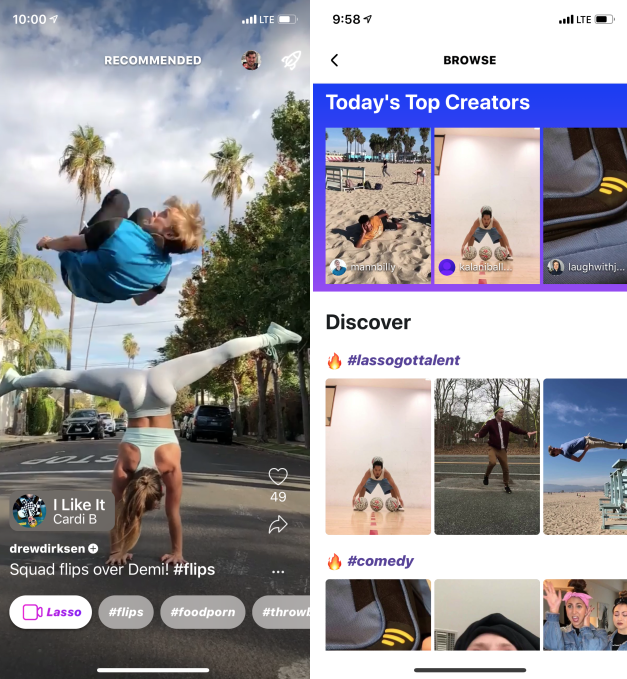
Facebook Lasso has a steep uphill climb ahead as it hopes to chase the musical video app it cloned, China’s TikTok (which merged with Musically). Lasso lets you overlay popular songs on 15-second clips of you lip syncing, dancing or just being silly — kind of like Vine with a soundtrack. It’s off to a slow start since launching Friday, having failed to reach the overall app download charts as it falls from No. 169 to No. 217 on the U.S. iOS Photo and Video App chart, according to App Annie. Sensor Tower estimates Lasso has been downloaded fewer than 10,000 times across both iOS and Android.

Forme Facebook Lead Product Designer Brady Voss

And now one of the Lasso team’s bosses, Brady Voss, is leaving Facebook for a job at Netflix. He’d spent five years as a lead product designer at Facebook working on standalone apps like Hello and major feature launches like Watch, Live, 360 video and the social network’s smart TV app. He previously designed products for TiVo and Microsoft’s Xbox.

“After five life-changing years at Facebook, my last day will be this Friday, 11/16,” Voss wrote on Facebook. “Following our launch of our new app, Lasso, a project I’ve been working on for a while now, the timing works well to explore what’s coming next…. As for what’s next? I have accepted a position at Netflix in Los Gatos, California.” A Facebook spokesperson responded that “Yes, I can confirm that Brady is leaving Facebook.”

Voss added some color about joining Facebook, noting, “There was actually a discussion about whether or not I’d be a great culture fit because I wore a tie to my interviews–which is funny because we don’t believe dressing like that is what enables people to bring their best everyday. Thankfully, they saw past the common clichés–because suits and ties are not me.” As for Facebook’s troubles, he wrote that “I was even there for the big freak out moments along the way–we’ll keep them unnamed 🙃”, which could refer to his work on Facebook Live that spawned big problems with real-time broadcasts of violence and self-harm.

While it’s reasonable for anyone to want a change of pace after five years, especially after the brutal year Facebook’s had in the press, his departure just a week after Lasso’s launch doesn’t inspire a ton of confidence in the app’s trajectory. It might have been a sensible stopping point haven gotten the app out the door, but you’d also think that if Lasso had a real shot at popularity, he’d have wanted to stick around to oversee that growth.

Lasso’s first rodeo

TechCrunch first broke the news last month that Lasso was in development, citing Voss as one of the team’s heads. But in the meantime, the world’s highest valued private startup ByteDance managed to push its TikTok app past Instagram, Snapchat and YouTube on the download charts. It’s now at No. 5 on the U.S. iOS overall charts and No. 1 in Photo and Video. Facebook seems to have shooed Lasso out a little prematurely before losing more ground, given it lacks many of the augmented reality features and filters found in Instagram, Snapchat and TikTok .

Facebook Lasso

TechCrunch asked the company for some more details about the Lasso roadmap. A spokesperson told me that Facebook will be evolving Lasso and adding new features with time, and may test a feature for uploading videos instead of being restricted to shooting them in-app right now. Voss’ departure post includes a “Made With Lasso” video featuring an augmented reality effect with him conjuring Facebook Like thumbs-ups out of his hand. [Update: He tells me he added this in AfterEffects, but it shows that Facebookers think AR should be part of Lasso.]

As for monetization, Facebook tells me there are no plans to show ads right now. Typically, Facebook tries to build products to have hundreds of millions of users before it potentially endangers growth by layering in revenue generators. I asked if users might be able to pay their favorite video creators with tips, and the company says that while that’s not currently available, it hopes to explore ways to allow creators to earn money in the future. Instagram said the same thing about IGTV when it launched in June, and we still haven’t heard anything on that front. Facebook likely won’t be able to lure creators to new platforms with smaller audiences than their main channels unless it’s going to let them earn money there.

If Facebook is truly serious about challenging TikTok, it may need to build closer ties between Lasso and Instagram. Facebook left its previous standalone video apps like Slingshot and Poke out to dry, eventually shuttering them after providing little cross-promotion. Given the teen audience Lasso craves is already on Instagram, it will be fascinating to see if former VP of News Feed Adam Mosseri, who’s now running Instagram, will insert some links to Lasso. A Facebook spokesperson says that Facebook may investigate promoting Lasso on its other apps down the line.

And one final concern regarding Lasso is that Facebook isn’t doing much to prevent underage kids below 13 from getting on the app. Tweens flocked to Musically, leading to some worrisome content. Ten-year-old girls in revealing clothing singing along to the scandalous lyrics of pop songs frequently populated the Musically leaderboard. That prompted me to question Musically CEO Alex Zhu onstage at TechCrunch Disrupt London 2015 about whether his app violated the Child Online Privacy Protection Act (COPPA) that prohibits online services from collecting photos or videos of kids under 13. He denied wrongdoing with flimsy excuses, claiming parents were always aware of what kids were doing, and stormed out of the backstage area after our talk.

So I asked Facebook how it would prevent such issues on Lasso, where all content is public and adults can follow children. A spokesperson told me that you need a Facebook or Instagram account to sign up for Lasso, and those services require people to be 13 older. But “require” isn’t exactly the right word. It asks people to state they’re of age, but doesn’t do anything to confirm that. Lasso does have a report button for flagging inappropriate content, and the company claims to be taking privacy and safety seriously.

But if the tech giants are going to build apps purposefully designed for young audiences, asking for kids to merely promise they’re old enough to join may not be sufficient.


from RSSMix.com Mix ID 8176981 https://techcrunch.com/2018/11/13/facebook-lasso/
http://www.gadgetscompared.com
from Tumblr http://ikonografico.tumblr.com/post/180089770321
via http://www.gadgetscompared.com

Google’s Project Fi gets an improved VPN service

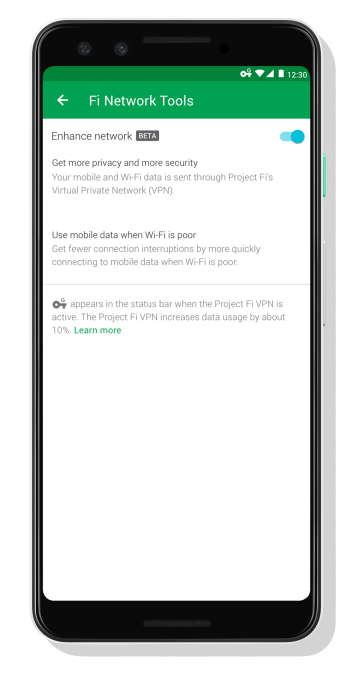
Google’s Project Fi wireless service is getting a major update today that introduces an optional always-on VPN service and a smarter way to switch between Wi-Fi and cellular connections.

By default, Fi already uses a VPN service to protect users when they connect to the roughly two million supported Wi-Fi hotspots. Now, Google is expanding this to cellular connections, as well. “When you enable our enhanced network, all of your mobile and Wi-Fi traffic will be encrypted and securely sent through our virtual private network (VPN) on every network you connect to, so you’ll have the peace of mind of knowing that others can’t see your online activity,” the team writes in today’s announcement.

Google notes that the VPN also shields all of your traffic from Google itself and that it isn’t tied to your Google account or phone number.

The VPN is part of what Google calls its “enhanced network” and the second part of this announcement is that this network now also allows for a faster switch between Wi-Fi and mobile networks. When you enable this — and both of these features are currently in beta and only available on Fi-compatible phones that run Android Pie — your phone will automatically detect when your Wi-Fi connection gets weaker and fill in those gaps with cellular data. The company says that in its testing, this new system reduces a user’s time without a working connection by up to 40 percent.

These new features will start rolling out to Fi users later this week. They are off by default, so you’ll have to head to the Fi Network Tools in the Project Fi app and turn them on to get started. One thing to keep in mind here: Google says your data usage will likely increase by about 10 percent when you use the VPN.


from RSSMix.com Mix ID 8176981 https://techcrunch.com/2018/11/13/googles-project-fi-gets-an-improved-vpn/
http://www.gadgetscompared.com
from Tumblr http://ikonografico.tumblr.com/post/180082428161
via http://www.gadgetscompared.com

Open sourcing analysis, plus US, China and HQ2

The big news today is that — finally — we have Amazon’s selection of cities for its dual second headquarters (Northern Virginia and NYC). Then some notes on China. But first, semiconductors and open sourcing analysis.

We are experimenting with new content forms at TechCrunch. This is a rough draft of something new – provide your feedback directly to the authors: Danny at danny@techcrunch.com or Arman at Arman.Tabatabai@techcrunch.com if you like or hate something here.

Pivot: Future of semiconductors, chips, AI, etc.

Last week, I focused on SoftBank’s debt and Form D filings by startups. On Friday, I asked what I should start to analyze next. There were several feedback hotspots, but the one that popped out to me was around next-generation chips and the battle for dominance at the hardware layer.

As a software engineer, I know almost nothing about silicon (the beauty of abstraction). But it is clear that the future of all kinds of workflows will increasingly be driven by capabilities at the hardware/silicon level, particularly in future applications like artificial intelligence, machine learning, AR/VR, autonomous driving, and more. Furthermore, China and other countries are spending billions to go after the leaders in this space such as Nvidia and Intel. Startups, funding, competition, geopolitics — we’ve got it all here.

Arman and I are now diving deeper into this space. We will start to post once we have some interesting things to share, but if you have ideas, opinions, companies or investments in this space: tell us about them, as we are all ears: danny@techcrunch.com and Arman.tabatabai@techcrunch.com.

Open-source analysis at TechCrunch

Since I launched this daily “column” last week, I have included the text near the top that “We are experimenting with new content forms at TechCrunch.” One of those forms is what might be called open-source journalism. Definitions are fuzzy, but I take it to mean working “in the open”: allowing you, the audience of this column, to engage in not just feedback around finalized and published posts, but to actually affect the entire process of analysis, from sourcing and ideation to data science and writing.

I am thankful to work at a publication like TechCrunch where my readers are often working in the exact sectors that I am writing about. When I wrote about Form Ds last week, a number of startup attorneys reached out with their own thoughts and analysis, and also explained key aspects of how the law is changing around SEC disclosure for startups. That’s really powerful, and I want to apply it to as many fields as possible.

This thesis is ultimately intentional — now I have to operationalize it. There aren’t good tools (yet!) that I know of that allows for easy sharing of data and notes that doesn’t rely on a hacked together set of Google Docs and Github. But I’m exploring the stack, and will publish more things publicly as we have them.

Amazon HQ2 – the future of corporate relations with cities
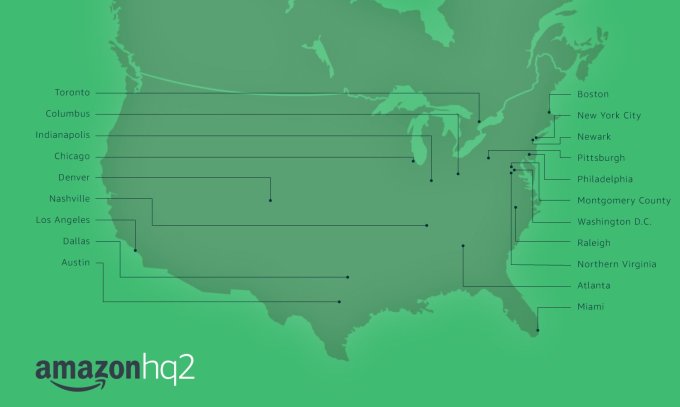
Amazon’s long process for selecting an HQ2 is finally over, and the official answer is two: Northern Virginia and NYC. Tons of words have been spilled about the search, and I am sure even more analysis will strike today about what put those two locations over the top.

To me, the key for mayors is to start using these reverse searches (where a company seeks a city and not vice versa) as leverage to actually get resources to fund infrastructure and other critical services.

This is a theme that I discussed about a year ago:

Take Boston’s bid for GE’s new headquarters. Yes, the city offered property tax rebates of about $25 million , but GE’s move also pushed the state to fund a variety of infrastructure improvements, including the Northern Avenue bridge and new bike lanes. That bridge adds a critical path for vehicles and pedestrians in Boston’s central business district, yet has gone unfunded for years.

Ideally, governments could debate, vote, and then fund these sorts of infrastructure projects and community improvements. The reality is that without a time-sensitive forcing function like a reverse RFP process, there is little hope that cities and states will make progress on these sorts of projects. The debates can literally go on forever in American democracy.

So if you are a mayor or economic planning official, use these processes as tools to get stuff done. Use the allure of new jobs and tax revenues to spur infrastructure spending and get a rezoning through a recalcitrant city council. Use that “prosperity bomb” to upgrade old parts of the urban landscape and prepare the city for the future. A healthier, more humane city can be just around the corner.

Take DC. The city has seen one of the best-run Metro systems deteriorate to abysmal levels over the past few years due to a complete dumpster fire of organizational design (the DC transit agency WMATA is funded by inconsistent revenue sources that ensure it will never be sustainable). Here is an opportunity to use Amazon’s announcement to get the tax framework and operations figured out to ensure that real estate, transportation, and other critical urban infrastructure are designed effectively.

China’s mobile internationalization

Timothy Allen/Getty Images

Talking about second headquarters, the technology industry clearly has separated into poles, one based around the United States and the other based around China. Two articles I read recently gave good insights of the benefits and challenges for China in this world.

The first is from Sam Byford writing at The Verge, who investigates the native OS options that Chinese consumers receive from companies like Xiaomi, Huawei, Oppo, and others. The headline is much more shrill than the text, so don’t let that frighten you.

Byford provides an overview of the lineage of Chinese mobile OSes, and also notes that what might look like design gaffes in Western consumer eyes might be critical needs for Chinese buyers:

But what is true today is that not all Chinese phone software is bad. And when it is bad from a Western perspective, it’s often bad for very different reasons than the bad Android skins of the past. Yes, many of these phones make similar mistakes with overbearing UI decisions — hello, Huawei — and yes, it’s easy to mock some designs for their obvious thrall to iOS. But these are phones created in a very different context to Android devices as we’ve previously understood them.

The article is perhaps a tad long for what it is, but Byford’s key viewpoint should be repeated as a mantra by any person connected to the technology sector today: “The Chinese phone market is a spiraling behemoth of innovation and audacity, unlike anything we’ve ever seen. If you want to be on board with the already exciting hardware, it’s worth trying to understand the software.”

Of course, while China may be a huge country, its leading technology companies do want to globalize and expand their user bases outside of the Middle Kingdom’s borders. That may well be a challenging proposition.

Writing at Factor Daily, Shadma Shaikh dives into the failure of WeChat to break into the Indian market. The product lessons learned by WeChat’s owner Tencent could be applied to any Silicon Valley company — cultural knowledge and appropriate product design are key to entering overseas markets.

Shaikh gives a couple of examples:

Another design feature in the app allowed users to look up and send add-friend requests to WeChat users nearby. During initial onboarding when users were just checking app’s features, many would tap the “people nearby” feature, which would switch on location sharing by default – including with strangers. Once location sharing with strangers was switched on, it wasn’t very intuitive to turn it off.

“Women used to get a lot of unwarranted messages from men, which was a major turn off and many of them left the platform,” Gupta says. “China probably didn’t have this stalking problem.”

And

In China, where the internet was cheaper than in India in 2012, sending video files of, say, 4 MB was not a challenge. WhatsApp compresses a 5 MB photo to 40 kilobytes. WeChat did not compress the files and took many minutes and data to send and receive media files.

Internationalization will never be easy, but the lessons that Silicon Valley has slowly learned over the past two decades will need to be learned again by Chinese companies if they want to export their software to other countries.

Reading Docket


from RSSMix.com Mix ID 8176981 https://techcrunch.com/2018/11/13/open-sourcing-analysis-plus-us-china-and-hq2/
http://www.gadgetscompared.com
from Tumblr http://ikonografico.tumblr.com/post/180078675816
via http://www.gadgetscompared.com

Snapchat launches Bitmoji merch and comic strips starring your avatar

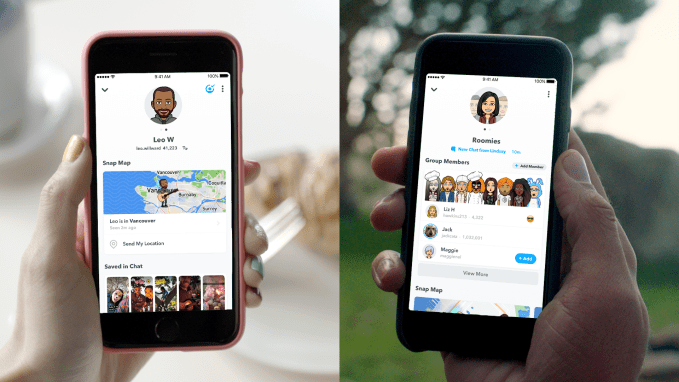
Snapchat is doubling down on its biggest differentiator by turning its personalized avatar Bitmoji into a revenue stream and a new source of content. Snapchat is launching a Bitmoji merchandise store you can customize with you and your friends’ cartoonified faces, Bitmoji Stories comic strips featuring you and friends’ avatars in fun scenes, and a new Friendship profile that collect all the content you and a friend have saved from your Snap message thread.

The new features could help earn Snapchat money to reduce its still-massive quarterly losses, get Snap’s brand out in public, and give people new ways to spend more time on Snapchat when it’s otherwise been losing users.

Snapchat, The Ecommerce Company

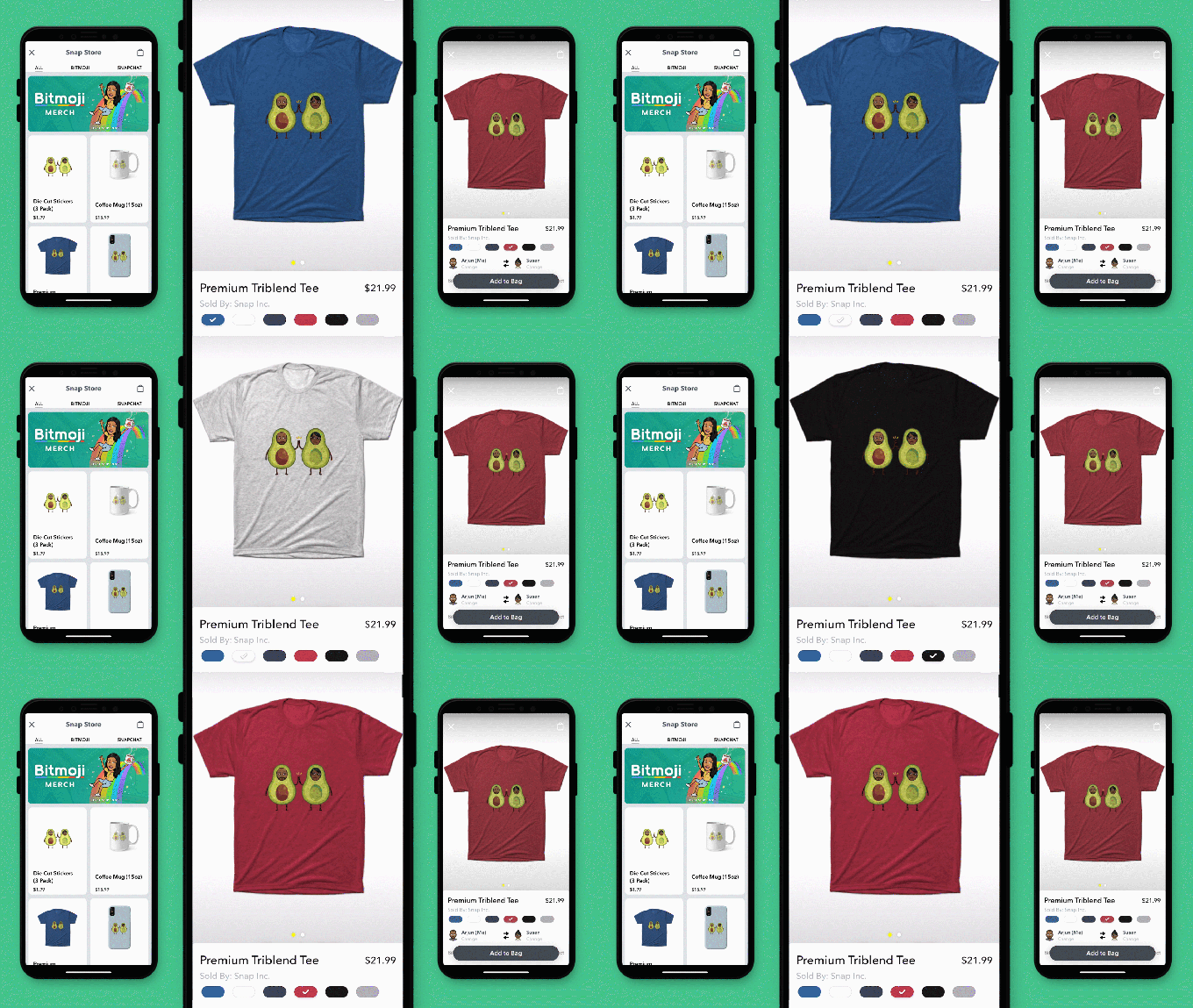
The Bitmoji merchandise store opens Thursday in the US on iOS only with $2 stickers, $15 coffee mugs, $16 standard t-shirts and notebooks, $22 triblend t-shirts $27 sweatshirts and more that you can personalize by adding their Bitmoji, one of their friends’, them and a friends’ playing together, or any two of their friends. Phone cases, towels, and pillows are also available. You can access the Bitmoji store from Snap Store in the Settings menu of Snapchat’s app. Snapchat first launched its Snap Store in Ghostface Chillah logo merchandise back in February to sell Dancing Hot Dog dolls, ghost pool floats, and puppy selfie filter shirts.

The new merch could help Snap show off its name and brand, reminding people to use the app since they can’t get the true Bitmoji anywhere else. Snap could also use the revenue given it lost $325 million last quarter and might have to take outside investment or be acquired as it may not break even before running out of cash.

Snap Comics

Back before it settled on the idea of turning personalized emoji into stickers you could use in chat, Bitmoji parent company Bitstrips started as a comic strip creator. You could make an avatar and then create little scenes for them to star in. The idea was inspired by co-founder Jacob ‘BA’ Blackstock’s school days when he and friends would draw comic strips when they were bored. Now Snap is getting back to Bitmoji’s roots.

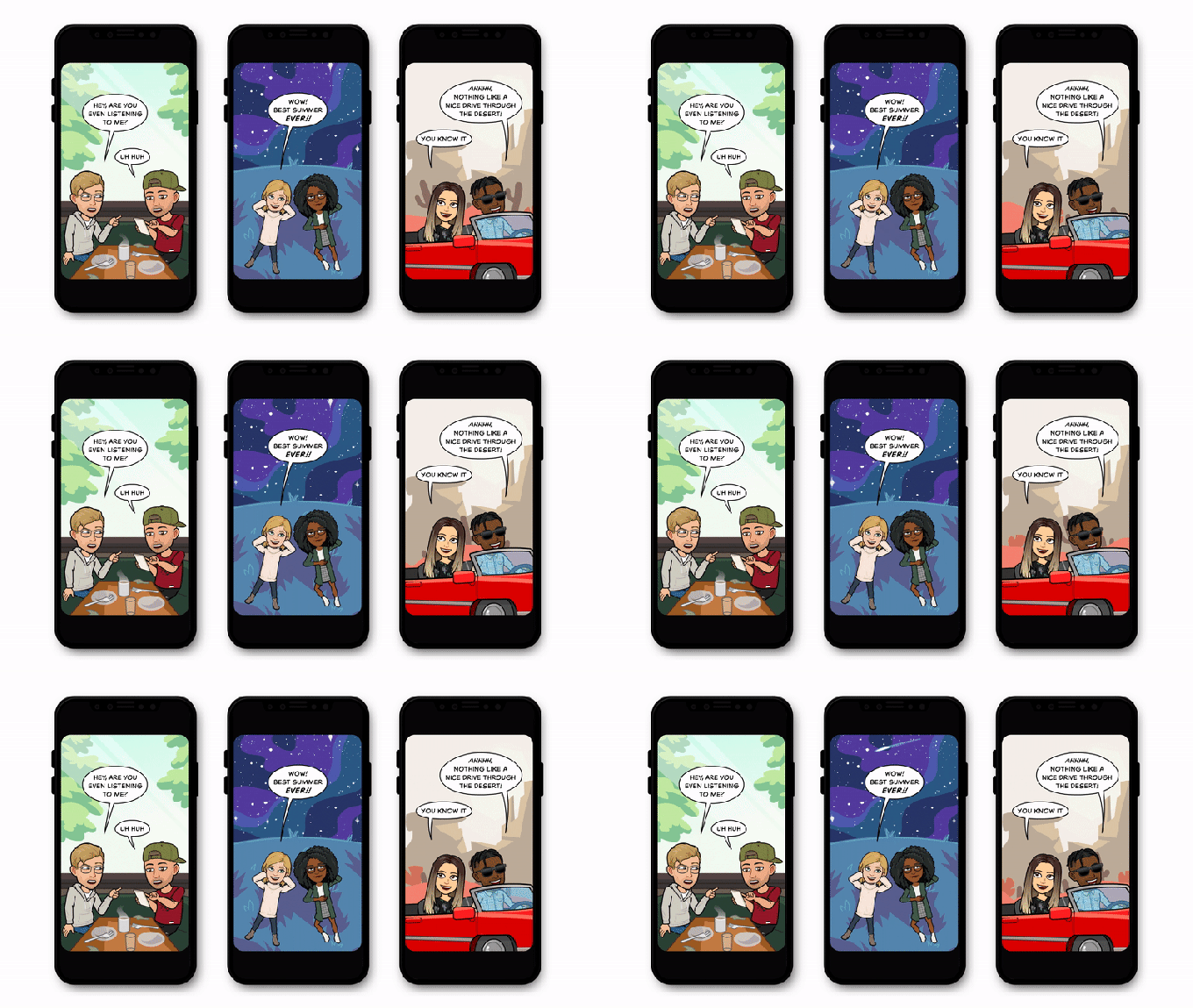
Bitmoji Stories launch tomorrow in the US. A Snapchat spokesperson tells me “Bitmoji Stories will tell lighthearted stories in the form of short comic strips. Bitmoji Stories are created by Snap (from the Bitmoji content team), and will star the Snapchatter solo or with a friend.” They’ll be constantly updated with new advantures, and they’re quite reminiscent of lifelike avatar startup Genies’ scenes. By creating a new form of Discover content in-house, Snapchat could draw more time and therefore more ad views out of its audience. And since there’s no outside publisher to pay, Snapchat can keep all the ad revenue.

Snap’s big competitors have largely failed to field a viable Bitmoji competitor. A year ago I wrote that “Facebook seriously needs its own Bitmoji”, and in May, we broke the news that Facebook Avatars were in the works — though the prototypes were pretty ugly.. Each day Facebook delays, Bitmoji becomes more entrenched as the avatar standard. Two weeks ago, Google launched its own Gboard Mini avatars that you can automatically create with a selife, rather than having to configure them manually like on Snapchat. But when it comes to an illustrated version of you, even tiny missteps can make you look monstrous. Plus, people love wasting time customizing avatars. Snap’s version still regins supreme.

Besties Are Snap’s Best Shot

And lastly, today Snapchat begins globally rolling out its Friendship profiles. Accessible by clicking on a friend’s Bitmoji (or blank avatar if they haven’t made one) from Chat, Stories, Discover, or search, Snapchat says they “make it easy to find your favorite memories and the important information you’ve saved over time.” That includes, photos, videos, messages, and links saved from your otherwise ephemeral chats, plus a quick way to see that bestie on the Snap Map.

None of these features is so seismic as to change the overall momentum of Snapchat, which has been struggling lately with shrinking user counts, a battered share price, and non-stop executive departures. Its VP of Content Nick Bell left yesterday. Having talked with him, he’s one of the smartest minds in modern mobile content, and Snap’s hopes to get rid of the clickbait and messy design of Discover may be more difficult without him.

The strategy of focusing on best friends is smart, though. The one thing Facebook and Instagram can’t copy is Snapchat’s tight social graph of just your closest pals. Those competitors allowed their networks to bloat with acquaintances, family, and colleagues that can make people less comfortable openly sharing. Now that they’ve copied Snapchat’s Stories broadcasting to a wider audience, Snap must refocus on best friends if it wants to stay unique and turn its smaller size and graph into an asset instead of a liability.


from RSSMix.com Mix ID 8176981 https://techcrunch.com/2018/11/13/bitmoji-store/
http://www.gadgetscompared.com
from Tumblr http://ikonografico.tumblr.com/post/180075277816
via http://www.gadgetscompared.com

Friday, November 9, 2018

Limiting social media use reduced loneliness and depression in new experiment

The idea that social media can be harmful to our mental and emotional well-being is not a new one, but little has been done by researchers to directly measure the effect; surveys and correlative studies are at best suggestive. A new experimental study out of Penn State, however, directly links more social media use to worse emotional states, and less use to better.

To be clear on the terminology here, a simple survey might ask people to self-report that using Instagram makes them feel bad. A correlative study would, for example, find that people who report more social media use are more likely to also experience depression. An experimental study compares the results from an experimental group with their behavior systematically modified, and a control group that’s allowed to do whatever they want.

This study, led by Melissa Hunt at Penn State’s psychology department, is the latter — which despite intense interest in this field and phenomenon is quite rare. The researchers only identified two other experimental studies, both of which only addressed Facebook use.

One hundred and forty-three students from the school were monitored for three weeks after being assigned to either limit their social media use to about 10 minutes per app (Facebook, Snapchat and Instagram) per day or continue using it as they normally would. They were monitored for a baseline before the experimental period and assessed weekly on a variety of standard tests for depression, social support and so on. Social media usage was monitored via the iOS battery use screen, which shows app use.

The results are clear. As the paper, published in the latest Journal of Social and Clinical Psychology, puts it:

The limited use group showed significant reductions in loneliness and depression over three weeks compared to the control group. Both groups showed significant decreases in anxiety and fear of missing out over baseline, suggesting a benefit of increased self-monitoring.

Our findings strongly suggest that limiting social media use to approximately 30 minutes per day may lead to significant improvement in well-being.

It’s not the final word in this, however. Some scores did not see improvement, such as self-esteem and social support. And later follow-ups to see if feelings reverted or habit changes were less than temporary were limited because most of the subjects couldn’t be compelled to return. (Psychology, often summarized as “the study of undergraduates,” relies on student volunteers who have no reason to take part except for course credit, and once that’s given, they’re out.)

That said, it’s a straightforward causal link between limiting social media use and improving some aspects of emotional and social health. The exact nature of the link, however, is something at which Hunt could only speculate:

Some of the existing literature on social media suggests there’s an enormous amount of social comparison that happens. When you look at other people’s lives, particularly on Instagram, it’s easy to conclude that everyone else’s life is cooler or better than yours.

When you’re not busy getting sucked into clickbait social media, you’re actually spending more time on things that are more likely to make you feel better about your life.

The researchers acknowledge the limited nature of their study and suggest numerous directions for colleagues in the field to take it from here. A more diverse population, for instance, or including more social media platforms. Longer experimental times and comprehensive follow-ups well after the experiment would help, as well.

The 30-minute limit was chosen as a conveniently measurable one, but the team does not intend to say that it is by any means the “correct” amount. Perhaps half or twice as much time would yield similar or even better results, they suggest: “It may be that there is an optimal level of use (similar to a dose response curve) that could be determined.”

Until then, we can use common sense, Hunt suggested: “In general, I would say, put your phone down and be with the people in your life.”


from RSSMix.com Mix ID 8176981 https://techcrunch.com/2018/11/09/limiting-social-media-use-reduced-loneliness-and-depression-in-new-experiment/
http://www.gadgetscompared.com
from Tumblr http://ikonografico.tumblr.com/post/179944715036
via http://www.gadgetscompared.com