Wednesday, October 2, 2019

Lookout, Robinhood. E*Trade, Schwab, Ameritrade go zero-fee

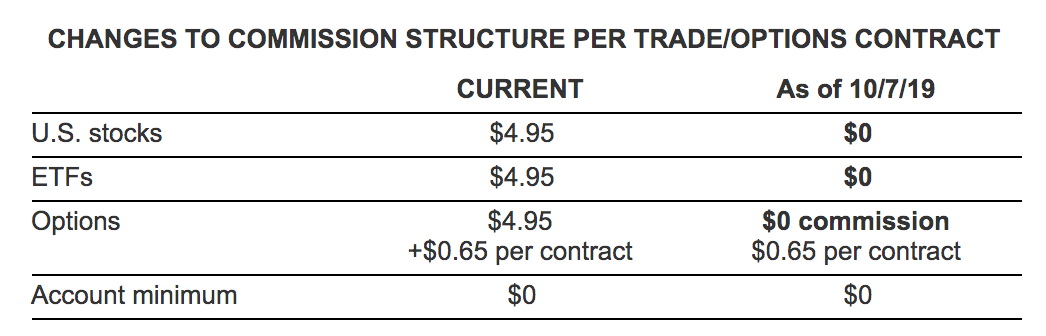
The biggest players in online stock trading all just copied Robinhood by removing their fees for stock and ETF trading. Charles Schwab announced yesterday it would drop its $4.95 fee, leading to plummeting share prices for it as well as competitors. By the end of yesterday Ameritrade announced it too would axe its $6.95 fees, and then E*Trade followed suit this morning killing off its own $6.95 fee. However, none of their share price recovered.

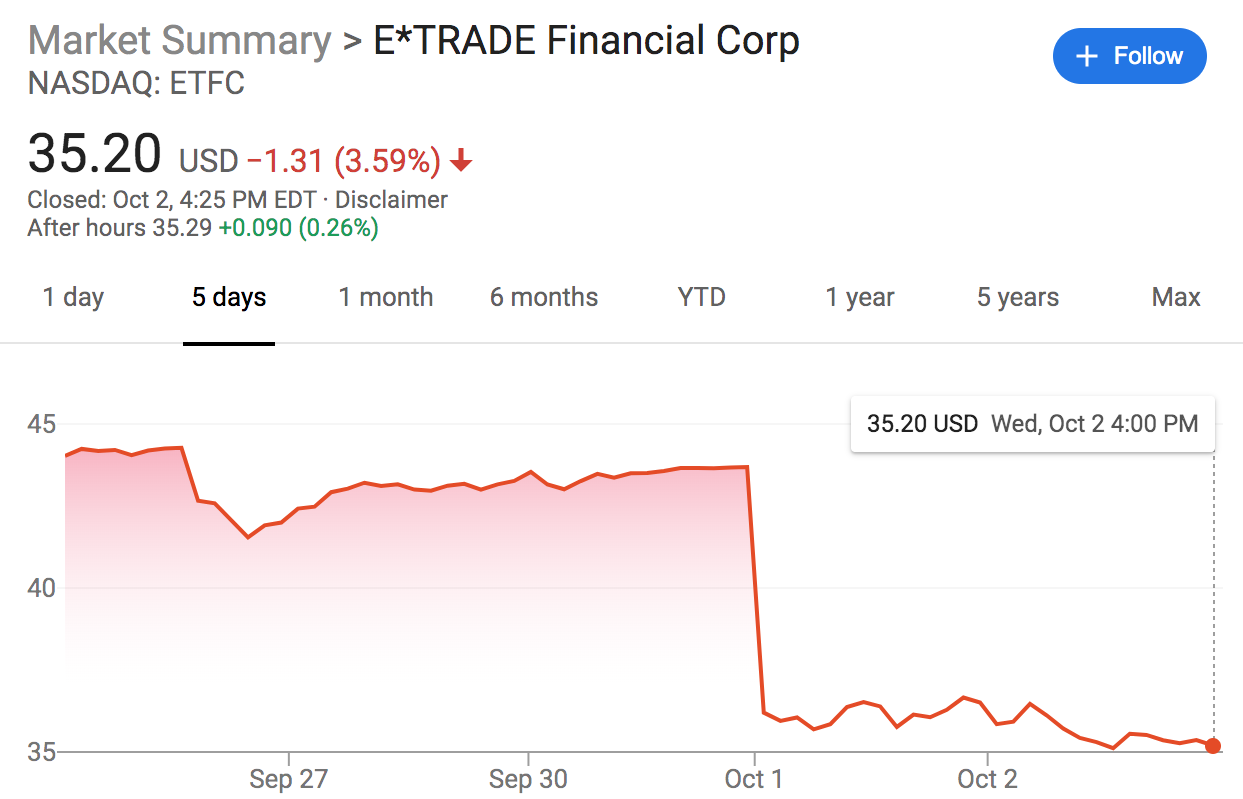
From yesterday before Schwab’s announcement through now, Schwab fell 12% from $41.84 to $36.54, E*Trade fell 19% from $43.69 to $35.20, and Ameritrade fell 28% from $46.70 to $33.54. Clearly investors aren’t thrilled that these financial giants are bowing to pressure from a measely startup.

ETrade Share Price

Yet the move could definitely hurt growth for the $7.6 billion-valued fintech upstart Robinhood. It’s relied on the free stock trades to pull in users that it then monetizes with its Robinhood Gold subscription to premium services including the ability to trade on margin by temporarily borrowing money from the company.

Schwab Fees

Schwab drops its fees

“The changes taking place across the brokerage industry reflect a focus on the customer that‘s been inherent to Robinhood since the beginning” said a spokesperson for the startup. “We remain focused on offering intuitively designed products that reduce barriers to our financial system, including account minimums and commission fees.”

Robinhood was hoping a high 3% interest rate checking account feature announced in December might help differentiate it from online stock brokerages. But after it prematurely launched the checking product without proper insurance, massive backlash ensued and the company announced it would shelve and rethink the idea. But that hiccup didn’t stop it from raising another $323 million this July to bring its total raised to $862 million. Its young user base and cryptocurrency exchange could give it potential that aged trading platforms lack.


from RSSMix.com Mix ID 8176981 https://techcrunch.com/2019/10/02/robinhood-e-trade-schwab-ameritrade/
http://www.gadgetscompared.com
from Tumblr https://ikonografico.tumblr.com/post/188094796331
via http://www.gadgetscompared.com

Rune raises $2M to help you find new friends in mobile games, starting with Brawl Stars

Multiplayer games are more fun when you get to play with the same crew regularly. Playing with the same people means better cooperation, deeper strategies and, if all goes well, more wins.

But what if none of your friends play the game you want to play?

Rune, a company out of Y Combinator’s Winter 2019 class, wants to use AI to help you find the right people to play with, connecting you via voice chat. And they’ve just closed a $2 million seed round to get it done.

The round was led by the gaming-focused firm Makers Fund, and backed by byFounders, E14 Fund, VentureSouq and Gmail creator Paul Buchheit.

The first game they’re supporting is Brawl Stars, the popular free-to-play mobile game built by Clash of Clans creator Supercell. It’s a pretty perfect game for something like this — it’s a game where strategic teams have a solid advantage, but where building such a team from scratch can be tough. Brawl Stars will automatically match you with teammates if you’re playing alone, but in-game communication is limited and random players tend to only hang around for a game or two.

brawl stars

Supercell’s Brawl Stars

When you first sign up, Rune asks you a handful of questions to start tuning their matchmaking algorithm. Which language(s) do you speak? How much Brawl Stars have you played (how many “trophies” have you earned)? What sort of gameplay are you looking for right now — are you just messing around, or are you looking for nothing but wins? Push a button, and the matchmaking system starts its search.

The more you play, the better the algorithm is tuned. If you seem to have longer play sessions with certain players, for example, it can prioritize matchmaking you with players their algorithms see as similar. (For the curious: While they will tune the matchmaking algorithms based on metadata, like who you’re chatting with and for how long, Rune co-founder Sanjay Guruprasad tells me that they don’t store or analyze the actual voice communication in any way.)

The company says that players have collectively spent around 50,000 hours chatting through the app since launching in March of 2019.

Rune’s matchmaking and voice chat systems are currently limited to two players. Since Brawl Stars (and plenty of other Battle Royale/arena style games) have game modes that support up to three players per team, Sanjay tells me that three-player matchmaking and voice chat are “both in the pipeline and will come out soon.”

Rune plans to support other games beyond Brawl Stars in the future — in fact, driving traffic to other games is part of their plan to monetize the free app. Once you’ve befriended someone, you’re free to use Rune for voice chat with whatever game you want; it just runs in the background, so what you’re playing doesn’t matter too much.

Rune is available for free on iOS here, and on Android here.


from RSSMix.com Mix ID 8176981 https://techcrunch.com/2019/10/02/rune-raises-2m-to-help-you-find-new-friends-in-mobile-games-starting-with-brawl-stars/
http://www.gadgetscompared.com
from Tumblr https://ikonografico.tumblr.com/post/188094796236
via http://www.gadgetscompared.com

YouTube Music is launching three new personalized playlists

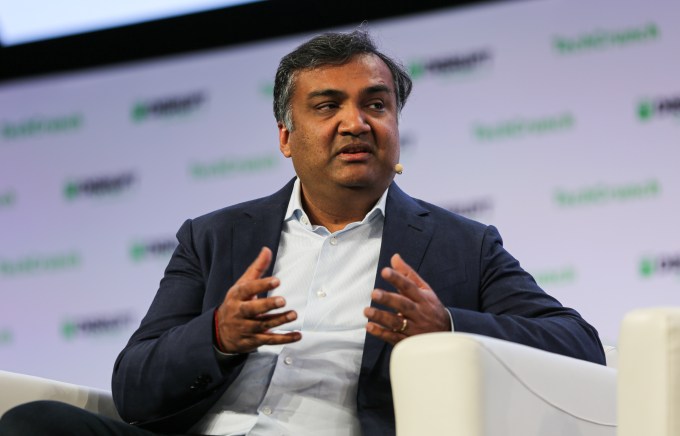
YouTube Music is preparing to better challenge Spotify and others with the launch of three new personalized playlists, Discover Mix, New Release Mix, and Your Mix, said YouTube Chief Product Officer Neal Mohan, in an on-stage interview this morning at TechCrunch Disrupt SF 2019.

Discover Mix, YouTube Music’s version of Spotify’s Discover Weekly, had already been spotted in the wild back in September. But it wasn’t yet broadly available. The other two hadn’t yet launched.

“Our YouTube Music app has been out now for a couple of years, we’ve launched the YouTube Premium service and the app and now 71 different countries,” noted Mohan. “And as we’ve rolled it out, we’ve gotten lots of feedback from our users about what they’d love to see,” he continued. And one of the things that they tell us repeatedly is, they love the fact that, through a combination of things like machine learning and human beings that are music lovers, we put all this great music in front of our users in the YouTube Music app,” he said.

disrupt neal mohan youtube 0142

According to Mohan, the Discover Mix will focus on helping users uncover new artists and music they might like, including tracks from artists you’ve never listened to before as well as lesser-known tracks from artists you already love.

The playlist takes advantage of your historical listening data on YouTube Music and on YouTube, he said.

New Release Mix, meanwhile, is YouTube Music’s version of Spotify’s Your Release Radar, and features the most recent release from your favorite artists.

Finally, Your Mix is a playlist that combines the music you love with songs you haven’t heard yet but will probably like, based on your listening habits.

The mixes will be updated weekly, and will be made available to all users worldwide where they’ll be found on the “Mixed for You” shelf on the home screen, or by searching in the app.

All three will launch sometime later this month, but YouTube doesn’t have an exact date.

The additions arrive at a time when Google is preparing to transition its Google Play Music users over to YouTube Music, which makes it a much bigger threat to existing music streaming services, including Spotify, Apple Music, Amazon Music, Pandora and others.

While YouTube Music hasn’t yet replaced Play Music entirely or shut the older app down, it did just make YouTube Music the default music app that ships with new Android devices just last week, instead of Google Play Music.


from RSSMix.com Mix ID 8176981 https://techcrunch.com/2019/10/02/youtube-music-is-launching-three-personalized-playlists/
http://www.gadgetscompared.com
from Tumblr https://ikonografico.tumblr.com/post/188092638601
via http://www.gadgetscompared.com

Google announces Action Blocks, a new accessibility tool for creating mobile shortcuts

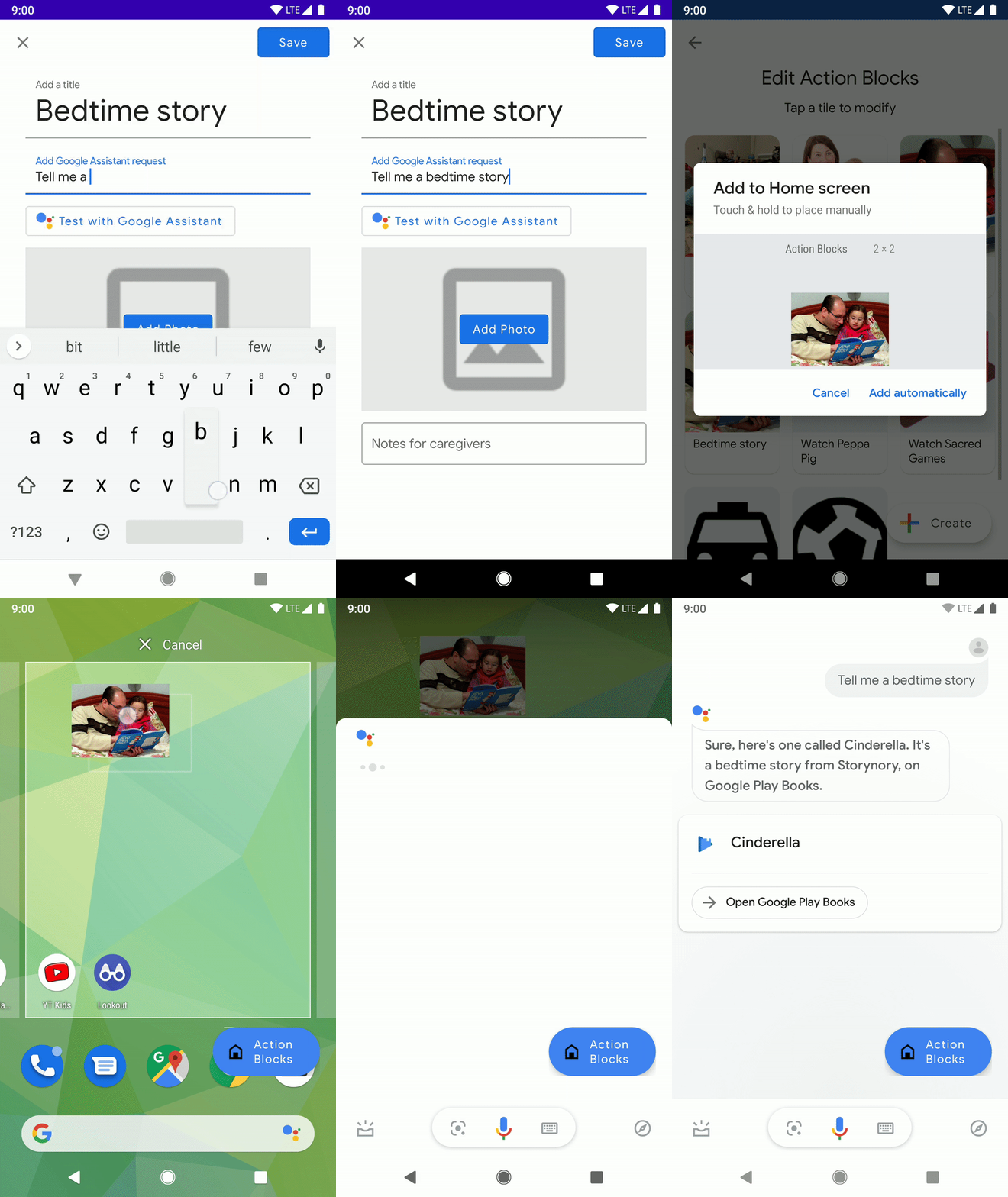
Google today announced Action Blocks, a new accessibility tool that allows you to create shortcuts for common multi-step tasks with the help of the Google Assistant. In that respect, Action Blocks isn’t all that different from Shortcuts on iOS, for example, but Google is specifically looking at this as an accessibility feature for people with cognitive disabilities.

“If you’ve booked a rideshare using your phone recently, you’ve probably had to go through several steps: unlock your phone, find the right app, navigate through its screens, select appropriate options, and enter your address into the input box,” writes google accessibility software engineer Ajit Narayanan. “At each step, the app assumes that you’re able to read and write, find things by trial-and-error, remember your selections, and focus for a sustained period of time.”

Google’s own research shows that 80 percent of people with severe cognitive disabilities like advanced dementia, autism or Down syndrome don’t use smartphones, in part because of these barriers.

BedtimeStory 1

Action Blocks are essentially a sequence of commands for the Google Assistant, so everything the Assistant can do can be scripted using this new tool, no matter whether that’s starting a call or playing a TV show. Once the Action Block is set up, you can create a shortcut with a custom image on your phone’s home screen.

For now, the only way to get access to Action Blocks is to join Google’s trusted tester program. It’s unclear when this will roll out to a wider audience. When it does, though, I’m sure a wide variety of users will want to use of this feature .


from RSSMix.com Mix ID 8176981 https://techcrunch.com/2019/10/02/google-announces-action-blocks-a-new-accessibility-tool-for-creating-mobile-shortcuts/
http://www.gadgetscompared.com
from Tumblr https://ikonografico.tumblr.com/post/188090618241
via http://www.gadgetscompared.com

Tuesday, October 1, 2019

Zuckerberg misunderstands the huge threat of TikTok

“It’s almost like the Explore Tab that we have on Instagram” said Facebook CEO Mark Zuckerberg in leaked audio of him describing TikTok during an all-hands meeting. But it’s not. TikTok represents a new form of social entertainment that’s vastly different from the lifelogging of Instagram where you can just take a selfie, show something pretty, or pan around what you’re up to. TikToks are premeditated, storyboarded, and vastly different than the haphazard Stories on Insta.

That’s why Zuckerberg’s comments cast a dark shadow over the future of the Facebook family of apps. How can it beat what it doesn’t understand? He certainly can’t ignore it. Facebook’s copycat Lasso has been installed just 425,000 times since it launched in November, while TikTok has 640 million installs in the same period outside of China. Oh, and TikTok has 1.4 billion total installs beyond China to date.
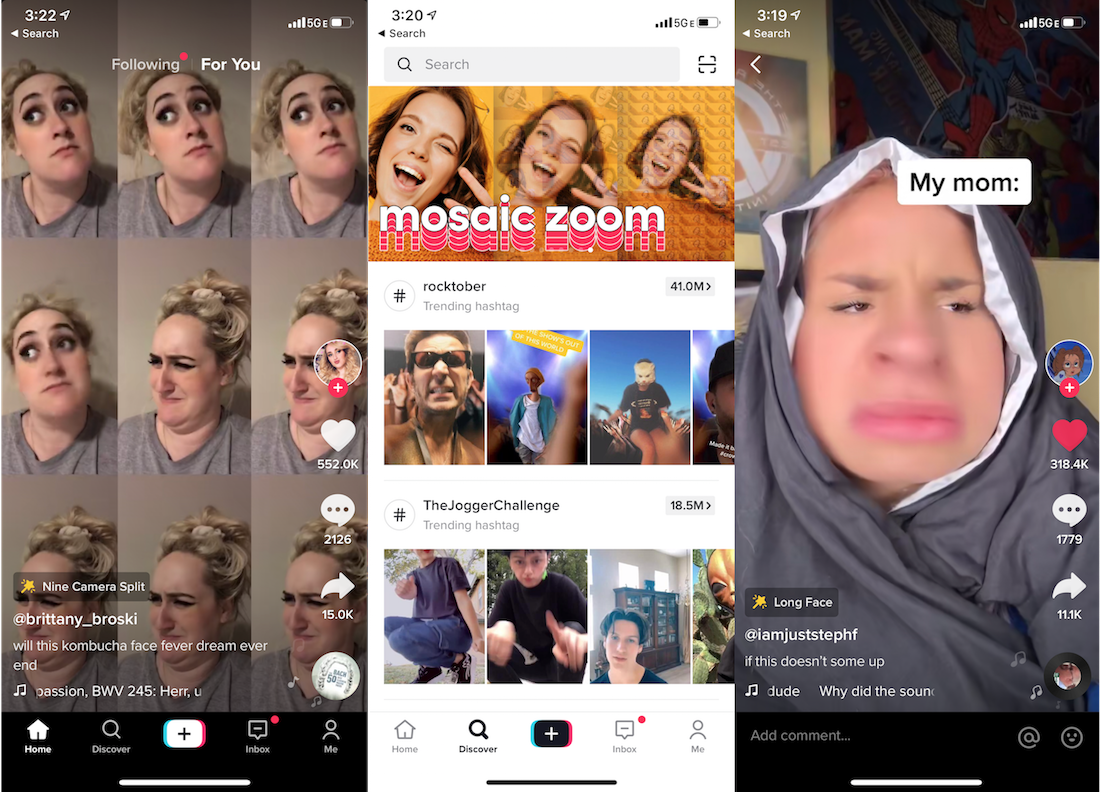
TikTok Screenshots

TikTok

Casey Newton of The Verge today published two hours of audio and transcripts from two internal-only all-hands Q&As held by Zuckerberg at Facebook in July. His comments touch on the company’s plan to fight being broken up by regulators, especially if Elizabeth Warren becomes President. He thinks Facebook would win, but on resorting to suing the government, he says “does that still suck for us? Yeah.” Zuckerberg also describes how Facebook is working to launch a payments product in Mexico and elsewhere by year’s end as Libra deals with regulatory scrutiny.

But beyond his comments on regulation, it’s his pigeonholing of TikTok that’s most alarming. It foreshadows Facebook failing to win one of the core social feeds that its business depends on. Perhaps his perspective on the competitor is evolving, but the leak portrays him as thinking TikTok is just the next Snapchat Stories to destroy.

Zuckeberg’s Thoughts On TikTok

Here’s what Zuckerberg said about TikTok during the internal Q&A sessions, (emphasis mine):

So yeah. I mean, TikTok is doing well. One of the things that’s especially notable about TikTok is, for a while, the internet landscape was kind of a bunch of internet companies that were primarily American companies. And then there was this parallel universe of Chinese companies that pretty much only were offering their services in China. And we had Tencent who was trying to spread some of their services into Southeast Asia. Alibaba has spread a bunch of their payment services to Southeast Asia. Broadly, in terms of global expansion, that had been pretty limited, and TikTok, which is built by this company Beijing ByteDance, is really the first consumer internet product built by one of the Chinese tech giants that is doing quite well around the world. It’s starting to do well in the US, especially with young folks. It’s growing really quickly in India. I think it’s past Instagram now in India in terms of scale. So yeah, it’s a very interesting phenomenon.

And the way that we kind of think about it is: it’s married short-form, immersive video with browse. So it’s almost like the Explore Tab that we have on Instagram, which is today primarily about feed posts and highlighting different feed posts. I kind of think about TikTok as if it were Explore for stories, and that were the whole app. And then you had creators who were specifically working on making that stuff. So we have a number of approaches that we’re going to take towards this, and we have a product called Lasso that’s a standalone app that we’re working on, trying to get product-market fit in countries like Mexico, is I think one of the first initial ones. We’re trying to first see if we can get it to work in countries where TikTok is not already big before we go and compete with TikTok in countries where they are big.

We’re taking a number of approaches with Instagram, including making it so that Explore is more focused on stories, which is increasingly becoming the primary way that people consume content on Instagram, as well as a couple of other things there. But yeah, I think that it’s not only one of the more interesting new phenomena and products that are growing. But in terms of the geopolitical implications of what they’re doing, I think it is quite interesting. I think we have time to learn and understand and get ahead of the trend. It is growing, but they’re spending a huge amount of money promoting it. What we’ve found is that their retention is actually not that strong after they stop advertising. So the space is still fairly nascent, and there’s time for us to kind of figure out what we want to do here. But I think this is a real thing. It’s good.

To Zuckerberg’s credit, he’s not dismissing the threat. He knows TikTok is popular. He knows it’s growing in key international markets Facebook and Instagram depend on to keep user counts rising. And he knows his company needs to respond via its standalone clone Lasso and more.
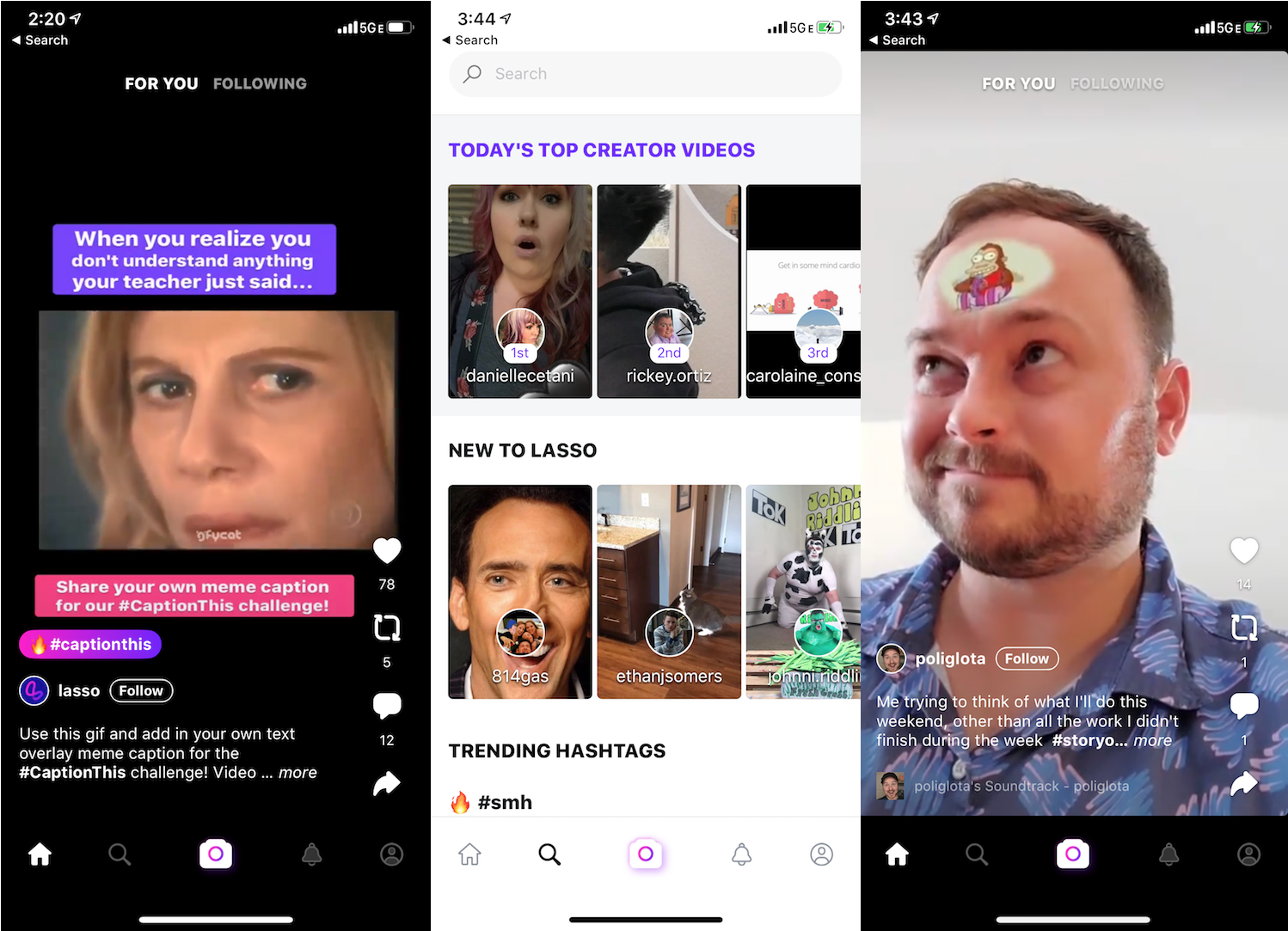
Facebook Lasso Screenshots

Lasso

But while TikToks might look like Stories because they’re vertical videos, and TikTok might algorithmically recommend them to people like Instagram Explore, it’s a whole ‘nother beast of a product and one that may be harder than it seems to copy.

To crystallize why, let’s rewind to Snapchat. With the launch of Stories, it started to blow up with US teens. Facebook’s attempts to clone it in standalone apps like Poke and Slingshot never gained traction. In fact, none of Facebook’s standalone apps have succeeded unless they splintered off an already-popular piece of Facebook like chat and users were forced to download them like Messenger. It wasn’t until Zuckerberg stuck his clone of Stories front-and-center atop Instagram and Facebook that Snapchat’s user count went from growing 18% per quarter to shrinking. There, Facebook used the same strategy laid out in Zuckerberg’s comments — push its good-enough clone in countries where the original isn’t popular yet.

But Facebook was fortunate because Stories really wasn’t that dissimilar to the content users were already sharing on Instagram — tiny biographical snippets of their lives. Snapchat CEO Evan Spiegel had originally invented Stories as a vision of Facebook’s News Feed through the lens of an ephemeral camera. All users had to know was “I take the same videos, but shorter and sillier, posted more often, and then they disappear”. The concept of Instagram and Facebook didn’t have to change. They were still about telling friends what you were up to. Choking off TikTok’s growth will be much more complicated.

Why TikTok Is Tough To Clone

TikTok isn’t about you or what you’re doing. It’s about entertaining your audience. It’s not spontaneous chronicling of your real life. It’s about inventing characters, dressing up as someone else, and acting out jokes. It’s not about privacy and friends, but strutting on the world stage. And it’s not about originality — the heart of Instagram. TikTok is about remixing culture — taking the audio from someone else’s clip and reimagining the gag in a new context by layering it atop a video you record.
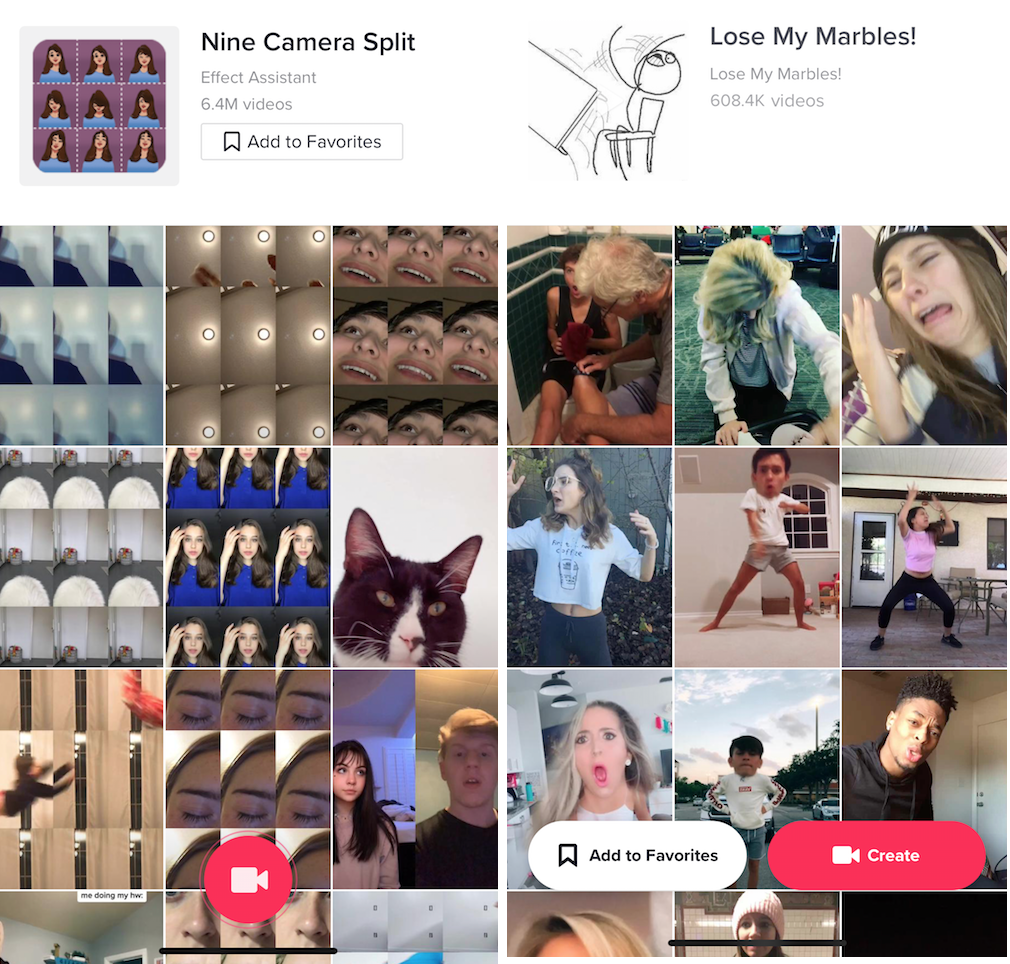
TikTok Remixes

That makes TikTok distinct enough that it will be very difficult to shoehorn into Instagram or Facebook, even if they add the remixing functionality. Most videos on those apps aren’t designed to be templates for memes like TikToks are. Insta and Facebook’s social graphs are rooted in friendship and augmented by the beautiful and famous, but don’t encompass the new wave of amateur performers TikTok elevates. And since each post to the app becomes fodder for someone else’s creativity, a competitor starting from scratch doesn’t offer much to remix.

That means a TikTok clone would have to be somewhat buried in Instagram or Facebook, rebuild a new social graph, and retrain users’ understanding of these apps’ purpose…at the risk of distracting from their core use cases. This leaves Facebook hoping to grow its standalone TikTok clone Lasso which TechCrunch scooped a year ago before it launched last November. But as we’ve seen, Facebook struggles growing brand new apps, and that effort is further hindered by its increasingly toxic brand and sheen of uncoolness. Nor does it help that Facebook must divert development resources to comply with all the new privacy and transparency obligations as part of its $5 billion FTC fine and settlement.

The Next Feed

Facebook’s best bet is to assess the future value of the ads it could run on a successful TikTok clone and apply some greater fraction of that grand sum to competing directly. It’s already made some smart additions to Lasso like tutorials for how to remix and the option to add GIFs as sections of your video. But it’s still failing to gain serious traction in the US. While typical TikTok homepage videos have hundreds of thousands of Likes, the top ones I saw in my Lasso feed today received 70 or fewer.

I had Sensor Tower run some analysis comparing TikTok with Lasso since its launch last November, and found that Lasso gets 6 downloads for every 1000 for TikTok in the US. Some more stats:

  • US Total Downloads Since November: Lasso – 250,000 // TikTok – 41.3 million
  • US Downloads Per Day Since November: Lasso – 760 // TikTok – 126,000
  • Average US Google Play Social App Chart Ranking: Lasso – #155 // TikTok – #2

Beyond the US, Lasso has only launched in one other market, Mexico in April, where it’s been faring better but could hardly even be considered a competitor to TikTok. They won’t even coherently fit together on a graph. Facebook needs to lean harder into Lasso:

  • Mexico Total Downloads Since April: Lasso – 175,000 // TikTok – 3.3 million
  • Mexico Downloads Per Day Since November: Lasso – 1,000 // TikTok – 19,000
Facebook Lasso Logo

Zuckerberg may need to find a coherent place for TikTok style features inside Instagram and potentially Facebook. That could be another horizontal row of previews like with Stories and/or a header on the Explore page dedicated to premeditated content. Certainly something more prominent than a single button like IGTV that still no one is asking for. One opportunity to best TikTok would be building a dedicated remix source browser into the Stories camera to help users find content to put their own spin on.

Facebook will also need to buy out top TikTok creators to make videos for it instead, and even quasi-hire some of the most prolific video meme or challenge inventors to give users trends to jump on rather than just one-off clips to watch. Its failure to offer IGTV stars monetization has led many to ignore that platform, and it can’t afford that again.

If Zuckerberg approaches TikTok as merely an algorithmic video recommender like Explore, Facebook will miss out on owning the social entertainment feed. If he doesn’t decisively move to challenge TikTok soon, its catalog of content to remix will grow insurmountable and it will own the whole concept of short form performative video. Snapchat’s insistence on ephemerality makes it incompatible with remixing, and YouTube isn’t nimble enough to reinvent itself.

If no American company can step up, we could see our interest data, faces, and attention forfeited to an app that while delightful to use, heralds Chinese political values at odds with our own. If only Twitter hadn’t killed Vine.


from RSSMix.com Mix ID 8176981 https://techcrunch.com/2019/10/01/instagram-vs-tiktok/
http://www.gadgetscompared.com
from Tumblr https://ikonografico.tumblr.com/post/188076436861
via http://www.gadgetscompared.com
Knowable launches its ‘not a podcast’ $100 audio classes

Books on tape were the lifeblood of self-help. But e-learning startups like Khan Academy and Coursera demanded our eyes, not just our ears. Then came podcasts that make knowledge accessible, yet rarely focus on you retaining and applying what they teach.

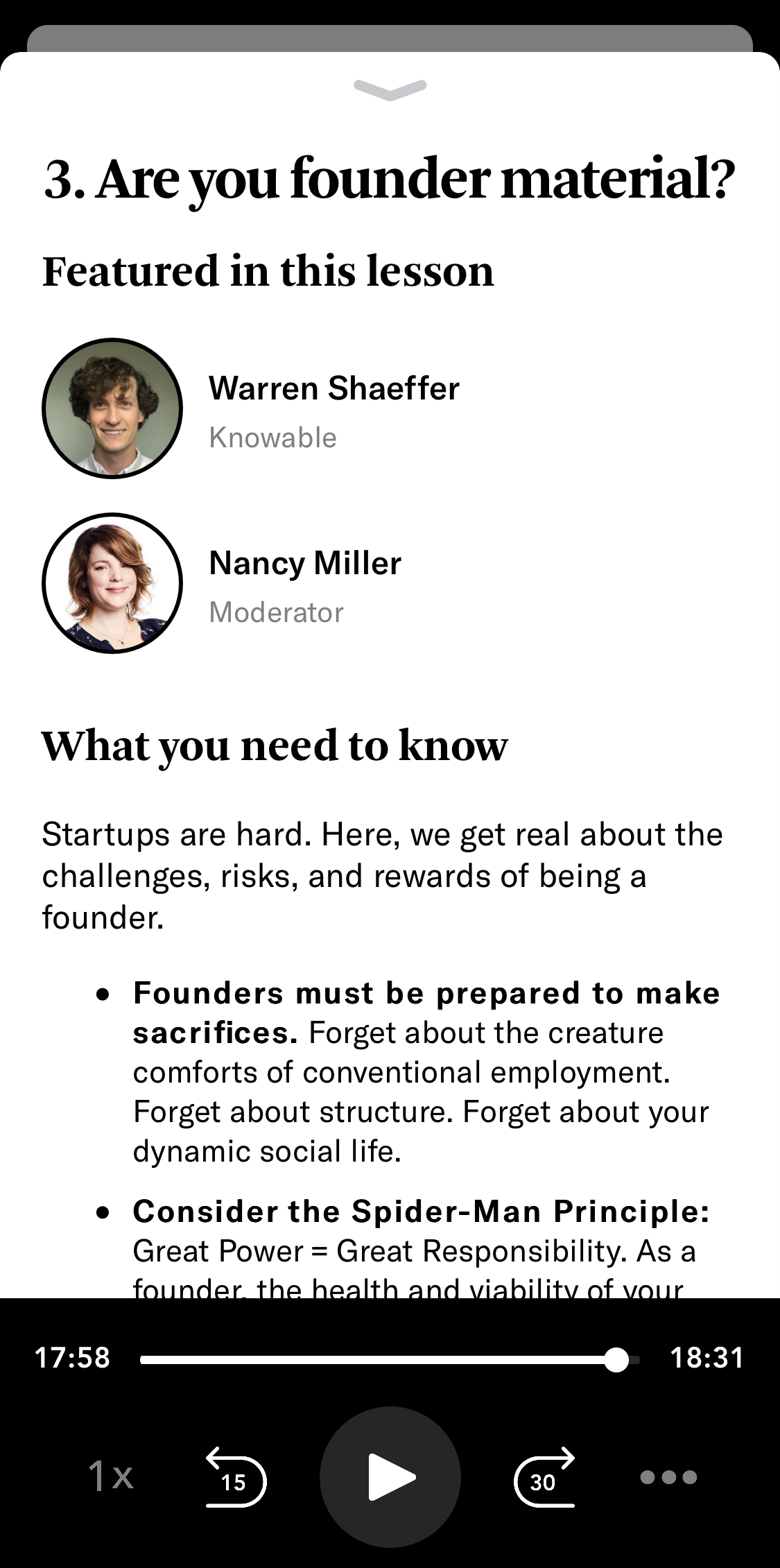
Today, a new startup called Knowable is launching to provide gaze-free audio education at $100 per eight-hour course on topics like how to launch a startup or how to sleep better. The idea is that by layering chapter summaries and eventually interactive activities atop premium, long-form, ad-free lessons, it can become the trusted name in learning anywhere. With always-in Bluetooth earbuds and smart speakers becoming ubiquitous, we can imbibe content in smaller chunks in new environments. Knowable wants to fill that time with self-improvement.

The big question is whether Knowable can differentiate its content from free alternatives and build a moat against copycats through savvy voice-responsive learning exercises so you don’t forget everything.

To evolve beyond the podcast, Knowable has raised a $3.75 million seed round led by Andreessen Horowitz’s partner Connie Chan, and joined by Upfront, First Round and Initialized. “The market is ready for a company like Knowable. Their timing is right and their team possesses the rare combination of product expertise and creative media experience necessary to win. That’s why I’m not just hosting Knowable’s first course, Launch a Startup, we’re also one of the earliest investors in the company,” says Initialized’s Alexis Ohanian.

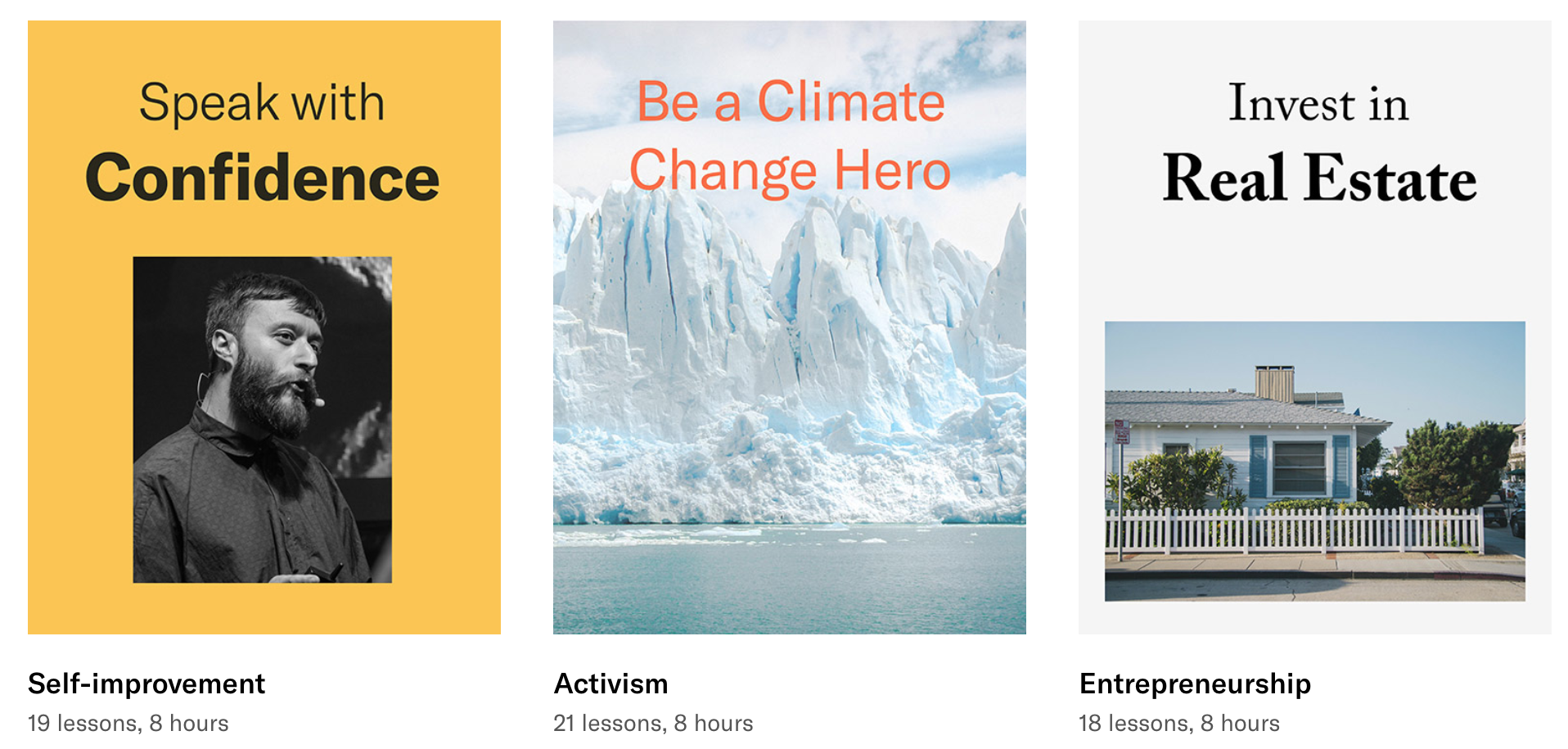
Knowable Courses

There’s certainly a market opportunity, as 32% of Americans listen to podcasts monthly, up from 26% in 2018, with 74% of those citing the desire to learn. Half of Americans have listened to an audio book. The e-learning market is $190 billion today, but projected to grow to $300 billion as bloated and expensive higher education succumbs to cheaper and more focused options.

But to score consistent revenue, Knowable must build up its library and execute on plans to offer a subscription service with access to updates on prior lessons. A major challenge will be bundling classes on the right topics that don’t exhaust users so they keep listening and paying.

Building a school from sound

“My first-generation immigrant parents came here without college degrees. Great teachers let me move up the socioeconomic ladder pretty quickly,” says Knowable co-founder Warren Schaeffer. “The genesis of the idea came from our shared interest in education and the value of great teachers.”

Knowable ChaptersSchaeffer and his co-founder Alex Benzer have already been through the struggles of startup life together. After meeting at MuckerLab in LA and splitting from their respective co-founders, in 2007 they created SocialEngine, a community website builder that sold to Room 214. Next they built up a video platform for independent creators called Vidme that raised $9 million but never became sustainable before selling to Giphy in 2018.

The pair had glimpsed how great content could rope in an audience, but felt like the true potential of the podcast hadn’t been explored. Why did they have to be produced on the cheap, distributed on generic platforms and supported by ads? Knowable emerged as a way to create luxury audio, delivered through a purpose-built app and paid for with direct sales or subscriptions. Instead of recording unscripted discussions as episodes, they mapped out course curriculum and filled them with structured advice from experts.

I’m a few hours into the Ohanian-hosted Launch a Startup. It’s certainly a lot more efficient than trying to learn the basics just through storytelling from podcasts like Reid Hoffman’s Masters of Scale or NPR’s How I Built This. One chapter breaks down the top ways startups die and the traits you’ll need to persevere. From optimism and resilience operating in unstructured environments to a refusal to make excuses why you can’t succeed, Ohanian cooly recaps the learnings at the end of the chapter. Open the app and you’ll get a written summary plus suggested blog posts and books for diving deeper. An accompanying 95-page PDF workbook collects all the key learnings for rapid review later.

The topic is huge, though, and Knowable is at its best when it’s distilling knowledge into neatly packaged lists and frameworks. The course’s weakest moments are when it feels most like a podcast, with somewhat meandering conversations with random founders discussing how they dealt with problems. Meanwhile, it currently lacks some basic tools like in-app notetaking and sharing, or as wide a range of playback speeds and rewind options as you’ll get on Audible. “We don’t think of ourselves as a podcast company,” Schaeffer says, but that’s still who he’s competing against.

What’s also missing is any true interactivity. The downside of audio learning is that if you’re not paying full attention, it’s easy to zone out. Knowable needs to develop voice and touch-controlled exercises to help users apply and retain the lessons. There are plans to launch learning communities where students can confer about the classes, akin to Y Combinator’s “Bookface” forum.

However, Schaeffer says that “we’re on a mission to make education more accessible and quizzes might be an impediment to that,” which leaves questions about what the learning activities will look like, even though they’re crucial to users coughing up $100 per class. It’s easy to imagine Spotify/Anchor, Gimlet Media or other major podcast players developing their own interactive features and classes if Knowable doesn’t get there first.

Snackable audio education

The startup’s bid for virality is the ability to give a friend a code to take the class with you. Knowable is also hoping big-name experts and quality driven by a team cobbled together from NPR, The Washington Post, William Morris Endeavor, Masterclass and Vice will set it apart. They’ve got a lot of work ahead to grow beyond the six courses currently available on topics like climate change activism and real estate, especially because there’s a 100% money-back guarantee if classes fall short.

For the moment, Knowable feels a bit late with its homework. It has the potential and demand to reinvent audio learning but currently sounds too similar to what’s already everywhere. I was hoping for a Bandersnatch for education that made a broadcast experience feel more like a game.

But the opportunity will only continue to grow as we spend more of our lives in earshot of AirPods and Echoes. With a broad enough library and clever editing, one day you might tell Knowable “teach me something about venture capital in eight minutes” as you walk to the coffee shop. That’s going to have a much better impact on your life than just scrolling through another feed.


from RSSMix.com Mix ID 8176981 https://techcrunch.com/2019/10/01/knowable/
http://www.gadgetscompared.com
from Tumblr https://ikonografico.tumblr.com/post/188070188636
via http://www.gadgetscompared.com

Pandora puts its personalization powers to work in a revamped app

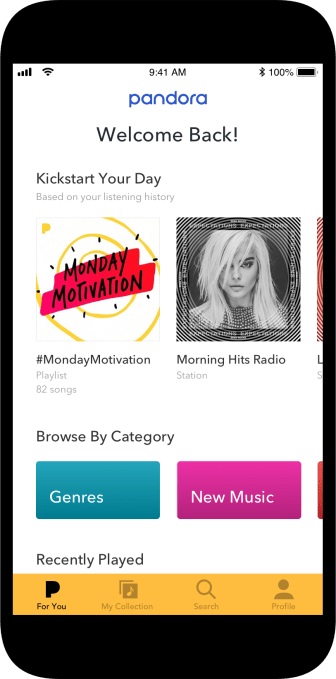
Pandora is doubling down on personalization and revamping its app in order to better compete with rivals like Spotify and Apple Music. Today, the company is introducing a new mobile experience which includes a dedicated “For You” tab where a continually updated feed of content is presented to users, including both music and podcast recommendations and more. This content is personalized to the individual, based on factors like the day of the week, the time of day, and Pandora’s predictions about your mood, among other things.

The new personalized feed will also help the company to better showcase more of its exclusive content — like its music-and-podcast combos, called “Pandora Stories,” for example. Or the dozens of SiriusXM talk shows that became Pandora podcasts, following its acquisition.

“Our listeners have told us that they love the utility of Pandora — it’s drop-dead easy, it works, it knows me, It’s really simple,” explains Pandora’s Chief Product Officer, Chris Phillips. “But what they haven’t been able to understand and have easy enough access to is all the content and programming that we have available on Pandora — the new content, new programming, and the unique content that you can’t get other places,” he says.

The For You tab aims to change that by turning Pandora’s personalization capabilities onto its broader catalog and exclusives, then crafting a scrollable feed with dozens of ways to listen.

SuperbrowseHeroStatic 002

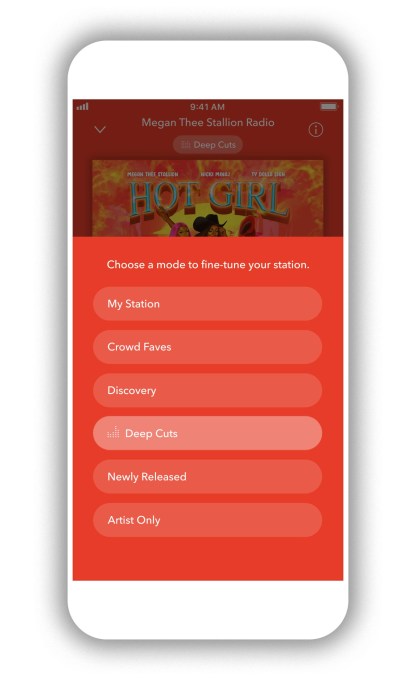
Here, you’ll be able to tap into Pandora Modes,  for example, which is a new way to listen to Pandora Stations. The feature was previously available on the web, and has now come to mobile for the first time with today’s launch.

Pandora Modes let you toggle between ways to customize your stations. You can opt for modes that will tweak the station to play things like the most popular songs (“crowd faves”), the deep cuts, new releases, artist-only tracks, and more.  You can also opt for a “discovery” mode to have Pandora introduce you to new artists you may like, as related to the station in question.

Another section in the For You tab lets you browse by categories, including by genre, by new music, podcasts, moods, playlists, decades and by trending.

The “Moods & Activities” section, meanwhile, will present collections of music based on current trends — for example, one of the available “moods” is “fall” and another could be “rainy day,” matched up with the day’s weather. You can also dig into this section for moods to match your activity, like workout, gaming, studying, family time, and more.

As you scroll down the For You page, you’ll come across your podcast recommendations and personalized playlists. And Pandora can create some 80 different versions of the latter, which include playlists by moods, activities, genres, and more all powered by its Music Genome.

Plus, the combined Pandora and SiriusXM editorial team of around 25 creates hundreds of human-curated playlists, too.

PandoraModes BlogImage

In total, there are some 35 different modules in Pandora’s new For You feed, some of which are shown to every user while others appear dynamically based on time of day and day of week. Its suggestions will also be tailored to your own likes and interests, thanks to your own listening behavior and explicit signals, like thumbs up and thumbs down.

That means your For You tab will be unique to you, and you can later be targeted with specific promotions — like the content to emerge from that deal between SiriusXM/Pandora and Drake, for example, if relevant to your interests. (Hey, it’s better than that time when Spotify put Drake’s face on every playlist.)

Despite the personalization, the feed will still include some insights powered by the larger Pandora population, so you can see what’s popular and trending more broadly across the service.

In time, Pandora plans to roll out even more modules to build out the experience further.

“100 billion thumbs are what’s powering all this,” adds Phillips, speaking of Pandora’s recent milestone, which measured the number of thumbs up and down clicks from users. Until now, he says, Pandora “hadn’t really brought together the community…and the power of our personalization, but not just for stations — for all the playlists, albums, songs, and artists,” Phillips continues. “And then the idea that we lay on top of all of this…the idea of what time of day it is, and what might be interesting based on what we predict your mood is right now,” he says.

The “For You” tab and other features are arriving today on Pandora for iOS and Android.


from RSSMix.com Mix ID 8176981 https://techcrunch.com/2019/10/01/pandora-puts-its-personalization-powers-to-work-in-a-revamped-app/
http://www.gadgetscompared.com
from Tumblr https://ikonografico.tumblr.com/post/188068212416
via http://www.gadgetscompared.com