Saturday, October 5, 2019

HTC stopped innovating on smartphones, new CEO admits

Several months back, we invited HTC cofounder and CEO Cher Wang to appear on stage at TechCrunch Disrupt. Sometimes, however, life happens. Two weeks ago, the company announced that Wang would be stepping down from the role, which would immediately be filled by longtime telecom vet, Yves Maitres. Thankfully, the former Orange exec also agreed to appear on stage at this week’s event.

Maitres took the stage immediately following a one on one with OnePlus cofounder, Carl Pei. The contrast of the two companies couldn’t be more stark. In six short years of existence, OnePlus has managed to buck a number of industry trends with a controlled growth that flies in the face of wider industry smartphone trends.

HTC, meanwhile, has been struggling for years. In Q2, the Taiwanese hardware maker posted its fifth consecutive quarterly loss. Last July, it laid off around a quarter of its staff. It’s been a precipitous fall. In 2011, the company comprised around 11 percent of global smartphone sales, per analyst figures. Now its figures are routinely classified among the “Others” in those reports.

Speaking to Maitres at an event such as this offers a rare opportunity for insight from a newly minted exec who has spent years watching his new company from the outside. As such, he addressed HTC’s struggles with a refreshing candidness.

“HTC has stopped innovating in the hardware of the smartphone,” he told the audience. “And people like Apple, like Samsung and, most recently, Huawei, have done an incredible job investing in their hardware. We didn’t, because we have been investing in innovation on virtual reality. When I was young, somebody told me, ‘to be be right at the wrong time is to be wrong and to be wrong at the right time is right.’ I think we’ve been right at the wrong time and now we have to catch up. We made a timing mistake. It is very difficult to anticipate the time. HTC made a mistake in terms of timing. It is a difficult mistake and we are paying for that, but we still have so many assets in terms of innovation, team and balance sheets that I feel we are recovering from the timing mistake.”

‘Timing,’ here, is primarily a reference to the company’s decision to move much of its R&D money into XR (primarily VR through its Vive wing). Maitres said he anticipates that HTC’s XR offerings will overtake the mobile side in about five years.

“We’ll do our best to make it shorter, but customer adoption is key,” he explained. “How people are adopting your technology. And we all know know it is absolutely critical. And the end of the day, we have human beings in front of us, and they’re dealing with something total new and totally unusual, which is virtual.”

On the mobile side, Maitres sees 5G as the primary bottleneck to growth. Contrary to suggestions that the company’s best play is in developing nations, he says HTC’s play going forward will be more premium handset focused on “countries with higher GDP.”

“The competition is changing,” he says. “We’re all having a situation where worldwide marketshare is going down and the customer is disappointed in not being to have the latest Huawei phone anymore. How to give our customers the ability to come back to what they wish, in terms of best in class hardware and photography that HTC to will to solve in the next few months.”

While figures will largely be dependent on decisions Brough to HTC’s board, Maitres maintains optimistic projections when it comes to returning the company profitability.

“I truly believe that it is going to depend on the way carriers deploy 5G,” he says. “And you know that 2020 will bee the starting point for 5G. Usually it takes two years to deploy a network. So 2023 will have significant coverage. That’s why I believe that 2025, probably even earlier will be the turning point. We are dependent on carrier deployment speed.”


from RSSMix.com Mix ID 8176981 https://techcrunch.com/2019/10/05/htc-stopped-innovating-on-smartphones-new-ceo-admits/
http://www.gadgetscompared.com
from Tumblr https://ikonografico.tumblr.com/post/188161638606
via http://www.gadgetscompared.com

Friday, October 4, 2019

HTC’s new CEO discusses the phonemaker’s future

On September 17, HTC announced that cofounder Cher Wang would be stepping down as CEO. In her place, Yves Maitre stepped into the role of Chief Executive, after more than a decade at French telecom giant, Orange.

It’s a tough job at an even tougher time. The move comes on the tail of five consecutive quarterly losses and major layoffs, including a quarter of the company’s staff, which were let go in July of last year.

It’s a far fall for a company that comprised roughly 11 percent of global smartphone sales, some eight years ago. These days, HTC is routinely relegated to the “other” column when these figures are published.

All of this is not to say that the company doesn’t have some interesting irons in the fire. With Vive, HTC has demonstrated its ability to offer a cutting edge VR platform, while Exodus has tapped into an interest in exploring the use of blockchain technologies for mobile devices.

Of course, neither of these examples show any sign of displacing HTC’s once-booming mobile device sales. And this January’s $1.1 billion sale of a significant portion of its hardware division to Google has left many wondering whether it has much gas left in the mobile tank.

With Wang initially scheduled to appear on stage at Disrupt this week, the company ultimately opted to have Maitre sit in on the panel instead. In preparation for the conversation, we sat down with the executive to discuss his new role and future of the struggling Taiwanese hardware company.

5G, XR and the future of the HTC brand


from RSSMix.com Mix ID 8176981 https://techcrunch.com/2019/10/04/htcs-new-ceo-discusses-the-phonemakers-future/
http://www.gadgetscompared.com
from Tumblr https://ikonografico.tumblr.com/post/188138116381
via http://www.gadgetscompared.com

Amazon’s Prime Video app disappears from the App Store

In what will hopefully turn out to be just a mistake, the Amazon Prime Video app has disappeared from the Apple App Store, making it unavailable for new downloads or updates to users both on iOS and Apple TV. Twitter users began to tweet to Amazon for help about the problem on Friday morning, to which Amazon’s support channels have yet to reply.

The app’s disappearance was earlier reported by AppleInsider, iMore and others.

The most likely reason for the app’s removal is a technical one — an issue with the update could have caused it to be temporarily pulled, perhaps.

What’s not likely is that Amazon Prime Video is gone for good.

The company just released an X-Ray upgrade to the app across platforms, including iOS, allowing users to get more information about what they’re streaming, including Amazon’s run of Thursday Night Football games.

Nor is it likely that Apple has for some reason booted out Prime Video, given the anti-competitive nature of such a move (Apple TV+ is soon to launch), at a time when the tech giants are under increased regulatory scrutiny.

The issue isn’t only impacting users in the U.S., nor is it limited to iPhone, as Apple TV is also affected.

According to data from app store intelligence firm Sensor Tower, the app was removed today in all regions except Australia, Guatemala, Hong Kong, Hungary, Israel, India, Kenya, Kuwait, Lithuania, Luxembourg, Madagascar and Saudi Arabia.

Amazon has not responded publicly to users asking for help.

TechCrunch has also reached out to Amazon for comment and will update when we hear back.


from RSSMix.com Mix ID 8176981 https://techcrunch.com/2019/10/04/amazons-prime-video-app-disappears-from-the-app-store/
http://www.gadgetscompared.com
from Tumblr https://ikonografico.tumblr.com/post/188133861296
via http://www.gadgetscompared.com
Zuckerberg says Facebook will sue to stop EU’s global content takedowns

Facebook plans to challenge Europe’s top court, which today ruled that EU countries can order Facebook to globally remove content that violates local laws. Facebook currently complies with proper legal requests to remove content that breaks a nation’s laws, but can leave it up for global viewers if the post doesn’t violate its Community Standards.

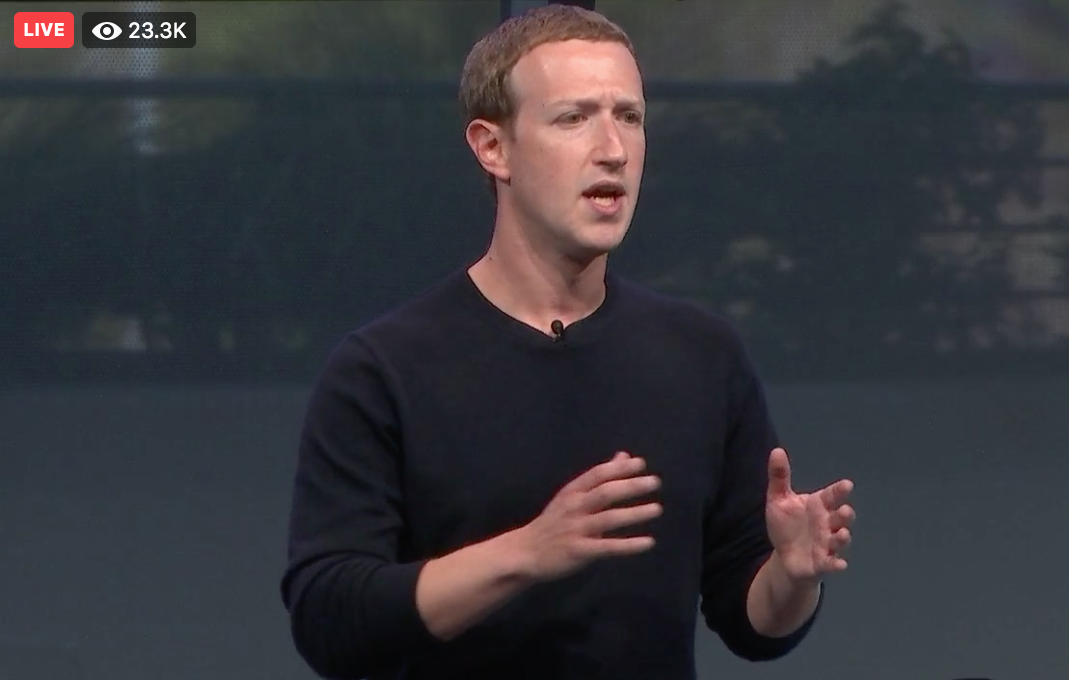
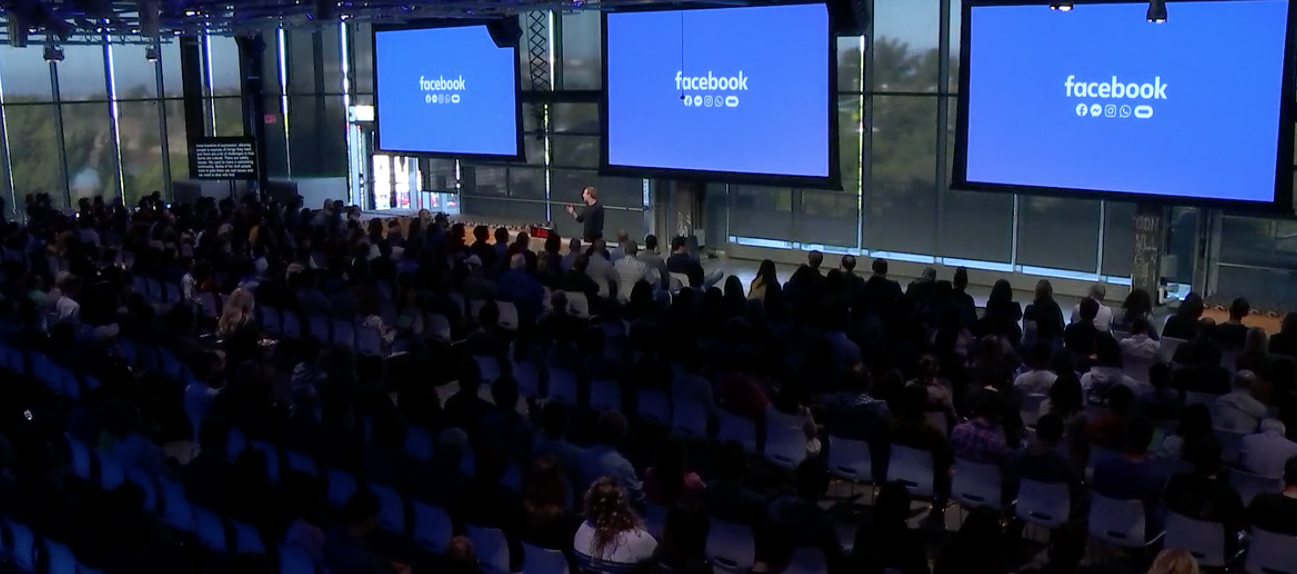
But today during a livestreamed Q&A with Facebook employees, CEO Mark Zuckerberg said that “This is something I expect us and other companies will be litigating.”

Live from our weekly internal Q&A

Live from our weekly internal Q&A

Posted by Mark Zuckerberg on Thursday, October 3, 2019

Zuckerberg explained that Facebook had “successfully fought” overly broad takedown requests in the past. He also noted that “a lot fo the details about exactly how [the ruling gets] implemented will depend on national courts across Europe.”

Facebook told TechCrunch in a statement today that:

“This judgement raises critical questions around freedom of expression and the role that internet companies should play in monitoring, interpreting and removing speech that might be illegal in any particular country.

At Facebook, we already have Community Standards which outline what people can and cannot share on our platform, and we have a process in place to restrict content if and when it violates local laws. This ruling goes much further.

It undermines the long-standing principle that one country does not have the right to impose its laws on speech on another country. It also opens the door to obligations being imposed on internet companies to proactively monitor content and then interpret if it is “equivalent” to content that has been found to be illegal.

 In order to get this right national courts will have to set out very clear definitions on what “identical” and “equivalent” means in practice. We hope the courts take a proportionate and measured approach, to avoid having a chilling effect on freedom of expression.”

Zuckerberg hadn’t done a livestreamed Q&A recently, but holds them weekly inside Facebook. Yet after The Verge’s Casey Newton published two-hours of leaked audio from Facebook internal all-hands meetings, Zuckerberg is trying to show he has nothing to hide.

Zuckerberg Live QA

During pre-question remarks, Zuckerberg also discussed the US Attorney General Bill Bar’s open letter from the US, UK, and Australia demanding that Facebook halt the expansion of encryption across all its messaging apps. “We get that there are real concerns with doing that ” Zuckerberg said. “There are these different equities we try to balance”, specifically safety needs like catching child abusers and terrorists versus privacy and protecting political dissidents as well as normal citizens.

The CEO argued Facebook could still police encrypted apps, noting the “There’s a lot we can do with detecting patterns” including linking accounts together so it can shut down the WhatsApp accounts of bad actors on Facebook, and that Facebook can “find it upstream” by analyzing suspicious activity outside of the messages threads themselves. He also mentioned that iMessage is the top US messaging app and it’s encrypted too, showing Facebook isn’t the only one pushing private messaging and clearly users want it.

Queried about Bernie Sanders’ statement that “billionaires shouldn’t exist”, Zuckerberg said “no one deserves to have that much money”. That’s despite having a fortune north of $60 billion, though much of it is dedicated to the Chan Zuckerberg Foundation that works on social and science causes.

Zuckerberg All Hands

Zuckerberg was asked about concerns that his comments regarding Facebook would likely sue to stop an attempt by regulators to break it up. He’d discussed how Presidential candidate Elizabeth Warren had made the break-up a core piece of her policy slate, which led to questions about whether Facebook might try to minimize the reach of her statements or avoid voter registration that could aid.

Zuckerberg crystallized the question, saying “If Facebook is worried about Elizabeth Warren becoming president because of that thing, …how can we be trusted to be impartial and make sure she and other people get a voice?” He said that “Even when people disagree with what I think would be good…I still want to give them a voice … We need to be able to put what people want to express…above our preferences all the time.”

Today’s session certainly felt more guarded than the leaked Q&As. At one point Zuckerberg noted he wouldn’t share stats on Facebook Dating because it wasn’t a private discussion. Yet the talk still helped clarify critical Facebook policy positions are a tumultuous time for the company.

Zuckerberg joked at the beginning of the Q&A that he’s making this one publicly available because “I do such a bad job in interviews that it’s like, what do we have to lose?”


from RSSMix.com Mix ID 8176981 https://techcrunch.com/2019/10/03/zuckerberg-vs-ecj/
http://www.gadgetscompared.com
from Tumblr https://ikonografico.tumblr.com/post/188123321516
via http://www.gadgetscompared.com

Thursday, October 3, 2019

Instagram launches Threads, a Close Friends chat app with auto-status

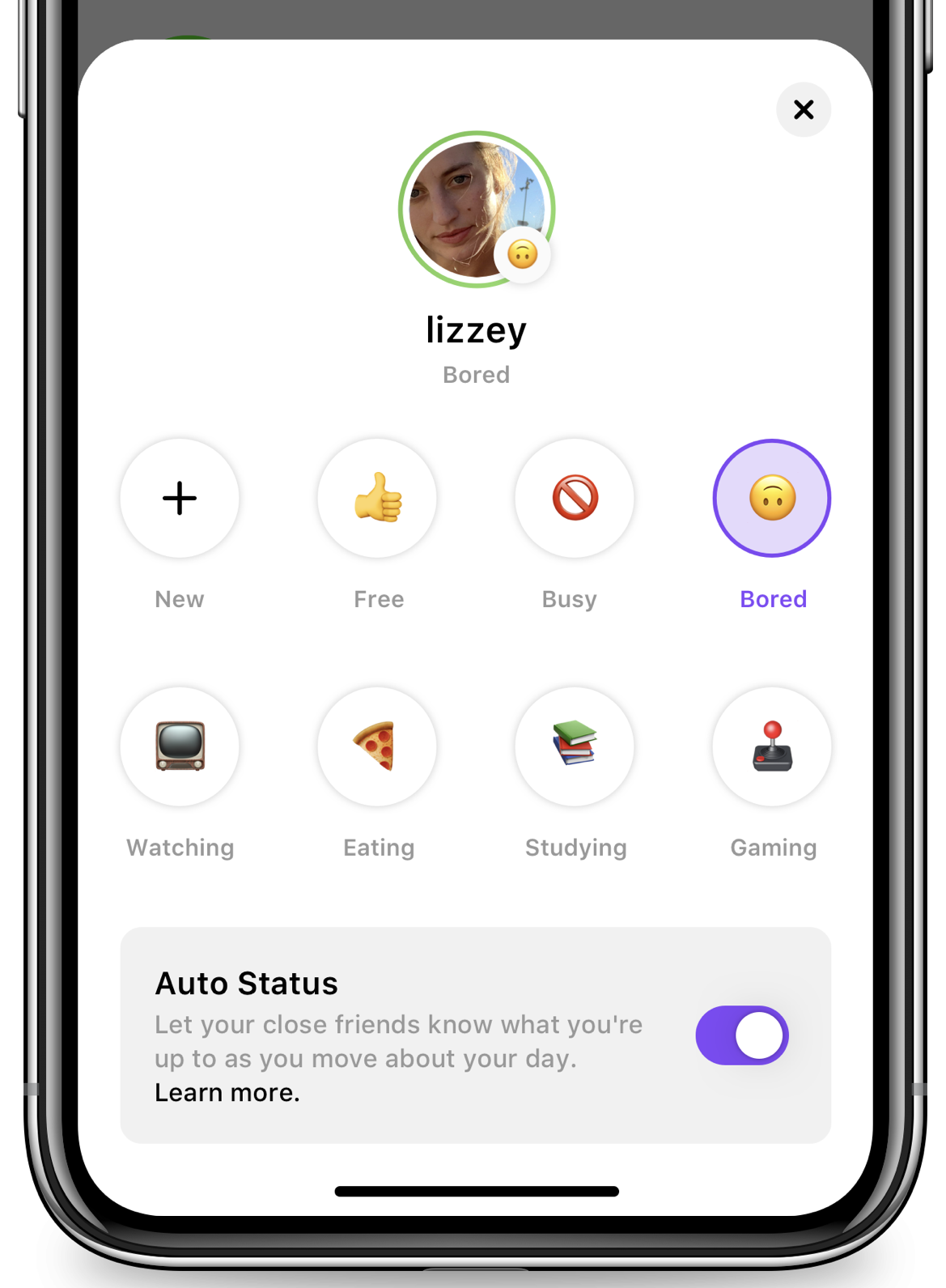
What if Instagram could automatically tell your Close Friends you’re 🏠 (home), πŸ€“ (working), πŸš— (on the move), or πŸ›‹ (chilling and might want to hang out)? That’s the idea behind Instagram’s new companion app Threads, a Close Friends-only messaging experience that opens to the camera with shortcuts for instantly sending specific people photos and videos. Threads offers two brand new features called Status and Auto-Status that allow you to manually set an emoji as an away message to show Close Friends what you’re up to, or opt in to letting Instagram select one automatically based on your location, accelerometer, and even your phone’s battery level.
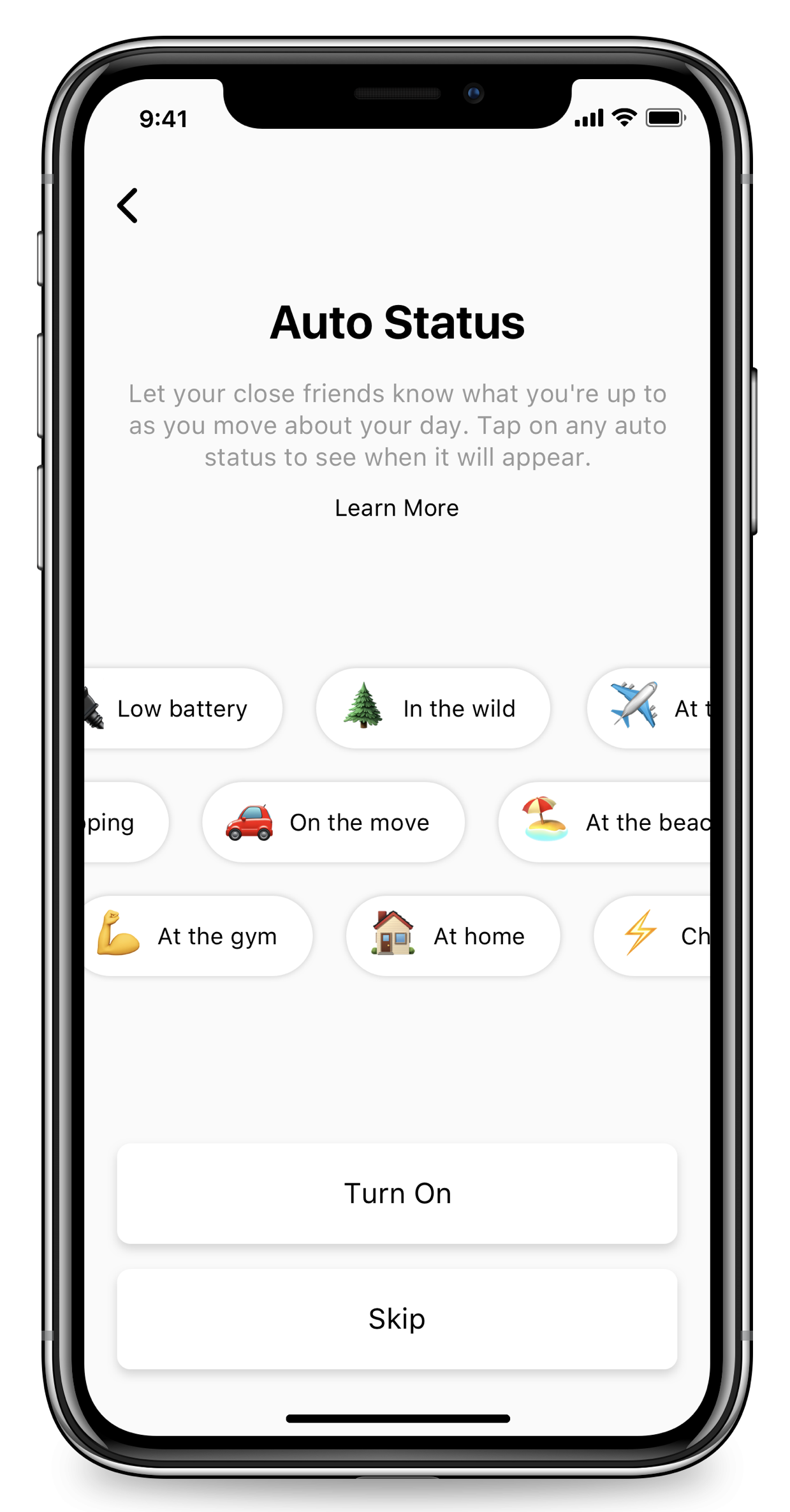
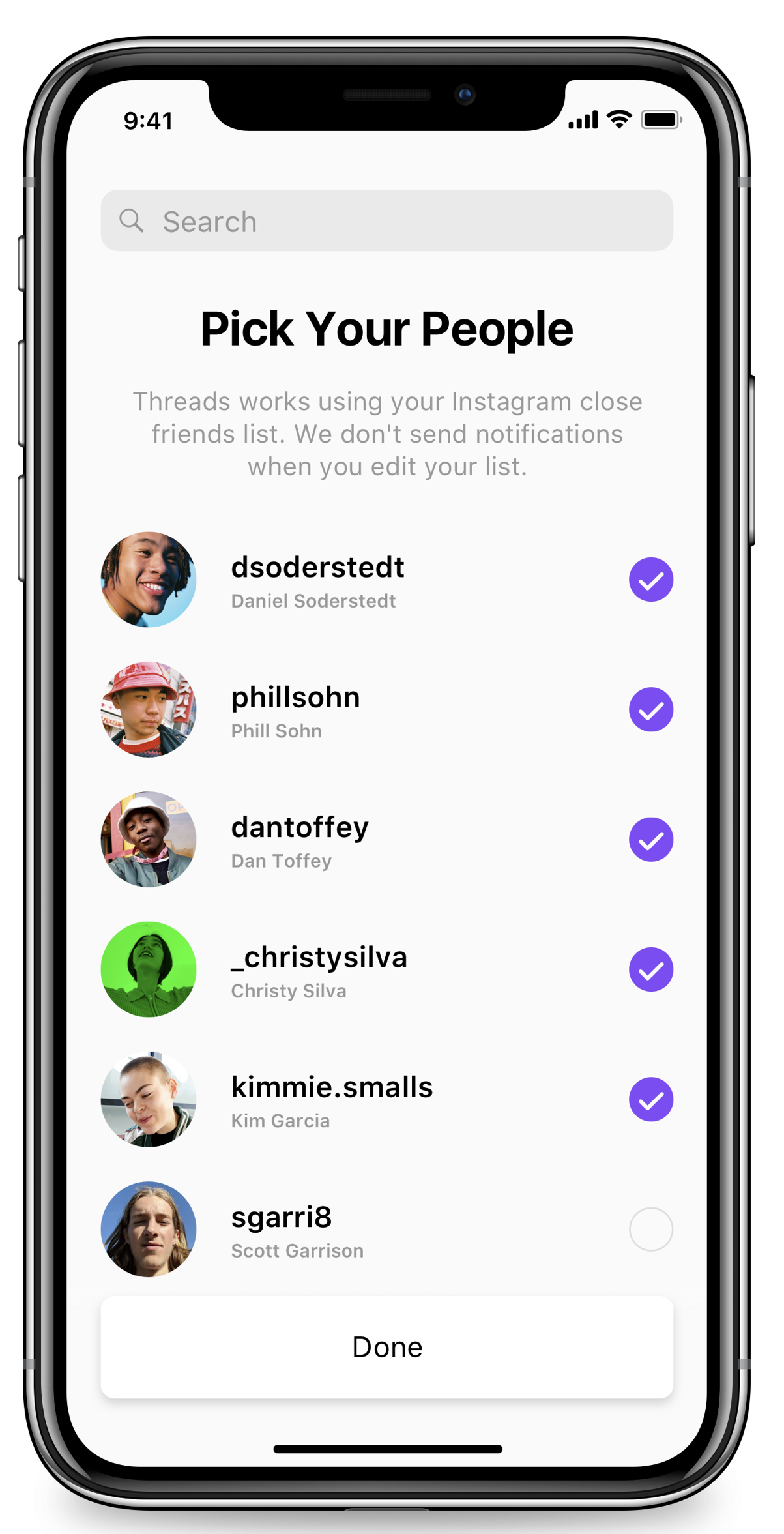
Instagram Threads Auto StatusLaunching globally today on iOS and Android, this is Facebook and Instagram’s next big swing at Snapchat, specifically targeting its top use case: rapid-fire camera and text messaging with your best friends. Sick of randos in your inbox? Only people in your Instagram Close Friends list show up in Threads so you can trust its notifications are important. You can still just use Instagram Direct in the main app or the two in parallel, though.

What’s most unique is that Threads finally sees the launch the Facebook “Your Emoji” status feature we reported it was prototyping 18 months ago. Threads Status and Auto-Status offer conversation starters, contextual clues to why someone might not respond, and opportunities to meet up offline. But importantly, it leaves out a map or any exact location sharing to avoid being creepy and instead focus on what Close Friends are up to — which determines if they can chat or hang out more than where they are.

Threads offers “persistent connection”, Instagram’s Director of consumer product management Robby Stein tells me. It was designed with three priorities: the ability to “fully control who can reach you”, speed because “If most of your messages only go to a couple of people, why isn’t the experience built around that?”, and “Having more of a connection through the day … even if you don’t have time for a conversation.”

By building Threads as a separate app, Instagram has little to lose if it flops and could learn about what features to pull back into its main app. But if it succeeds, Threads cement itself as where you stay in touch with your favorite people, while pigeonholing other messaging options like SMS, WeChat, as Snapchat as noisy channels full of unwanted alerts.

Close Friends Only

Social networks have an inevitable problem. Eventually out of coincidence and courtesy, you add too many people as friends, filling the apps with people who’s content you don’t care about and who’s messages you don’t always want. Facebook, the catch-all network for everything from family to bosses to acquaintances. That leads people to feel uncomfortable sharing too much, and to distrust that the notifications they get are important.

Instagram Close Friends ThreadsNow Instagram is doubling-down on Close Friends which launched last November at TechCrunch Disrupt Berlin to let you secretly set a special group of best pals who get to see special Stories you set as visible to only them. Facebook had tried complicated Lists products in the past and never seen them gain significant traction because it’s too tough to keep track of who’s in each. Instagram nailed the concept with a single list you edit as needed, though people don’t know if they’re added or removed. I’m surprised Facebook doesn’t already have its own Close Friends feature and it’d be smart to build one.

Instagram already tried building its own standalone Direct messaging app, but shut it down after low usage since it didn’t offer anything beyond what you already got in the main app. Casey Newton of The Verge reported Instagram was building an app with automatic activity sharing in August.

Now with Threads, Close Friends creates the foundation for something different. The only entries in your inbox are Close Friends, which you can edit in the app with the list syncing with your list on Instagram. You can hide any of those chats or group chats with exclusively close friends if you don’t want to see them.

When you open Threads, you’ll see open immediately to the camera like Snapchat. At the bottom are “Camera Shortcuts” that show friends’ faces you can tap on to send a photo or tap and hold for a video. You can also tap the “default camera” shutter and the select everyone you want to message. Since it’s focused on speed, there are no filters or augmented reality masks, just drawing and text overlays for off-the-cuff commentary on what’s going on around you.

Swiping up from the camera reveals the Threads inbox, where you can tap into a conversation for a full-featured messaging experience just like in Instagram Direct. There you can send GIFs, camera roll content, and more. Without unsolicited messages in your inbox, your most important people stay closer to the top. “I see more of my wife’s life now that we’re in this product” Stein tells me.

Ambient Sharing With Auto-Status

With Status, you can set an emoji as your away message for one to four hours. You can select from pre-made ones with their own text tag lines, or define a new one from the full range of emoji. You can say you’re πŸ‘ (free), 🚫 (busy), πŸ“š (studying), or make something personal like 😈 (getting into trouble).

Meanwhile, Auto-Status defaults to off but can be turned on to give Instagram the ability to use data signals to choose an emoji for you. It will match your exact location to specific places like Home, Work, cafes, bars, traveling out of town and more. Your accelerometer lets it show if you’re biking or driving. And your phone battery can let it display that you’re low on juice or currently charging.

Instagram threads Status

Why share my batter status? Stein tells me that if you’re charging your phone, you might not be next to it and could be slow to respond. Or if you’re low battery, you might suddenly stop replying all together. That’s helpful knowledge to share with Close Friends even if it’d be weird to post it more widely.

One problem is that who you want to message with often might include family or co-workers that you don’t want to have see your Close Friends Stories, but the list is used for both. At the same time, Threads could boost Close Friends usage, leading people to share more intimate and silly stuff on Stories which do help Instagram earn money thanks to the ads in between.

Instagram threads logo

For now, though, Instagram tells me there’s no plan to monetize Threads directly or show any ads in it. In fact, Facebook won’t even use the exact locations pulled from the app to power ad targeting. Coordinates are only sent so it can match them to locations like a movie theater to show you’re at the movies. Facebook won’t store the locations and they only stay on your device for a short period before they’re deleted.

Still, Auto-Status is sure to rile some who think Facebook and Instagram are too creepy to give any more data. But if the convenience of knowing your friend is available to hang out or is probably too stressed for a chat outweighs the company’s toxic brand, Instagram could develop an important new social behavior. Even if it doesn’t monetize it directly, Threads could keep users locked into the Insta ecosystem where they’ll see plenty of feed and Story ads between message bouts.

Social graph bloat causes a chilling effect on sharing. It’s what Snapchat, Path, and other apps have tried to solve but ended up succumbing to. Instagram accepts that you’ll inevitably connect with people you don’t care much about out of social obligation, pity, or apathy. But by building whole products around just sharing with your favorite subset of people, it could unlock what we self-center — the real us.


from RSSMix.com Mix ID 8176981 https://techcrunch.com/2019/10/03/instagram-launches-threads-a-close-friends-chat-app-with-auto-status/
http://www.gadgetscompared.com
from Tumblr https://ikonografico.tumblr.com/post/188110830431
via http://www.gadgetscompared.com

Stock trading app Robinhood revamps its newsfeed with The Wall Street Journal and ad-free videos

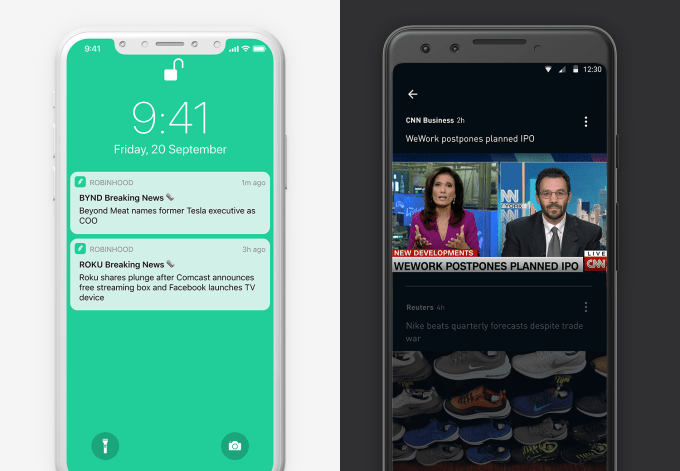
Robinhood may be best known its free stock trading, but today it’s rolling out a new version of the newsfeed, adding content from Reuters, Barron’s and market coverage from The Wall Street Journal, with no paywall or additional charge.

In addition, Robinhood is introducing video into the newsfeed, with ad-free videos from CNN Business, Cheddar and (again) Reuters.

The startup, which recently raised $323 million at a $7.6 billion valuation, has been showing more interest in content lately with the acquisition of the financial podcast and newsletter MarketSnacks — and as part of the redesign, the newsletter (now called Snacks) can be read directly in the app.

“A lot of this is not even about making investment decisions,” Robinhood’s Vice President of Product Josh Elman told me. “[Some users] check Robinhood very, very often just to consume the news and understand the companies that they’re watching, the ones that they are invested in and continuing to hold.”

He added that just buying and selling stocks is “sort of a utility,” so Robinhood wants to help its users “to feel informed, to be empowered to make their own decisions.”

Robinhood newsfeed

Before redesigning the newsfeed, Elman said the team did a seven-day study, where they asked subjects to create a diary of “all of their experiences reading and understanding market news.”

Among other things, Elman’s team learned that people “really want to read news from multiple, trusted sources,” which is why Robinhood is partnering with these publications. In addition, they saw that people like watching videos: “Even if it’s in the background, ultimately, people really told us they feel more confident and control in their decisions.”

Along with bringing in new content (which, again, is taken out from behind paywalls and is ad-free), Elman said the Robinhood newsfeed also features “all-new algorithms and a whole new display layer.” Robinhood users can see the new interface for themselves, but I was curious about those algorithms.

“We start with the companies you either own and hold in your portfolio or are watching, what types of sources do you frequently like to watch … and we make sure that we’re bringing you that news as much as possible,” Elman said. “And we have a lot of room to grow from here.”


from RSSMix.com Mix ID 8176981 https://techcrunch.com/2019/10/03/stock-trading-app-robinhood-revamps-its-newsfeed-with-the-wall-street-journal-and-ad-free-videos/
http://www.gadgetscompared.com
from Tumblr https://ikonografico.tumblr.com/post/188108759056
via http://www.gadgetscompared.com

Wednesday, October 2, 2019

Samsung pulls the plug on Chinese smartphone production

Samsung this morning confirmed with Reuters that it has shuttered handset production in China. The move comes as the company continues to struggle in the world’s No. 1 smartphone market.

As we noted in a deeper dive into China’s smartphone sales back in August, the Korean hardware giant has struggled to maintain a market share in the low single digits. It’s not alone, of course; Apple, too, has faced an uphill effort to crack the market, which is dominated by homegrown names, including Huawei, Vivo, Oppo and Xiaomi.

Sales have been driven by a combination of pricing and, in the case of embattled Huawei, patriotic purchasing decisions.

Samsung has slowly phased out production in the country over the past year, suspending operations in some plants, before ultimately pulling the plug altogether. The news follows a similar move by Sony. Apple, meanwhile, is maintaining its production in the country for now.

More recently, Samsung has looked to others countries, including India and Vietnam, which have undercut China’s production costs. The company will, however, continue selling phones in China, even as it eyes other cheaper locations for manufacturing.


from RSSMix.com Mix ID 8176981 https://techcrunch.com/2019/10/02/samsung-pulls-the-plug-on-chinese-smartphone-production/
http://www.gadgetscompared.com
from Tumblr https://ikonografico.tumblr.com/post/188100127971
via http://www.gadgetscompared.com