Wednesday, October 16, 2019

YouTube partners with Merchbar to sell music artists’ swag underneath videos

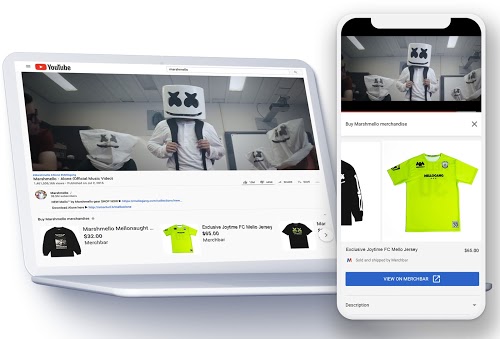
YouTube is partnering with Merchbar on a new integration that will allow artists to sell their official merchandise to their worldwide fans from a shelf just below the video.  The addition is the latest deal focused on helping video creators make more money from their videos, beyond the revenue brought in through advertisements and subscriptions.

Last year, YouTube announced a series of enhancements to the platform which focused on revenue generation, including channel memberships, premieres, merchandise, and more.

The merchandise feature was one of the more notable additions, as it lets creators put a shelf beneath their video where they can sell directly to fans. For example, they could sell their branded apparel like shirts and hats and other items.

At launch, YouTube had partnered with custom t-shirt maker Teespring on the effort. Earlier this year, the Merch shelf gained several more partners, including Crowdmade, DFTBA, Fanjoy, Represent and Rooster Teeth.

The company claimed at the time that “thousands” of channels had more than doubled their revenue as a result of Merch shelf and other integrations, like Super Chat and Channel Memberships.

youtube merchbar

With this new Merchbar partnership, YouTube is now focused on serving its artist community.

Merchbar today carries over 1 million items from 35,000 artists, making it one of the largest music merchandise aggregators worldwide. Now, YouTube artists who have an Official Artist Channel on the platform will be able to promote their merchandise right beneath their music videos. (Marshmello, never one to shy away from a marketing opportunity, made a soccer jersey exclusively for Merchbar and YouTube.)

As with prior merchandise integrations, the new Merchbar shelf will sit directly under videos on both desktop and web. Users can also click through from the shelf to the artist’s Merchbar website. In prior merchandise partnerships, YouTube took a small cut of transactions on items sold through its site. It didn’t say what sort of deal it has with Merchbar, however.

The launch comes at a time when Google is more heavily invested in its YouTube Music service, a Spotify and Apple Music rival designed to offer both music and videos, including content not found elsewhere like live performances or remixes. The company recently made the YouTube Music app the default music app on Android, which should boost its adoption.

Eligible artists who have a Merchbar store offering U.S. fulfillment can sign up for the new merch shelf from YouTube Studio.

The feature is launching first in the U.S., and will later expand internationally.


from RSSMix.com Mix ID 8176981 https://techcrunch.com/2019/10/16/youtube-partners-with-merchbar-to-sell-music-artists-swag-underneath-videos/
http://www.gadgetscompared.com
from Tumblr https://ikonografico.tumblr.com/post/188394197261
via http://www.gadgetscompared.com
This brilliant app waits on hold for you

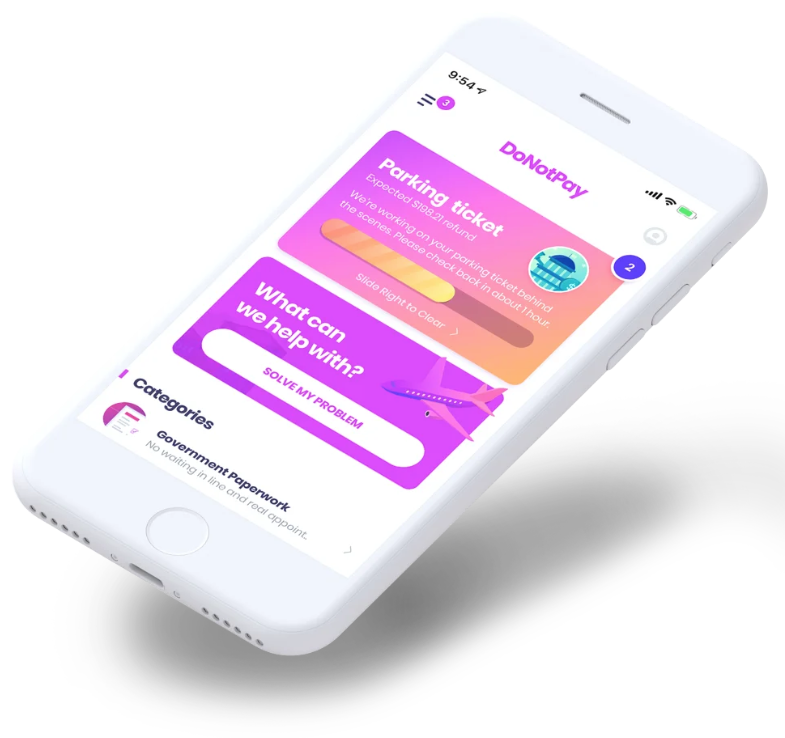
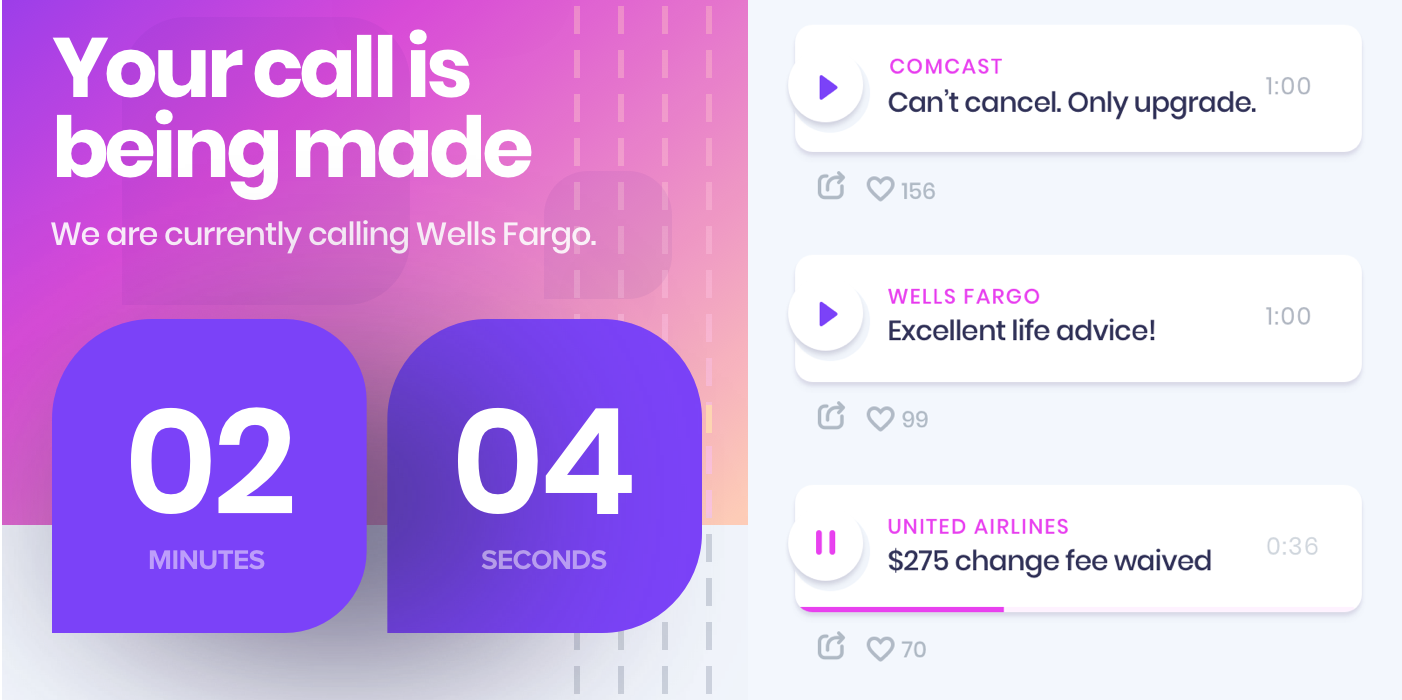
DoNotPay helps you get out of parking tickets, cancel forgotten subscriptions, and now it can call you when it’s your turn in a customer service phone queue. The app today is launching “Skip Waiting On Hold”. Just type in the company you need to talk to, and DoNotPay calls for you using tricks to get a human on the line quick. Then it calls you back and connects you to the agent so you never have to listen to that annoying hold music.

And in case the company tries to jerk you around or screw you over, the DoNotPay app lets you instantly share a legal recording of the call to social media to shame them.

How To Get Off hold

Skip Waiting On Hold comes as part of the $3 per month DoNotPay suite of services designed to save people time and money by battling bureaucracy on their behalf. It can handle DMV paperwork for you, write legal letters to scare businesses out of overcharging you, and it provides a credit card that automatically cancels subscriptions when your free trial ends.

“I think the world would be a lot fairer place if people had someone fighting for them” says DoNotPay’s 22-year-old founder Joshua Browder. $3 per month gets the iOS app‘s 10,000 customers unlimited access to all the features with no extra fees or commissions on money saved. “If DoNotPay takes a commission then we have an incentive to perpetuate the problems we are fighting against.”

Browder comes from a family of activists. His father Bill Browder got the Magnitsky Act passed, which lets the US government freeze the foreign assets and visas of human rights abusers. It’s named after Bill’s Russian lawyer who was murdered in Moscow after uncovering a $230 million government curruption scheme linked to President Putin’s underlings.

DoNotPay app

“These big companies [and governments] are getting away with a lot” Browder tells me. He hit a breaking point when frustrated with the process of appealing parking tickets. He built DoNotPay to cut through hassles designed to separate us from our money. In April it raised a $3.5 million seed round led by Felicis to develop an Android version after picking up early funding from Andreessen Horowitz. Surprisingly, the startup has never been sued.

For Skip Waiting On Hold, DoNotPay built out a database of priority and VIP customer service numbers for tons of companies. For legality, if you opt in to recording the exchanges, the app automatically plays a message informing both parties they’ll be recorded. A human voice detection system hears when a real agent picks up the phone, and then rings your phone. It’s like having customer service call you.

Not only can DoNotPay help you get in touch about cancelling subscriptions, scoring refunds, or retreiving information. It’s like “a body camera for customer service calls” Browder says. “Before they make a decision that rips off the customer, they’ll think ‘this could be made public and go viral and hurt our business.‘” For example, an airline that jacks up prices for rescheduled flights surrounding hurricanes could be shamed for profiting off of natural disasters.

Record and share customer service calls

The full list of DoNotPay services includes:

  1. Customer service disputes where it contacts companies about refunds for Comcast bills, delayed flights, etc
  2. The free trial credit card that auto-cancels subscriptions before you’re actually charged
  3. Traffic and parking appeals where it generates a letter for you based on answers to questions like if signs were too hard to read or there was a mistake on the ticket
  4. Hidden money discovery that finds refunds in your bank fees, identifies forgotten subscriptions, gets you free stuff on your birthday, and more
  5. Government paperwork assistance that can help you get DMV appointments and fill out forms
  6. Skip Waiting On Hold

Browder hopes that with time, companies and governments will make all these chores easier for everyone. To avoid putting itself out of a job, DoNotPay is constantly looking for new annoyances to eliminate. “I’m from the UK. America seems to be a pay-to-play society. The more money you have to more rights you have” Browder concludes. But those rights could be restored for all by building a robot lawyer that’s affordable to everyone.


from RSSMix.com Mix ID 8176981 https://techcrunch.com/2019/10/16/avoid-waiting-on-hold/
http://www.gadgetscompared.com
from Tumblr https://ikonografico.tumblr.com/post/188391750061
via http://www.gadgetscompared.com

Live Caption, Google’s automatic captioning technology, is now available on Pixel 4

Live Caption, Google’s automatic captioning system first introduced at its I/O developer conference this May, is now officially available, alongside the launch of the new Pixel 4. But unlike some of the other technologies highlighted at the company’s Pixel hardware event yesterday, Live Caption won’t be limited to Google’s new smartphone alone. After the initial debut on Pixel 4, the automatic captioning technology will roll out to Pixel 3, Pixel 3 XL, Pixel 3a and Pixel 3a XL before the year-end, says Google, and will become more broadly available in 2020.

The company has already offered automatic captions on YouTube for a decade, but that same sort of experience isn’t available across the wider web and mobile devices. For example, Google explains, you can’t read captions for things like the audio messages sent by your friends, on trending videos published elsewhere on social media, and on the content you record yourself.

There’s a significant accessibility issue with the lack of captions in all these places, but there’s a convenience issue, as well.

If you’re in a loud environment, like a commuter train, or trying to watch content privately and forgot your headphones, you may need to just use the captions. Or maybe you don’t want to blare the audio, which disturbs others around you. Or perhaps, you want to see the words appear because you’re having trouble understanding the audio, or just want to be sure to catch every word.

With the launch of the Pixel 4, Live Caption is also available for the first time to the general public.

The technology will capture and automatically caption videos and spoken audio on your device, except for phone and video calls. This captioning all happens in real-time and on your device — not in the cloud. That means it works even if your device lacks a cell signal or access to Wi-Fi. The captions also stay private and don’t leave your phone.

Google Live Caption UIDemo720 16MB

This is similar to how the Pixel 4’s new Recorder app functions. It, too, will do its speech-to-text processing all on your device, in order to give you real-time transcriptions of your meetings, interviews, lectures, or anything else you want to record, without compromising your privacy.

You can launch the Live Captions feature with a tap from the volume slider that appears, then reposition the caption box anything on your screen so it doesn’t get in the way of what you’re viewing.

Currently, the feature supports English only. But Google says it’s working to add more languages in the future.

After today’s launch on Pixel 4 and the rollout to the rest of the modern Pixel line of smartphones this year, it will start to show up in other new Android phones. Google says it’s working with other manufacturers to make the technology available to more people as soon as next year.


from RSSMix.com Mix ID 8176981 https://techcrunch.com/2019/10/16/live-caption-googles-automatic-captioning-technology-is-now-available-on-pixel-4/
http://www.gadgetscompared.com
from Tumblr https://ikonografico.tumblr.com/post/188387612391
via http://www.gadgetscompared.com

Tuesday, October 15, 2019

Hands-on with the new Pixel 4

After the onstage presentation at Made by Google 2019, we got our hands on a Pixel 4. In this video, you can watch us do a quick run-through of the major new features — like Motion Sense, which provides gesture controls that don’t require you to touch your phone, and improved Night Sight, which allows you to take high-quality photos in dark environments.

The Pixel 4 will start shipping on October 24, with a starting price of $799.


from RSSMix.com Mix ID 8176981 https://techcrunch.com/2019/10/15/hands-on-with-the-new-pixel-4/
http://www.gadgetscompared.com
from Tumblr https://ikonografico.tumblr.com/post/188373828541
via http://www.gadgetscompared.com
Up close with Google’s new Pixel 4

This is the Pixel 4, the handset that literally everyone saw coming. Even by Google’s standards, the handset leaked like crazy. Some was almost certainly by design as the company looked to hype up its new flagship amid slowing smartphone sales. That said, showing up for preorder on two different sites in the past few days is a lot, even by Pixel Standards.

From the front, at least, the new device doesn’t really stand out The standard Pixel 4 maintains some pretty sizable bezels on the top and bottom, even as most of the industry has moved toward a notch or hole punch to accommodate the camera.

CMB 8458

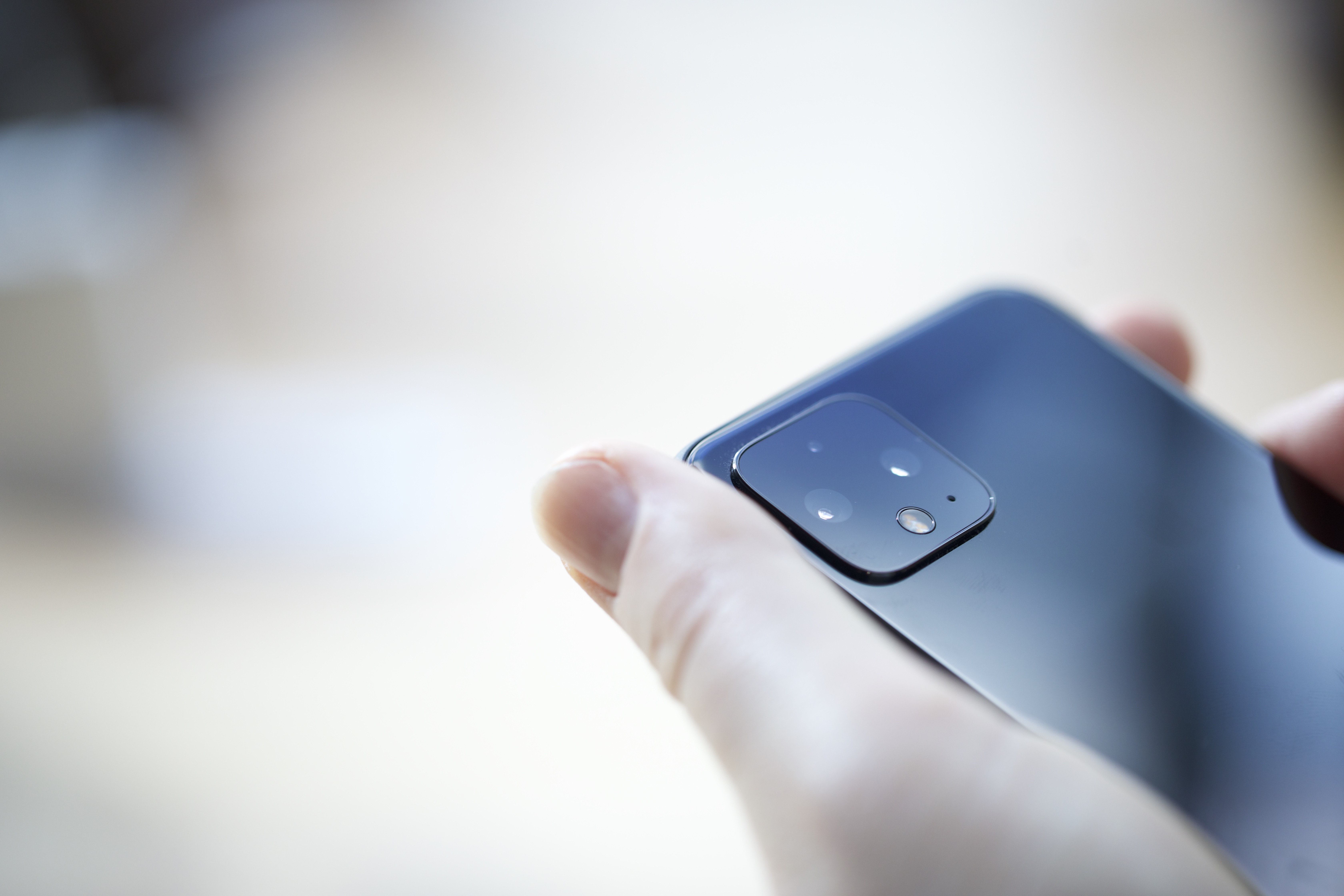
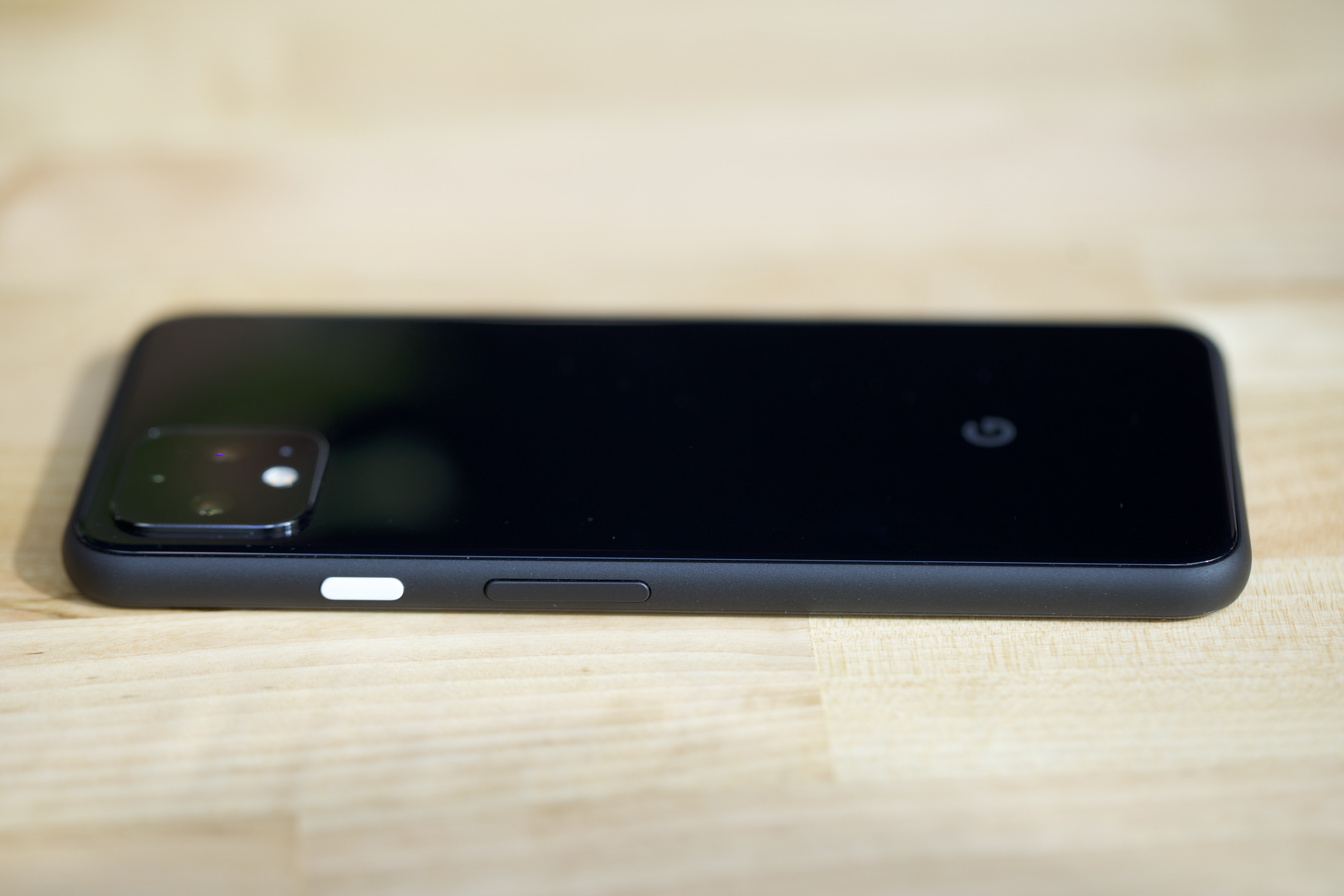
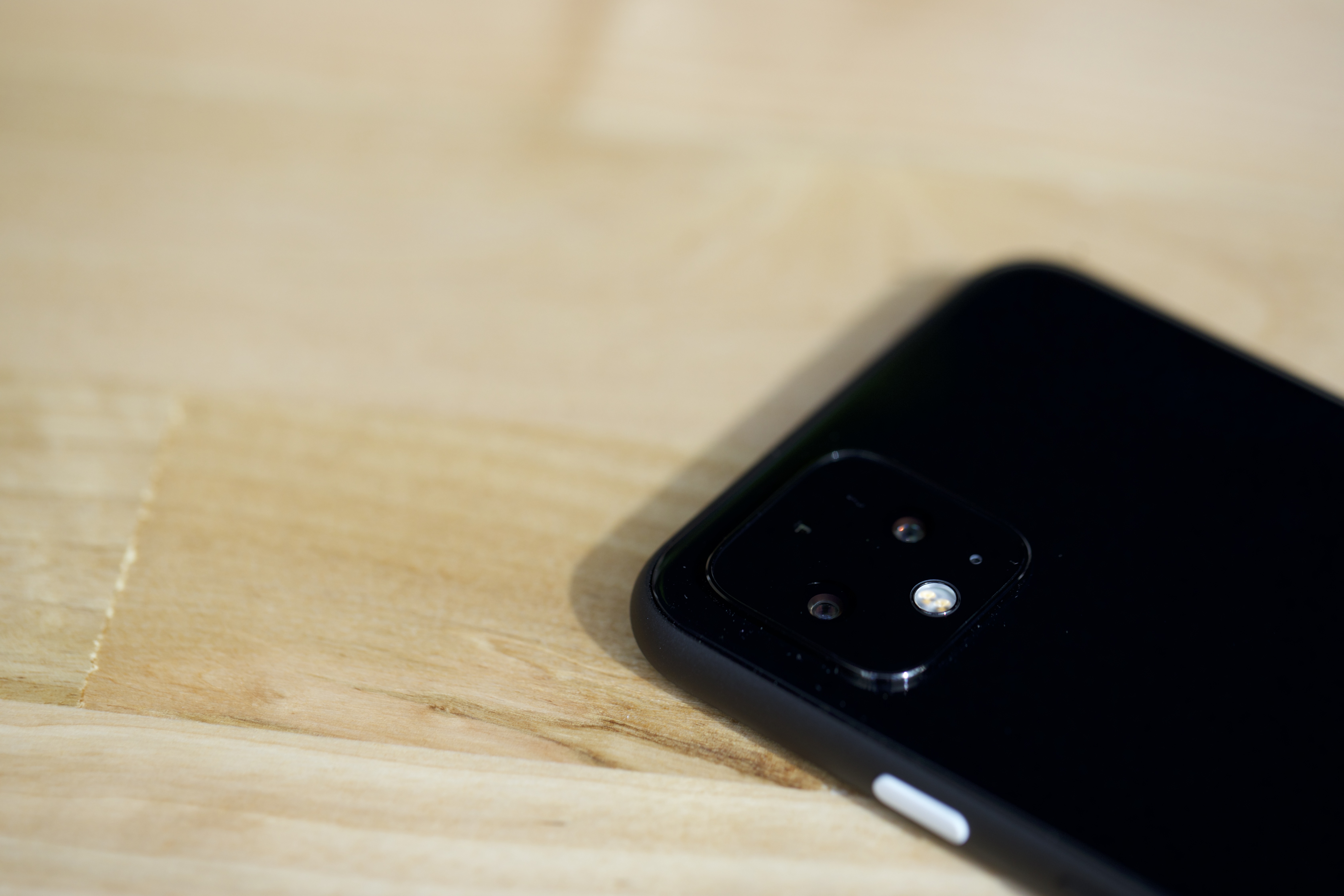
The back of the device is another story entirely, of course. After a few generations of pushing back on multiple camera setups, Google is finally embracing them with the 4. The pair of cameras are positioned in a square configuration, similar to the iPhone 11.

The sensor is up top and the flash is on the bottom, with the wide angle and telephoto sitting next to one another in the middle. There’s a 12- and 16-megapixel, per earlier leaks. I’ve included a handful of random shots I’ve taken here. They leave a little to be desire — more when we get our hands on the device later for a proper review, but this should give you some idea of what we’re working with here.

CMB 8438

Honestly, I’m pretty excited to see what’s on offer with the device here. Google’s always done a good job using AI/ML to augment the single lens configuration, so the idea of what it’s capable of producing in tandem with dual lenses could well make it a contender for one of the best camera phones on the market.

CMB 8437

Imagining has been improved across the board here, including the already solid Night Sight, Portrait Mode and zoom, which uses a hybrid of digital and the physical telephoto lens. I mean, if it’s good enough for Annie Leibovitz, right?

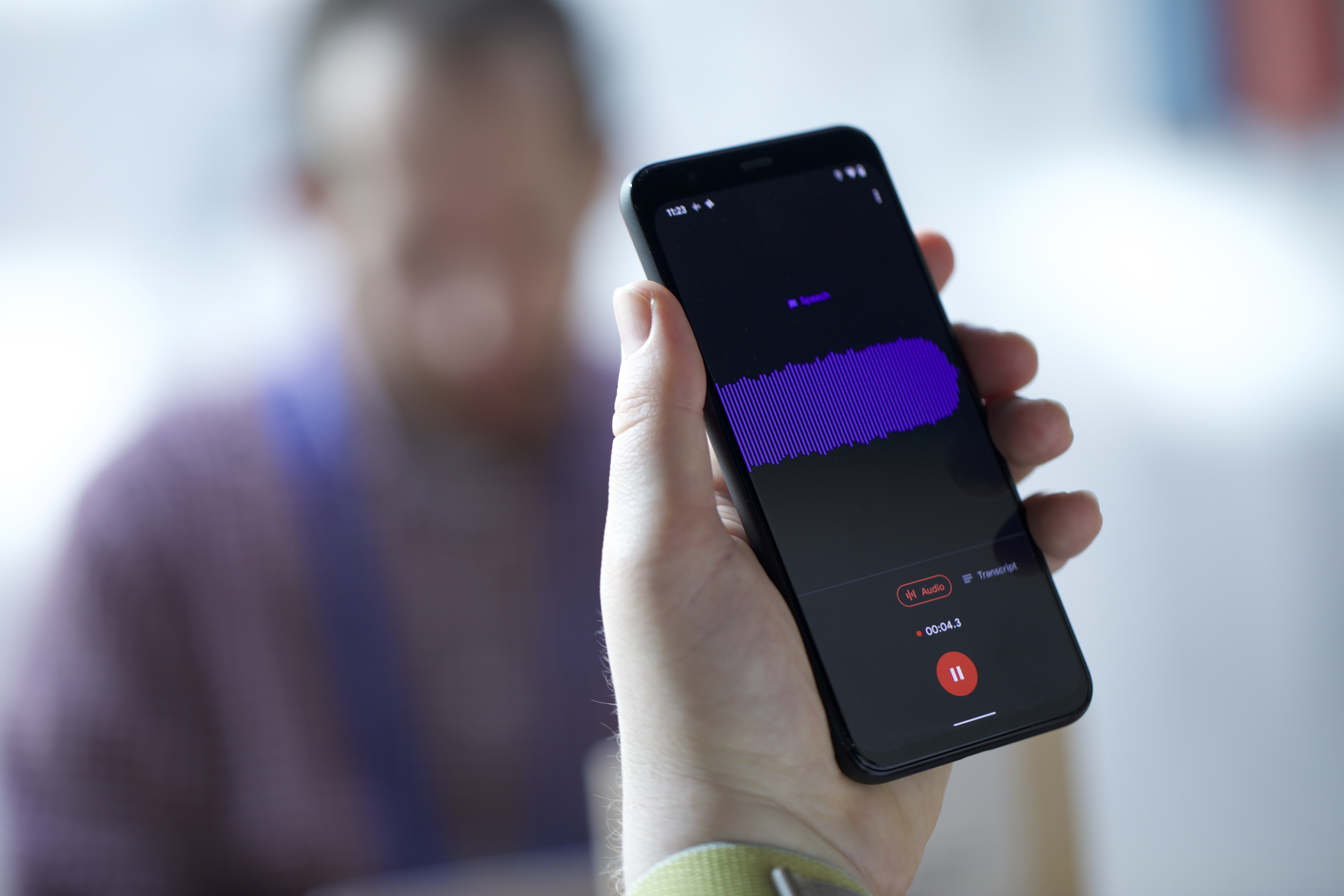
Recorder is an exciting new prospect for someone who makes a living interviewing people such as myself. I tried it out, but honestly, it leaves a bit to be desired in this super noisy setting. Again, a more official writeup of that later, though I do appreciate that the company is doing the transcribing on-board, versus the cloud.

[gallery ids=“1897517,1897523,1897518”]

That means a faster response and no concern over more sensitive stuff. Once recording, you’ll see a gray wave form that turns blue when speech is detected. Tapping “transcript” will show the speech. From there you can share it via social media or save it to Google Drive.

CMB 8450

It’s fun to see Google embracing gestures here, as a natural followup to its squeezable Active Edge. Admittedly, it’s something that plenty of phone makers have tried with limited success Perhaps the inclusion of the new radar chip will save it from accidental gestures and make it more user friendly.

Screen Shot 2019 10 15 at 12.01.18 PM

Or maybe the inclusion of a kind of game where you can wave at Pikachu and other Pokemon will help with adoption. I don’t have particularly high hopes on either one, if I’m being honest Training users on a new form of input is an uphill climb, though the gestures are pretty responsive. At least everyone is already familiar with face unlocks which is augmented by the aforementioned radar feature, detecting the user as they reach for the phone and beginning the unlock process from there.

The handset ships October 24, starting at $799. Look for a much meatier review in the near future.


from RSSMix.com Mix ID 8176981 https://techcrunch.com/2019/10/15/up-close-with-googles-new-pixel-4/
http://www.gadgetscompared.com
from Tumblr https://ikonografico.tumblr.com/post/188369337151
via http://www.gadgetscompared.com
Annie Leibovitz used the Pixel 4 to shoot a new collection of photos

Google ended today’s hardware event by going deep on the photo technology in its new Pixel 4, and brought out someone who’s actually been using the camera — legendary photographer Annie Leibovitz.

The company announced that it’s working with Leibovitz back in October 2018. Today, she spoke about the experience of working with the Pixel 3 and Pixel 4 for the past year.

Leibovitz told the audience that while she’s been using cameraphones for a while, she was “dying for this opportunity, to be given this opportunity by Google” to go out and use a cameraphone as a professional photographer.

The discussion didn’t include too many details about the project itself — from what I gathered, it’s a collection of photos of a wide range of activists and “changemakers.” Leibovitz said each portrait is a “diptych,” combining a photo of the ostensible subject with a second photo of something that’s important to them and their work.

She admitted that in the beginning, she had “a little bit of a rough start,” but as time went on, Leibovitz said, “I just relaxed and I totally enjoyed myself.” For example, she said her final shoot was with soccer star Megan Rapinoe, and she described the experience as one where “it really felt like we were just floating … I wasn’t really thinking about the camera.”

Google’s Lily Lin ended their conversation by asking about “pro tips” for other photographers.

“It’s all inside you,” Leibovitz replied. “You just go out and you do it … I mean, we all are using this camera, and it’s a brand new language.”


from RSSMix.com Mix ID 8176981 https://techcrunch.com/2019/10/15/annie-leibovitz-pixel-4/
http://www.gadgetscompared.com
from Tumblr https://ikonografico.tumblr.com/post/188369337111
via http://www.gadgetscompared.com

Germany says it won’t ban Huawei or any 5G supplier up front

Germany is resisting US pressure to shut out Chinese tech giant Huawei from its 5G networks — saying it will not ban any supplier for the next-gen mobile networks on an up front basis, per Reuters.

“Essentially our approach is as follows: We are not taking a pre-emptive decision to ban any actor, or any company,” government spokesman, Steffen Seibert, told a news conference in Berlin yesterday.

The country’s Federal Network Agency is slated to be publishing detailed security guidance on the technical and governance criteria for 5G networks in the next few days.

The next-gen mobile technology delivers faster speeds and lower latency than current-gen cellular technologies, as well as supporting many more connections per cell site. So it’s being viewed as the enabling foundation for a raft of futuristic technologies — from connected and autonomous vehicles to real-time telesurgery.

But increased network capabilities that support many more critical functions means rising security risk. The complexity of 5G networks — marketed by operators as “intelligent connectivity” — also increases the surface area for attacks. So future network security is now a major geopolitical concern.

German business newspaper Handelsblatt, which says it has reviewed a draft of the incoming 5G security requirements, reports that chancellor Angela Merkel stepped in to intervene to exclude a clause which would have blocked Huawei’s market access — fearing a rift with China if the tech giant is shut out.

Earlier this year it says the federal government pledged the highest possible security standards for regulating next-gen mobile networks, saying also that systems should only be sourced from “trusted suppliers”. But those commitments have now been watered down by economic considerations at the top of the German government.

The decision not to block Huawei’s access has attracted criticism within Germany, and flies in the face of continued US pressure on allies to ban the Chinese tech giant over security and espionage risks.

The US imposed its own export controls on Huawei in May.

A key concern attached to Huawei is that back in 2017 China’s Communist Party passed a national intelligence law which gives the state swingeing powers to compel assistance from companies and individuals to gather foreign and domestic intelligence.

For network operators outside China the problem is Huawei has the lead as a global 5G supplier — meaning any ban on it as a supplier would translate into delays to network rollouts. Years of delay and billions of dollars of cost to 5G launches, according to warnings by German operators.

Another issue is that Huawei’s 5G technology has also been criticized on security grounds.

A report this spring by a UK oversight body set up to assess the company’s approach to security was damning — finding “serious and systematic defects” in its software engineering and cyber security competence.

Though a leak shortly afterwards from the UK government suggested it would allow Huawei partial access — to supply non-core elements of networks.

An official UK government decision on Huawei has been delayed, causing ongoing uncertainty for local carriers. In the meanwhile a government review of the telecoms supply chain this summer called for tougher security standards and updated regulations — with major fines for failure. So it’s possible that stringent UK regulations might sum to a de facto ban if Huawei’s approach to security isn’t seen to take major steps forward soon.

According to Handelsblatt’s report, Germany’s incoming guidance for 5G network operators will require carriers identify critical areas of network architecture and apply an increased level of security. (Although it’s worth pointing out there’s ongoing debate about how to define critical/core network areas in 5G networks.)

The Federal Office for Information Security (BSI) will be responsible for carrying out security inspections of networks.

Last week a pan-EU security threat assessment of 5G technology highlighted risks from “non-EU state or state-backed actors” — in a coded jab at Huawei.

The report also flagged increased security challenges attached to 5G vs current gen networks on account of the expanded role of software in the networks and apps running on 5G. And warned of too much dependence on individual 5G suppliers, and of operators relying overly on a single supplier.

Shortly afterwards the WSJ obtained a private risk assessment by EU governments — which appears to dial up regional concerns over Huawei, focusing on threats linked to 5G providers in countries with “no democratic and legal restrictions in place”.

Among the discussed risks in this non-public report are the insertion of concealed hardware, software or flaws into 5G networks; and the risk of uncontrolled software updates, backdoors or undocumented testing features left in the production version of networking products.

“These vulnerabilities are not ones which can be remedied by making small technical changes, but are strategic and lasting in nature,” a source familiar with the discussions told the WSJ — which implies that short term economic considerations risk translating into major strategic vulnerabilities down the line.

5G alternatives are in short supply, though.

US Senator Mark Warner recently floated the idea of creating a consortium of ‘Five Eyes’ allies — aka the U.S., Australia, Canada, New Zealand and the UK — to finance and build “a Western open-democracy type equivalent” to Huawei.

But any such move would clearly take time, even as Huawei continues selling services around the world and embedding its 5G kit into next-gen networks.


from RSSMix.com Mix ID 8176981 https://techcrunch.com/2019/10/15/germany-says-it-wont-ban-huawei-or-any-5g-supplier-up-front/
http://www.gadgetscompared.com
from Tumblr https://ikonografico.tumblr.com/post/188366173596
via http://www.gadgetscompared.com