French startup Shine is adding a new option today. If you think there’s a chance that a client is not going to pay your next invoice, you can insure that invoice to avoid any bad surprise.
Shine is building a challenger bank for freelancers and small companies. It lets you send and receive money in a separate business account, pay with a MasterCard, create invoices and stay on top of administrative tasks.
It also helps you get started as the startup can fill out all administrative paperwork to register yourself as a freelancer. You also get notifications to remind you that you should pay your taxes and more. Starting accepting freelancing jobs can be confusing and Shine can help you with that.
Shine has a built-in invoicing tool. It lets you add a client and generate an invoice directly in the mobile app. After that, you can send a link to your client. You get a notification when your client opens the invoice. They can download a PDF and get your bank details to pay you.
And yet, many clients often wait until the last minute to pay an invoice. It can be a month or two after finishing a job, which means that they also forget about outstanding invoices.
In a few weeks, Shine users will be able to create an invoice and insure it before sending it. It costs you 2% of your total amount on your invoice. There’s no subscription fee, it’s a one-off process.
If your client hasn’t paid you after the due date, Shine will reach out to your client again to try to get the payment. If that doesn’t work, you can file a claim with the partner insurance company.
In that case, if the company is still operating, you get paid 100% of your invoice. If the company has collapsed, you get 90% back. (Of course, that’s without taking into account the 2% fees you already paid.)
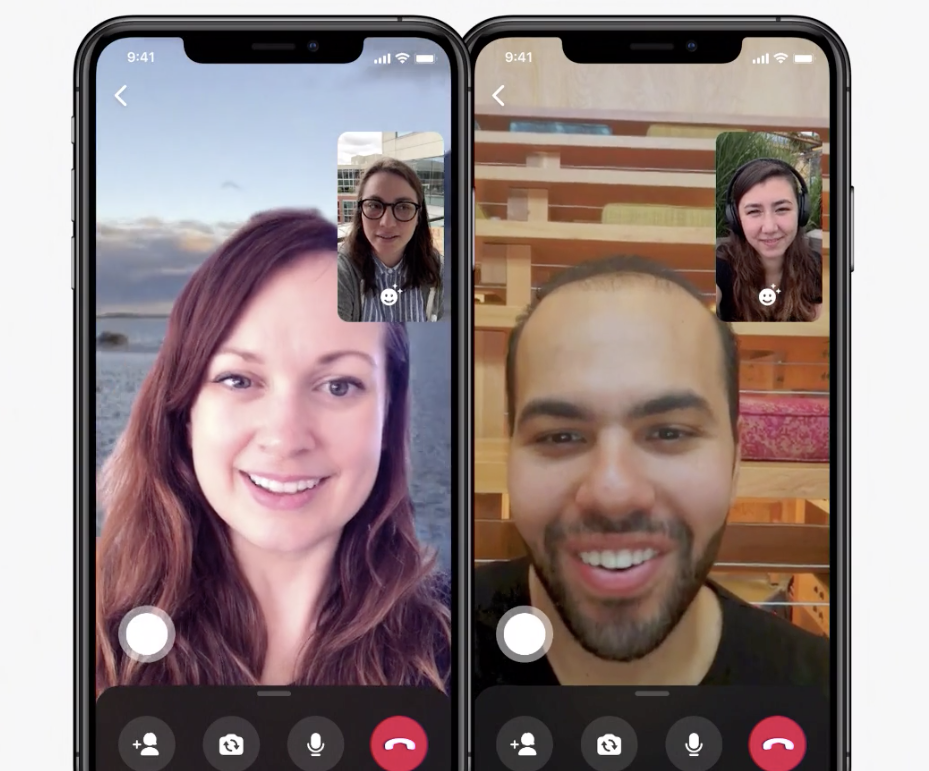
Facebook will soon allow users to go on “virtual dates,” the company announced today. The social network is planning to introduce a new video calling feature that will allow users of its Facebook Dating service to connect and video call over Messenger, as an alternative to going on a real-world date. This sort of feature is much in demand amid the coronavirus pandemic, which has forced people to stay home and practice social distancing.
But for online dating apps which aim to connect people in the real world, it’s a significant challenge for their business.
For the time being, government lockdowns have limited the places where online daters could meet up for their first date. Restaurants, malls, bars, and other retail establishments are closed across regions impacted by the coronavirus outbreak. But even when those restrictions life, many online dating app users will be wary of meeting up with strangers for those first-time, getting-to-know-you dates. Video chat offers a safer option to explore potential connections with their matches.
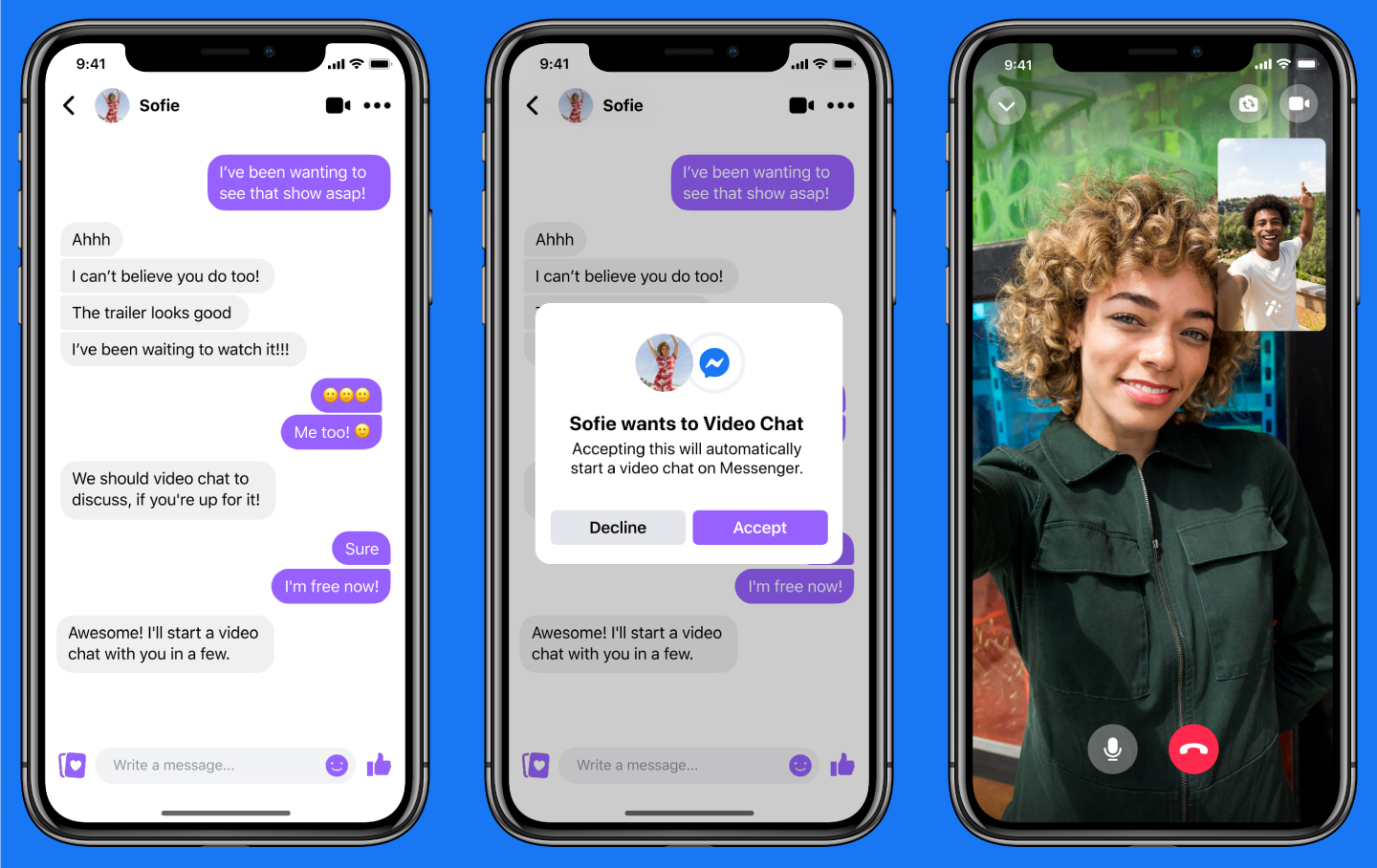
When the new Facebook Dating feature goes live, online daters will be able to invite a match to a virtual date. The recipient can either choose to accept or decline the offer via a pop-up that appears.
If they accept, the Facebook Dating users will be connected in a video chat powered by Facebook Messenger in order to get to know one another.
As the feature is still being developed, Facebook declined to share more specific details about how it will work, in terms of privacy and security features.
Facebook is not the first online dating service to pivot to video as a result of the pandemic. But many rival dating apps were adopting video features well before the coronavirus struck, as well.
Bumble, for example, has offered voice and video calling in its app for roughly a year. The feature there works like a normal phone call or Apple’s FaceTime. However, users don’t have to share their phone number or other private information, like an email address, which makes it safer.
The company says use of the feature has spiked over the last two months as users embrace virtual dating.
Meanwhile, Match Group has more recently rolled out video across a number of the dating apps it operates.
This month, the Match app added video chat that allows users who have already matched to connect over video calls. Match-owned Hinge also rolled out a “Dating from Home” prompt and is preparing its own live video date feature, as well, Match says. Plenty of Fish (PoF), another Match property, launched livestreaming in March, giving singles a new way to hang out with friends and potential matches.
Match Group’s flagship app Tinder has not yet embraced live video dates, but still offers a way for users to add video to their profiles. The company couldn’t comment on whether or not video dating was in the works for Tinder, but in the post-COVID era, it would be almost bizarre to not offer such feature.
Other dating apps have also launched video dating, including eHarmony and a number of lesser-known dating apps hoping to now gain traction for their video dating concepts.
Facebook says the feature will roll out in the months ahead and will be available everywhere Facebook Dating is available.
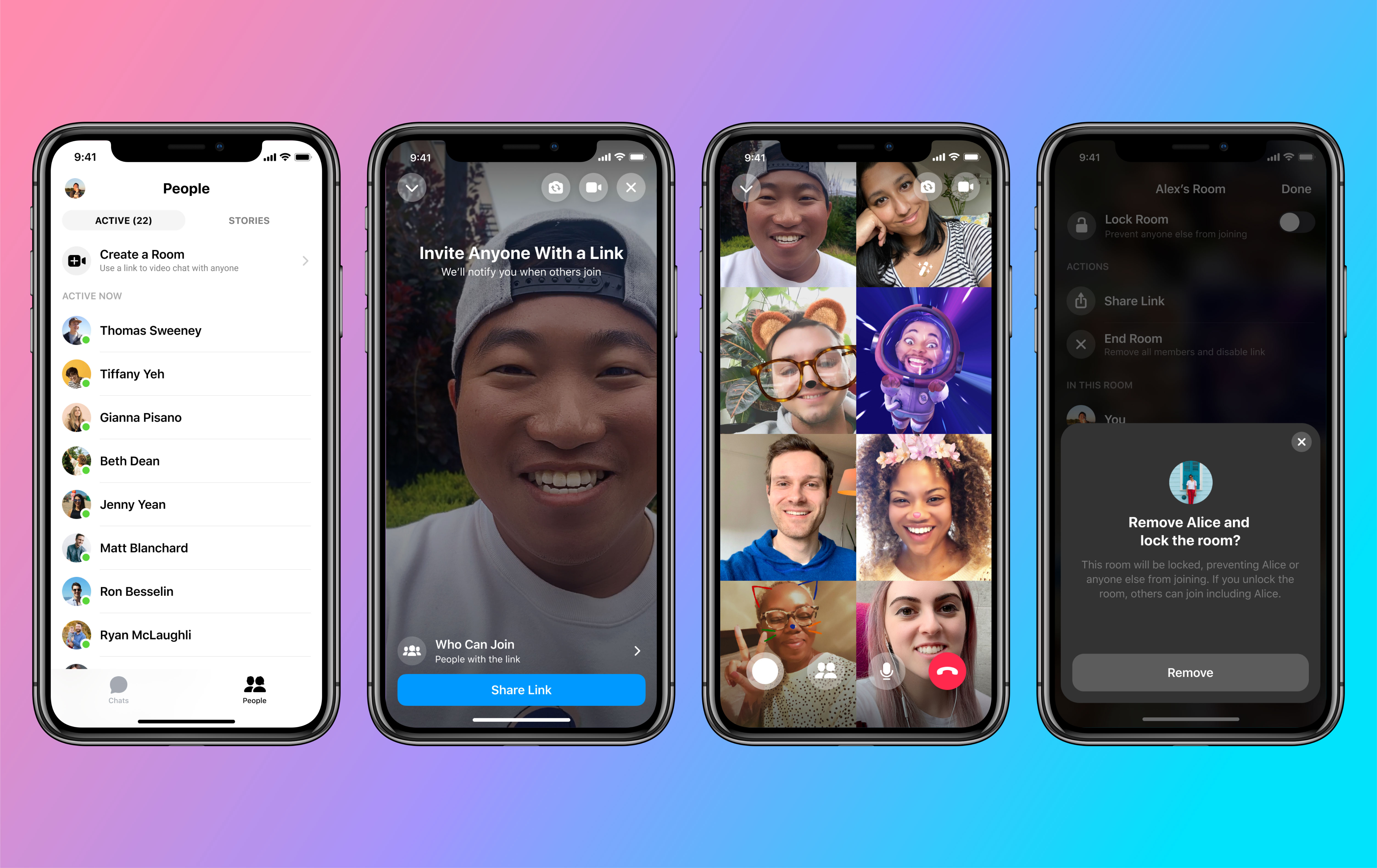
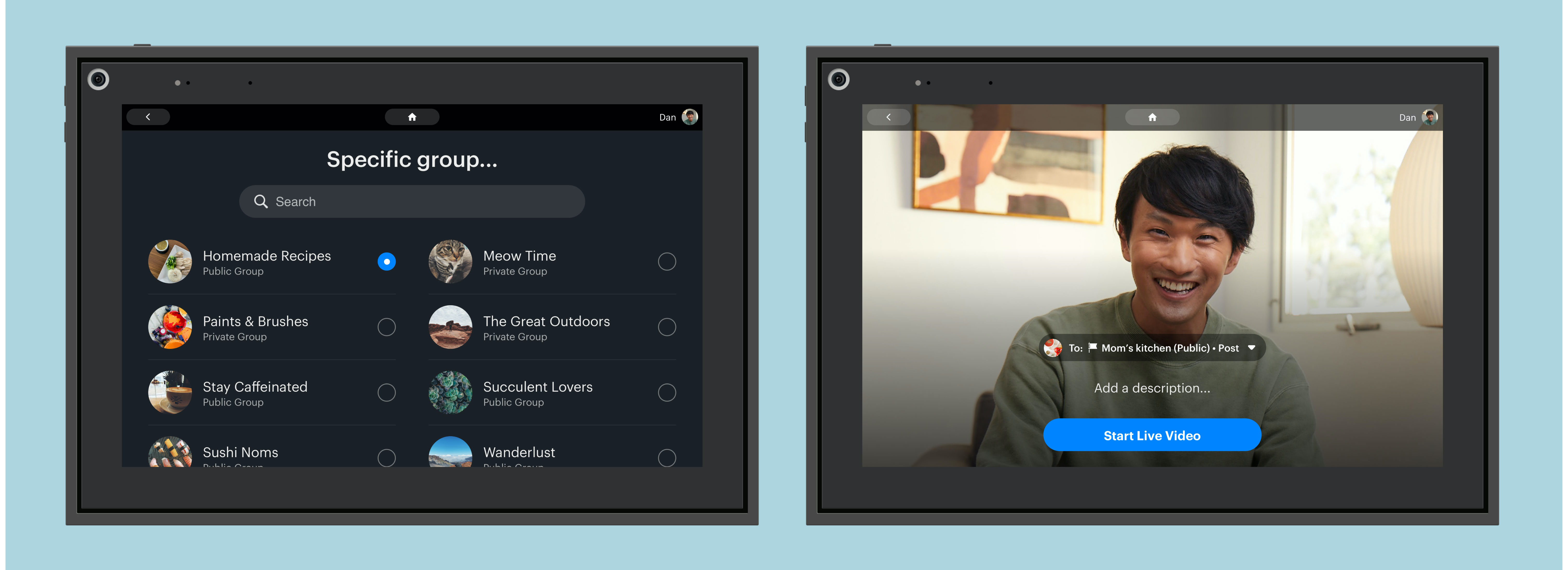
Facebook is co-opting some of the top video chat innovations like Zoom’s gallery view for large groups and Houseparty’s spontaneous hangouts for a new feature called Rooms. It could usher in a new era of unplanned togetherness via video.
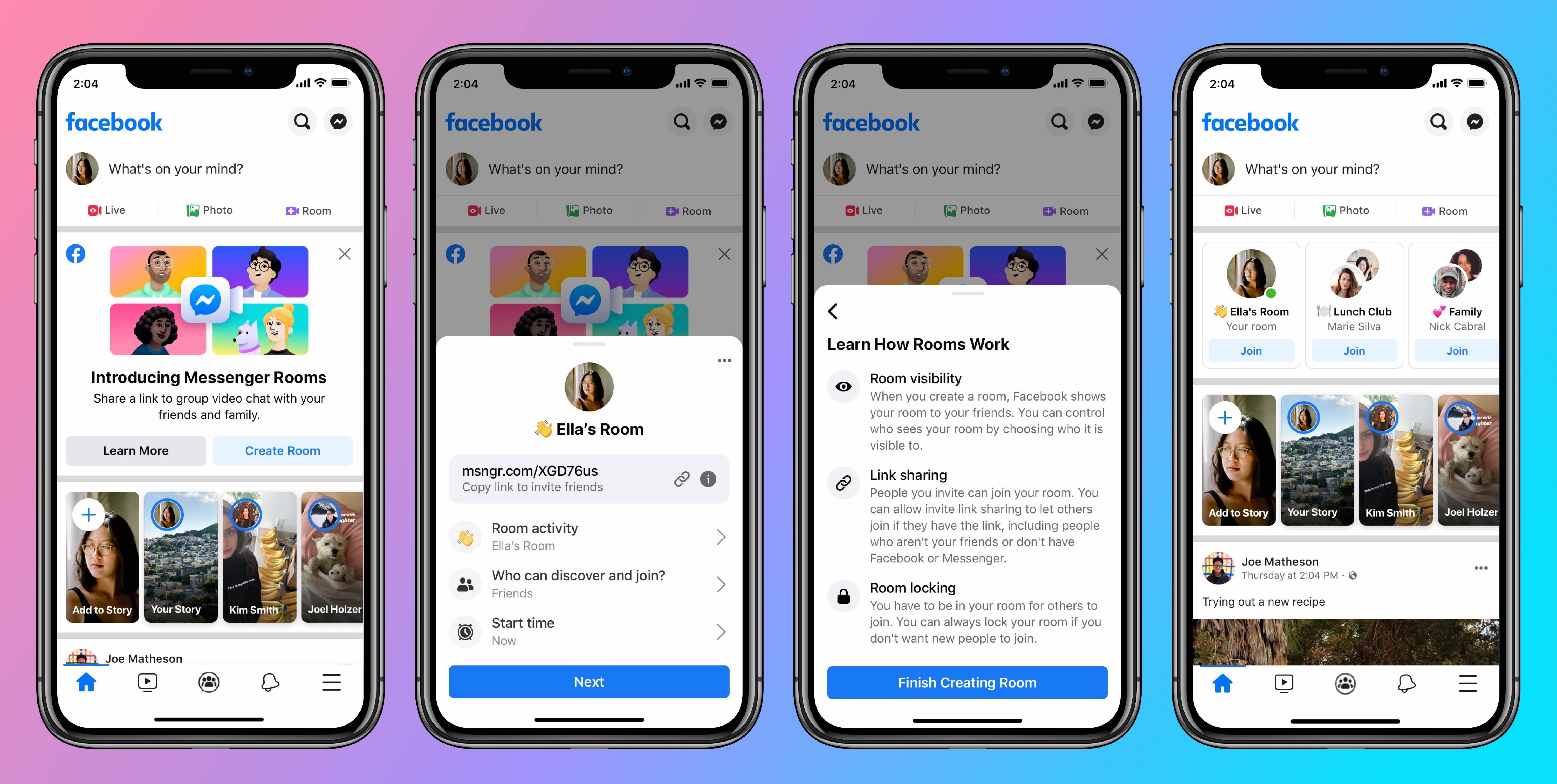
Launching today on mobile and desktop in English speaking countries, you can start a video chat Room that friends can discover via a new section above the News Feed or notifications Facebook will automatically send to your closest pals. You can also just invite specific friends, or share a link anyone can use to join your Room.
For now, up to 8 people can join, but that limit will rise to 50 within weeks, making it a more legitimate alternative to Zoom for big happy hours and such. And more importantly, users will soon be able to create and discover Rooms through Instagram, WhatsApp, and Portal, plus join them from the web without an account, making this Facebook’s first truly interoperable product.
“People just want to spend more time together” Facebook’s head of Messenger Stan Chudnovsky tells me. One-on-one and group video calling was already growing, but “Now in the time of COVID, the whole thing is exploding. We already had a plan to do a bunch of stuff here [so people could] hang out on video any time they want, but we accelerated our plans.” There’s no plans for ads or other direct monetization of Rooms, but the feature could keep Facebook’s products central to people’s lives.
Facebook Goes All-In On Video
The launch of Rooms comes alongside a slew other video-related updates designed to shore up Facebook’s deficiency in many-to-many communication. It already owns the many-to-one feeds and has emerged as a leader in one-to-many livestreaming, but “the middle piece needed way more investment” Chudnovsky says.
Here’s a rundown of the other announcements and what they mean:
Virtual And 360 Backgrounds with mood lighting – Facebook will soon launch the ability to choose a virtual background to cover up what’s behind you on a video call, including 360 backgrounds that look different as you move around, plus mood lighting to make you look better on camera
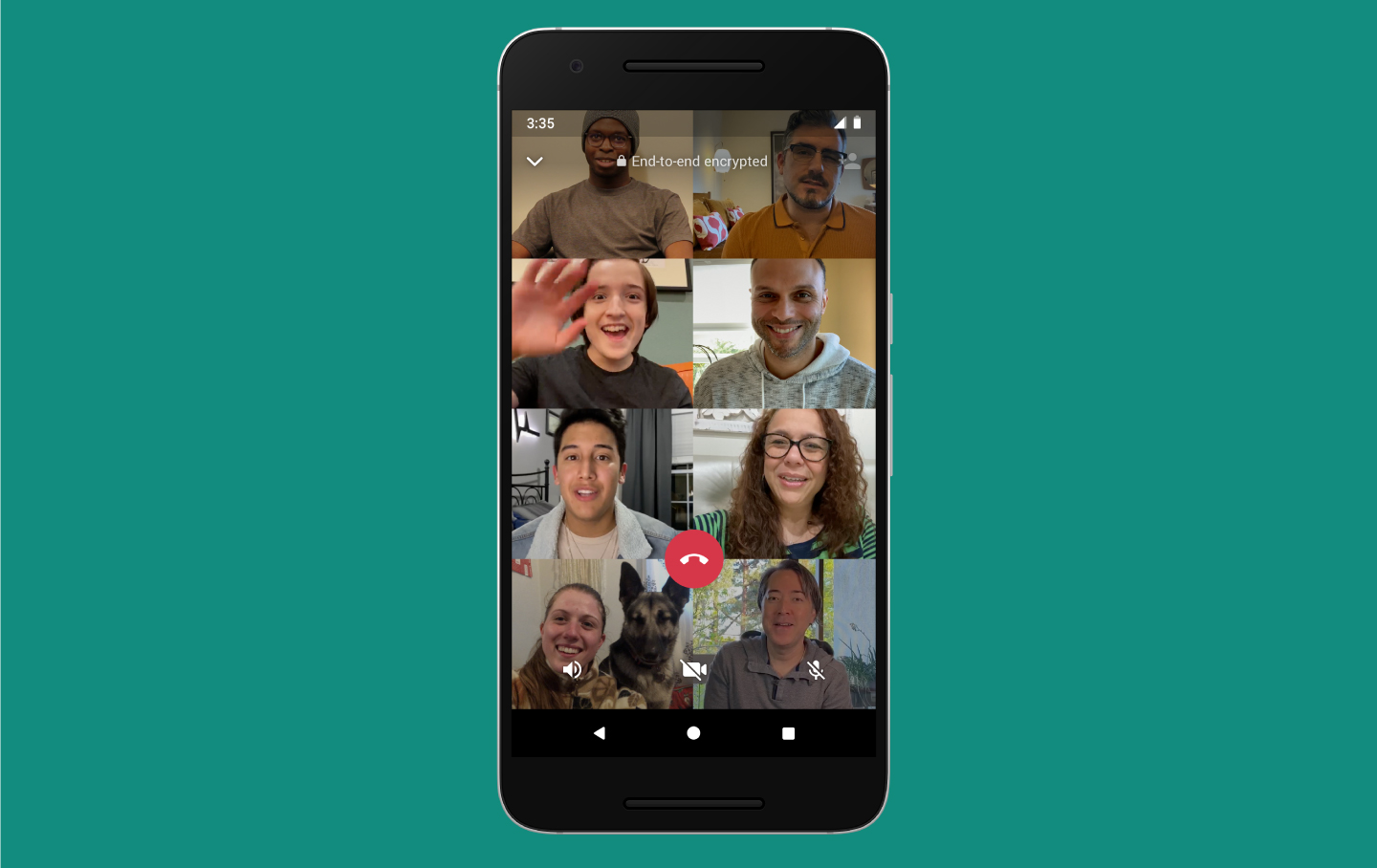
WhatsApp expands group calls from four to eight max participants – Encompassing larger families and friend groups makes WhatsApp a more viable competitor to Zoom
Facebook Live With returns – It’s tough to be the center of attention for long periods, so being able to bring a guest on screen during Live calls keeps them interesting and low pressure
Donate button on live videos – This makes it much easier for musicians, activists, and normal people to raise money for causes during the coronavirus crisis
Live via audio only – With more musicians bringing their tours to Facebook Live, now you can listen while still going about your day when you can’t watch too or want to conserve data, and you can use a toll-free number to dial in to some Pages’ videos
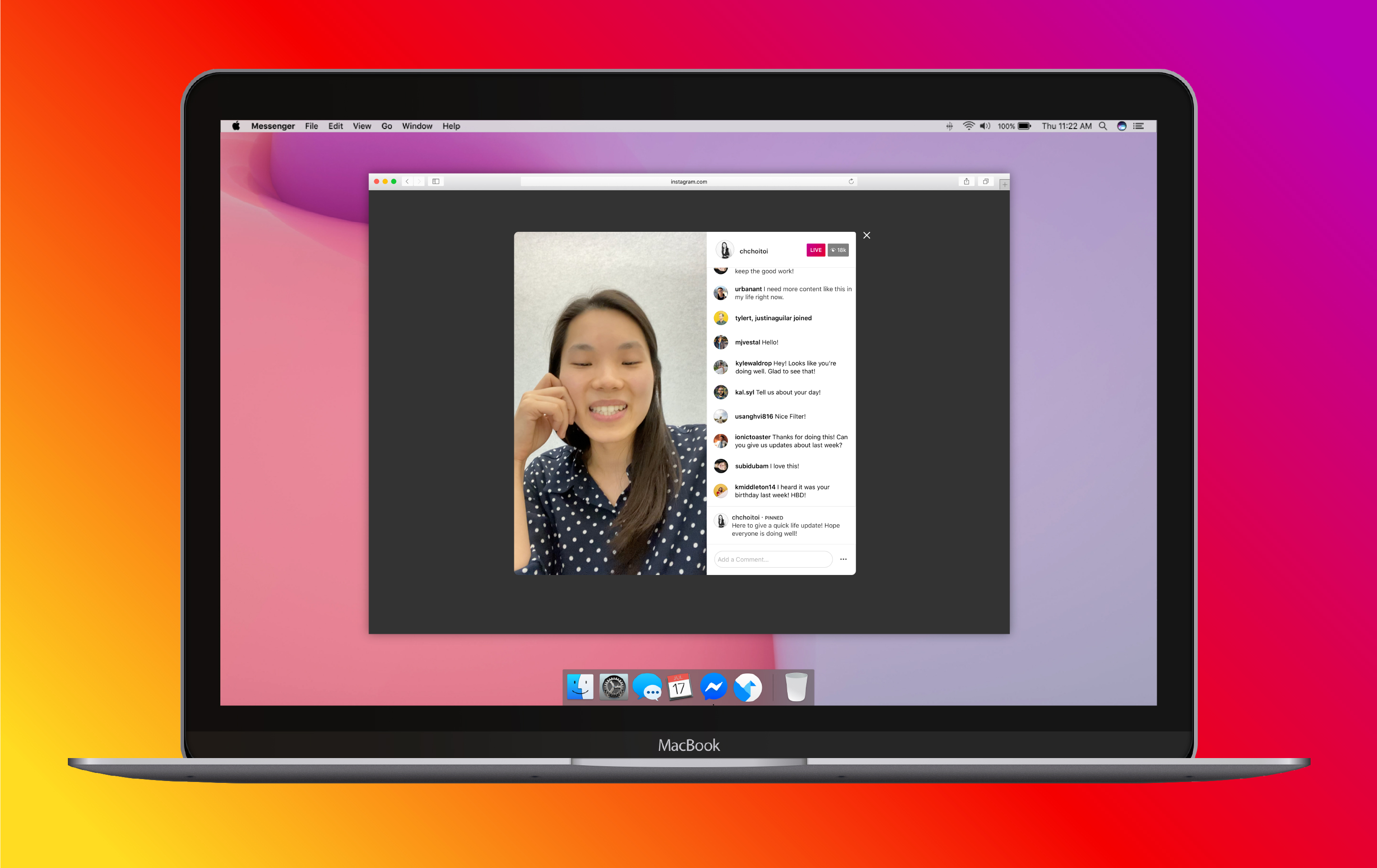
Instagram Live on web – You can now watch Live videos and comment from desktop so you can multi-task during longer streams
Live on IGTV – Long live videos won’t have to disappear since they can now be saved to IGTV, encouraging higher quality Instagram Lives meant to last
Portal Live – You’ll now be able to go Live to Pages and Groups from Portal devices so you can move around while streaming
Facebook Dating Video Chat – Rather than going on a date where you have no chemistry, you’ll be able to video chat with matches on Facebook Dating to get a feel for someone first.
How To Use Facebook Rooms
Facebook strived to make Rooms launchable and discoverable across all its apps in hopes of blitzing into the space. You can launch a Room from the News Feed composer, Groups, Events, the Messenger inbox, and soon Instagram Direct’s video chat button, WhatsApp, and Portal. You’ll be able to choose a start time, add a description, and choose who can join in three ways.
You can restrict your Room just to people you invite, such as for a family catch-up. You can make it open to all your friends, who’ll be able to see it in the new Rooms discovery tray above the News Feed or inbox and eventually similar surfaces in the other apps. In this case, Facebook may notify some close friends to make sure they’ll see it. Or you can share a link to your Room wherever you want, effectively making it public.
Facebook apparently watched the PR disaster that emerged from Zoombombing, and purposefully built security into Rooms. The host can lock the room to block people from joining via URL, and if they boot someone from a Room, it automatically locks until they unlock it. That ensures that if trolls find your link, they can’t just keep joining from the web.
Choosing to create a separate and extremely prominent space for discovering Room above the News Feed reveals how seriously it’s taking this product. It could have made Rooms just another News Feed post that’s timeliness would get lost in the algorithm. Instead, it was willing to push the feed almost entirely off the start screen beneath the composer, Rooms, and Stories. Clearly Facebook sees sharing, ephemeral content, and synchronous connection as more key to its future than static status updates.
The Uncopyable Copier
Facebook has been quietly working on Rooms since at least 2017, exploring how to make group chats discoverable. It tried a standalone app for group video chat discovery called Bonfire that year. In fact, Facebook launched a standalone app called Rooms back in 2014 for anonymous forums. The genius of this launch is how it combines three of Facebook’s biggest strengths to build a product that copies others but is hard to copy itself.
The ubiquity of its messaging apps and web compatibility make Rooms highly accessible, without the friction of having to download a new app.
The frequency of visits to its feeds and inboxes where Rooms can be found by the family of apps’ 2.5 billion users plus Facebook’s willingness to bet big by sticking Rooms atop our screen like it did with Stories could unlock a new era of spontaneous, serendipitous socializing.
The social graph we’ve developed with great breadth across Facebook’s apps plus the depth of its understanding about who we care about most allow it to reach enough concurrent users to make Rooms fun by intelligently ranking which we see and who gets notifications to join rather than spamming your whole phone book.
No other app has all of these qualities. Zoom doesn’t know who you care about. Houseparty is growing but is far from ubiquitous. Messaging competitors don’t have the same discovery surfaces.
Facebook knows the real engagement on mobile comes from messaging. It just needed a way to make us message more than our one-on-one threads and asynchronous group chats demanded. Rooms makes video calls something you can passively discover and join rather having to actively initiate or be explicitly pulled into by a friend. That could significantly increase how often and long we use Facebook without the deleterious impacts of zombie-like asocial feed scrolling.
AT&T is getting a new boss, the first piece of Apple and Google’s COVID-19 contact tracing program should be available soon and Snap is looking to raise more debt.
A big changing of the guard is underway at one of the world’s biggest names in telecoms and media. The change is effective on June 1, and while Stephenson is retiring, he will stay on as executive chairman of AT&T until January 2021.
Stankey has held other roles at AT&T, including CEO of WarnerMedia and CEO of the AT&T Entertainment Group. His promotion suggests a continuing emphasis on the media side of the business.
The first version of Apple and Google’s jointly developed, cross-platform contact tracing API should be available to developers as of next week, according to a conversation between Apple CEO Tim Cook and European Commissioner for internal market Thierry Breton.
Snap’s Q1 earnings impressed investors but the company is still losing plenty of cash and it’s clear that the full impact of the digital ad market’s downturn won’t be seen until the company’s Q2 earnings. The company is now looking to raise looking to raise $750 million.
Leaked images obtained by TechCrunch reveal that Google considered and designed a feature that would let people donate money to websites to help support news publishers, bloggers and musicians. But the company ultimately scrapped the idea.
Although it looks like the COVID-19 pandemic has clipped the tails of many unicorns, this era won’t last forever. Investors expect the domestic and global economy to recover, perhaps as soon as late 2020 or early 2021. (Extra Crunch membership required.)
The interim legislation will allocate $310 billion to replenish the SBA’s Paycheck Protection Program (PPP), $75 billion for hospitals and $25 billion for COVID-19 testing. President Trump previously expressed his approval of the bill, as well as his intention to sign it and make the funds available as quickly as possible.
Nintendo confirmed earlier reports of account breaches dating back over the past few weeks. The gaming giant issued an update (via Nintendo Japan) noting that around 160,000 Nintendo Accounts were impacted, with accounts being used to purchase digital items without the owner’s consent.
The Daily Crunch is TechCrunch’s roundup of our biggest and most important stories. If you’d like to get this delivered to your inbox every day at around 9am Pacific, you can subscribe here.
India has emerged as one of the fastest growing smartphone markets in the last decade, reporting growth each quarter even as handset shipments slowed or declined elsewhere globally. But the world’s second largest smartphone is beginning to feel the coronavirus heat, too.
The Indian smartphone market grew by a modest 4% year-over-year in the quarter that ended on March 31, research firm Counterpoint said Friday evening. The shipment grew annually in January and February, when several firms launched their smartphones and unveiled aggressive promotional plans.
But in March the shipment saw a 19% year-over-year dip, the firm said. Counterpoint estimated that the smartphone shipments in India will decline by 10% this year, compared to a 8.9% growth in 2019 and 10% growth in 2018.
The research firm also cautioned that India’s lockdown, ordered last month, has severely slowed down the local smartphone industry and it may take seven to eight months to get back on track. Currently, only select items such as grocery products are permitted to be sold in India.
Prachir Singh, Senior Research Analyst at Counterpoint Research, said the COVID-19 impact on India was relatively mild until mid-March. “However, economic activities declined as people save money in expectation of an extended period of uncertainty and an almost complete lockdown. Almost all smartphone manufacturing has been suspended. Further, with the social distancing norms, factories will be running at lower capacities even after the lockdown is lifted,” he said.
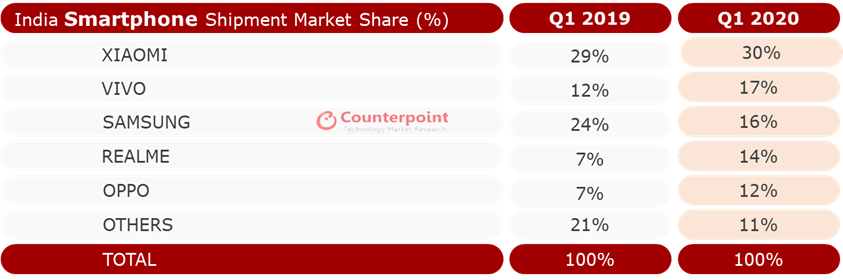
Overall, 31 million smartphone units shipped in India in Q1 2020. Chinese smartphone maker Xiaomi, which has held the tentpole position in what has become its biggest market globally for more than two years, widened its lead to command 30% of the market.
Vivo’s share grew to 17%, up from 12% during the same period last year. Samsung, which once led the Indian market, now sits at the third spot with 16% market share, down from 24% in Q1 2019. Apple maintained its recent momentum and grew by a strong 78% year-over-year in Q1 this year. It now commands 55% of the premium smartphone segment (handsets priced at $600 or above.).
More than 100 smartphone plants in India assemble or produce about 700,000 to 800,000 handsets a day, some of which are exported outside of the country. But the lockdown has halted the production and could cost the industry more than $3 billion to $4 billion in direct loss this year.
“We often draw parallels between India and China. But in China, their factories have adopted automation at various levels, something that is not the case in India,” said Tarun Pathak, a senior analyst at Counterpoint, earlier this week.
China, where smartphone sales declined by 38% annually in February this year, has already started to see recovery. Xiaomi said last month that its phone factories were already operating at more than 80% of their capacity. Globally, smartphone shipment declined by 14% in February, according to Counterpoint.
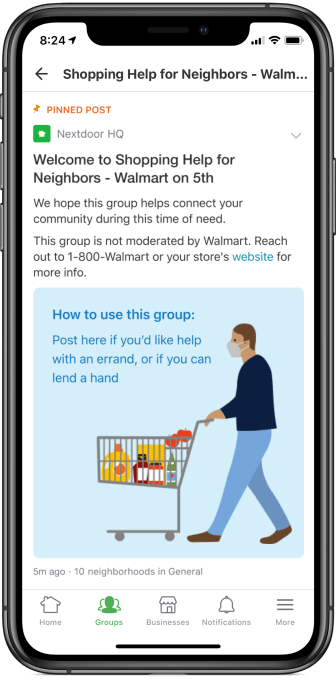
Neighborhood social network Nextdoor and Walmart are teaming up today to launch a new “Neighbors Helping Neighbors” program that will make it easier for vulnerable community members to get assistance from neighbors who are already planning a trip to Walmart. The new in-app feature will allow Nextdoor users to post to groups associated with their local Walmart store to request shopping assistance.
To find the new option, Nextdoor users can either use the Nextdoor website or mobile app.
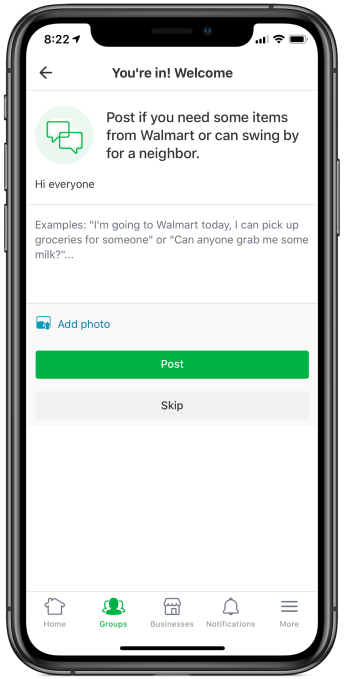
From there, users will click on the “Groups” tab where they’ll see local Walmart stores pinned to the top of the page. Members can then post a message to the group feed where they can ask for help or offer to help others.
Members who connect in the feed can then work out the details on the message board or through direct message, where they can share more private details like their address and what they need from the store.
The feature is designed to help elderly, high-risk or other vulnerable members find someone who will pick up groceries, medications, or other essentials when they’re planning a trip to the store.
This could also offer a low-cost alternative to using online grocery delivery services, which require tipping. In the case of a neighbor helping a neighbor, the assistance is offered on a volunteer basis, not as someone’s job. That could be potentially life-saving for low-income community members who can’t risk shopping in a store during the coronavirus pandemic, but who also struggle to afford alternatives like online grocery.
Walmart isn’t moderating or managing these Nextdoor groups, to be clear, but worked with Nextdoor to make the feature available.
For the retailer, the addition isn’t just beneficial in terms of directing customers to Walmart to shop, it’s also seen as a way to reduce the number of people who come to the store in-person.
“I’ve seen first-hand the countless ways our Walmart team is working together during this challenging time, leading with humanity, compassion and understanding to serve our customers,” said Janey Whiteside, Walmart’s Chief Customer Officer, in a statement about the feature’s launch. “We’re continuing to do that through our new program with Nextdoor. We’re connecting neighbors to each other so that more members of our communities have access to essential items, while limiting contact and the number of people shopping in our stores,” she added.
Nextdoor has launched several new features in response to the coronavirus pandemic in recent weeks.
Its new “Help Maps” allowed members to post and offer help in their neighborhood, for example. But this feature had been buried on the “More” menu in the app and was being underutilized as a result. A dedicated place within Nextdoor Groups for these sorts of requests is more visible, making it easier to offer assistance or to ask for help.
Over the past few weeks, Nextdoor says it’s seen a 7x increase in people joining groups to help one another, a not surprising figure given its recent exit from beta.
Nextdoor will also make the Walmart groups easy to find by pinning them to the top of the Groups tab, it says.
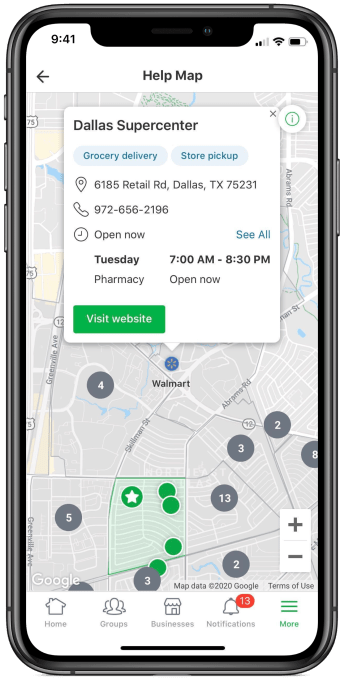
Meanwhile, Walmart store locations and hours where “Neighbors Helping Neighbors” is available can be found on Nextdoor’s “Help Map.”
“We’re inspired everyday by the kindness of people around the world who are stepping up and helping out. In recent weeks, we’ve been blown away by the number of members who have raised their hand to run an errand, go to the grocery store, or pick up a prescription for a neighbor,” said Sarah Friar, Nextdoor CEO, about the feature. “We’re grateful for Walmart’s partnership to make this important connection between neighbors around vital services, and we’re proud to come together to ensure everyone has a neighborhood to rely on,” she said.
The new initiative is launching nationwide starting today, but may not be immediately available in the app as the rollout could take time to complete.
According to security firm ZecOps, the bug is in the iPhone’s default Mail app. By sending a specially crafted email to the victim’s device, an attacker can overrun the device’s memory, allowing the attacker to remotely run malicious code to steal data from the device.
The bug dates back to iOS 6, but on the latest version of iOS 13, it doesn’t require any user interaction. Motherboard, which first reported the story, said the bug has been fixed in a beta version of the software, and a fix will be rolled out in an upcoming update.
Magic Leap announced today that it has laid off a “number of employees” and is backing away from its consumer ambitions to focus more heavily on selling to enterprise customers. Bloomberg reports that half of the company’s employees were laid off, roughly 1,000 in total.
The identity verification feature was first introduced in 2018, requiring political advertisers to provide documents to verify their identity, which is then displayed as part of the ad itself. Moving forward, Google says it will make identity verification a required part of the ad buying process, regardless of topic.
The UK’s competition watchdog officially gave a nod to the merger between UK’s JustEat and the Netherlands’ Takeaway.com. And the merged company announced that it had raised an additional €700 million ($756 million) in funding.
Lee and her fellow Cowboy Ventures partner Ted Wang joined us for our first episode of Extra Crunch Live, a virtual speaker series for Extra Crunch members. They covered a wide range of topics, including PPP loans, advice for business leaders around layoffs, the right time to seek funding and the right firms from which to seek that funding, how to pitch during a downturn and which sectors in particular Cowboy is interested in financing right now. (Extra Crunch membership required.)
For two weeks, Boston Dynamics’ Spot robot has been walking the halls of local hospital Brigham and Women’s. Telemedicine wasn’t generally listed as one of the primary applications for the company’s first commercial product, but Boston Dynamics is only one in a long list of tech companies that’s found itself shifting on the fly as the COVID-19 pandemic has become an all-consuming part of life.
Gurley’s transition out of the firm won’t surprise many. Benchmark — which has always run a fairly small operation — has routinely groomed new investors as veterans of the firm have moved on.
The Daily Crunch is TechCrunch’s roundup of our biggest and most important stories. If you’d like to get this delivered to your inbox every day at around 9am Pacific, you can subscribe here.