Thursday, May 7, 2020

UK eyeing switch to Apple-Google API for coronavirus contacts tracing — report

The UK may be rethinking its decision to shun Apple and Google’s API for its national coronavirus contacts tracing app, according to the Financial Times, which reported yesterday that the government is paying an IT supplier to investigate whether it can integrate the tech giants’ approach after all.

As we’ve reported before coronavirus contacts tracing apps are a new technology which aims to repurpose smartphones’ Bluetooth signals and device proximity to try to estimate individuals’ infection risk.

The UK’s forthcoming app, called NHS COVID-19, has faced controversy because it’s being designed to use a centralized app architecture. This means developers are having to come up with workarounds for platform limitations on background access to Bluetooth as the Apple-Google cross-platform API only works with decentralized systems.

The choice of a centralized app architecture has also raised concerns about the impact of such an unprecedented state data grab on citizens’ privacy and human rights, and the risk of state ‘mission creep‘.

The UK also looks increasingly isolated in its choice in Europe after the German government opted to switch to a decentralized model, joining several other European countries that have said they will opt for a p2p approach, including Estonia, Ireland and Switzerland.

In the region, France remains the other major backer of a centralized system for its forthcoming coronavirus contacts tracing app, StopCovid.

Apple and Google, meanwhile, are collaborating on a so-called “exposure notification” API for national coronavirus contacts tracing apps. The API is slated to launch this month and is designed to remove restrictions that could interfere with how contact events are logged. However it’s only available for apps that don’t hold users’ personal data on central servers and prohibits location tracking, with the pair emphasizing that their system is designed to put privacy at the core.

Yesterday the FT reported that NHSX, the digital transformation branch of UK’s National Health Service, has awarded a £3.8M contract to the London office of Zuhlke Engineering, a Switzerland-based IT development firm which was involved in developing the initial version of the NHS COVID-19 app.

The contract includes a requirement to “investigate the complexity, performance and feasibility of implementing native Apple and Google contact tracing APIs within the existing proximity mobile application and platform”, per the newspaper’s report.

The work is also described as a “two week timeboxed technical spike”, which the FT suggests means it’s still at a preliminary phase — thought it also notes the contract includes a deadline of mid-May.

The contracted work was due to begin yesterday, per the report.

We’ve reached out to Zuhlke for comment. Its website describes the company as “a strong solutions partner” that’s focused on projects related to digital product delivery; cloud migration; scaling digital platforms; and the Internet of Things.

We also put questions arising from the FT report to NHSX.

At the time of writing the unit had not responded but yesterday a spokesperson told the newspaper: “We’ve been working with Apple and Google throughout the app’s development and it’s quite right and normal to continue to refine the app.”

The specific technical issue that appears to be causing concern relates to a workaround the developers have devised to try to circumvent platform limitations on Bluetooth that’s intended to wake up phones when the app itself is not being actively used in order that the proximity handshakes can still be carried out (and contacts events properly logged).

Thing is, if any of the devices fail to wake up and emit their identifiers so other nearby devices can log their presence there will be gaps in the data. Which, in plainer language, means the app might miss some close encounters between users — and therefore fail to notify some people of potential infection risk.

Recent reports have suggested the NHSX workaround has a particular problem with iPhones not being able to wake up other iPhones. And while Google’s Android OS is the more dominant platform in the UK (running on circa ~60% of smartphones, per Kantar) there will still be plenty of instances of two or more iPhone users passing near each other. So if their apps fail to wake up they won’t exchange data and those encounters won’t be logged.

On this, the FT quotes one person familiar with the NHS testing process who told it the app was able to work in the background in most cases, except when two iPhones were locked and left unused for around 30 minutes, and without any Android devices coming within 60m of the devices. The source also told it that bringing an Android device running the app close to the iPhone would “wake up” its Bluetooth connection.

Clearly, the government having to tell everyone in the UK to use an Android smartphone not an iPhone wouldn’t be a particularly palatable political message.

One source with information about the NHSX testing process told us the unit has this week been asking IT suppliers for facilities or input on testing environments with “50-100 Bluetooth devices of mixed origin”, to help with challenges in testing the Bluetooth exchanges — which raises questions about how extensively this core functionality has been tested up to now. (Again, we’ve put questions to the NHSX about testing and will update this report with any response.)

Work on planning and developing the NHS COVID-19 app began March 7, according to evidence given to a UK parliamentary committee by the NHSX CEO’s, Matthew Gould, last month.

Gould has also previously suggested that the app could be “technically” ready to launch in as little as two or three weeks time from now. While a limited geographical trial of the app kicked off this week in the Isle of Wight. Prior to that, an alpha version of the app was tested at an RAF base involving staff carrying out simulations of people going shopping, per a BBC report last month.

Gould faced questions over the choice of centralized vs decentralized app architecture from the human rights committee earlier this week. He suggested then that the government is not “locked” to the choice — telling the committee: “We are constantly reassessing which approach is the right one — and if it becomes clear that the balance of advantage lies in a different approach then we will take that different approach. We’re not irredeemably wedded to one approach; if we need to shift then we will… It’s a very pragmatic decision about what approach is likely to get the results that we need to get.”

However it’s unclear how quickly such a major change to app architecture could be implemented, given centralized vs decentralized systems work in very different ways.

Additionally, such a big shift — more than two months into the NHSX’s project — seems, at such a late stage, as if it would be more closely characterized as a rebuild, rather than a little finessing (as suggested by the NHSX spokesperson’s remark to the FT vis-a-vis ‘refining’ the app).

In related news today, Reuters reports that Colombia has pulled its own coronavirus contacts tracing app after experiencing glitches and inaccuracies. The app had used alternative technology to power contacts logging via Bluetooth and wi-fi. A government official told the news agency it aims to rebuild the system and may now use the Apple-Google API.

Australia has also reported Bluetooth related problems with its national coronavirus app. And has also been reported to be moving towards adopting the Apple-Google API.

While, Singapore, the first country to launch a Bluetooth app for coronavirus contacts tracing, was also the first to run into technical hitches related to platform limits on background access — likely contributing to low download rates for the app (reportedly below 20%).



from RSSMix.com Mix ID 8176981 https://techcrunch.com/2020/05/07/uk-eyeing-switch-to-apple-google-api-for-coronavirus-contacts-tracing-report/
http://www.gadgetscompared.com
from Tumblr https://ikonografico.tumblr.com/post/617468534559211520
via http://www.gadgetscompared.com

Wednesday, May 6, 2020

Your iPhone will soon be able to tell 911 about your medical conditions and allergies

Got something in your medical history that first responders should know about if you call 911? Things like known drug allergies, or the medications you’re on?

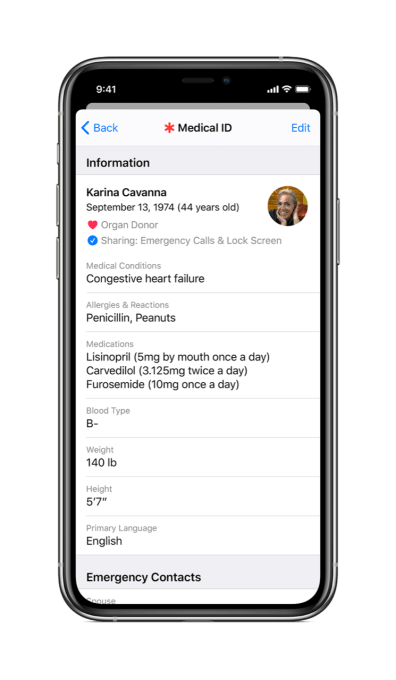
The iPhone and Apple Watch will soon be able to share this information with first responders automatically (if you opt to let it do so).

When a user with this feature enabled calls 911, Apple will ping their location to determine if the local 911 dispatch supports “Enhanced Emergency Data” — a service the company first started building out a few years back to tell emergency services where you’re calling from. If it does, your Medical ID info (as set up in your Health app) will be shared with emergency services accordingly.

It’ll also work with the Apple Watch’s Fall Detection feature, which can automatically call 911 if it detects that the wearer has fallen and is now immobile.

The feature was rolled into the beta build of iOS 13.5 this morning, and Apple says it should ship to everyone in “the coming weeks.”

This is a super logical feature, and one that’ll almost certainly save lives. People are rarely in the calmest state when calling 911, and most people wouldn’t think to say “Oh, and hey by the way, I have an allergy to [medication here]” if they’re worried they’re about to pass out — and that’s something first responders really should know.


from RSSMix.com Mix ID 8176981 https://techcrunch.com/2020/05/06/your-iphone-will-soon-be-able-to-tell-911-about-your-medical-conditions-and-allergies/
http://www.gadgetscompared.com
from Tumblr https://ikonografico.tumblr.com/post/617420513922498560
via http://www.gadgetscompared.com
Google delays Android 11 by a month

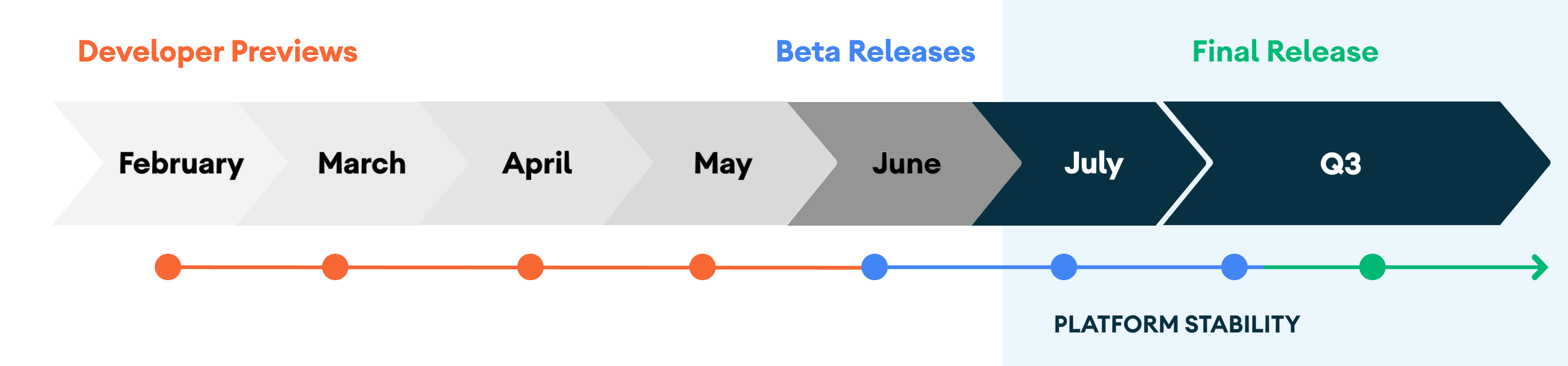
Google today announced that it is extending the preview period of Android 11 by about a month. So instead of launching a beta this month, as it had previously planned, it’ll release a fourth developer preview today instead. The first beta will officially launch on June 3, during an Android-centric online event it’ll hold in lieu of its I/O developer conference.

“When we started planning Android 11, we didn’t expect the kinds of changes that would find their way to all of us, across nearly every region in the world,” Google’s Android team writes today. “These have challenged us to stay flexible and find new ways to work together, especially with our developer community. To help us meet those challenges we’re announcing an update to our release timeline.”

Google notes that it wants to meet the needs of the Android ecosystem, which has obviously started work on early app testing for Android 11 based on the company’s guidance, with the current environment during the coronavirus pandemic and the other priorities that come with that. Delaying the release by a month seems like a reasonable approach in this context.

Google says developers should target the Beta 1 release date of June 3 for releasing a compatible app to gather feedback from the larger group of Android Beta users. And that group will be larger because, like with previous releases, Google will make over-the-air updates available to users who opt in to the beta and have a compatible device. The list of compatible devices for the beta remains to be seen, but it’ll likely include all recent Pixel phones, starting with the Pixel 2.


from RSSMix.com Mix ID 8176981 https://techcrunch.com/2020/05/06/google-delays-android-11-by-a-month/
http://www.gadgetscompared.com
from Tumblr https://ikonografico.tumblr.com/post/617403527855292416
via http://www.gadgetscompared.com

New studio Modern Games acquires Beasts of Balance

Modern Games is a new studio working to create games that combine physical and digital play.

The company was founded by husband-and-wife team Justin and Amanda Kifer — serial entrepreneurs who previously launched companies including Citizen Local (acquired by MyLife in 2011) and Fidgetly, a fidget spinner company that also created a motion controller for iOS and Android games.

It sounds like the Kifers have a number of new titles in development, but the company is announcing today that it has acquired and is relaunching an existing game, Beasts of Balance.

The game was first released by Sensible Object in 2016. As demonstrated for me by Justin Kifer (the startup’s CEO), Beasts of Balance involves stacking physical animal pieces, while also scanning them into a companion app that keeps score and brings their fantastical skills to life. The basic game costs $99 (currently on sale for $79), and players can purchase expansion packs to get additional accessories, beasts and other “artefacts.”

The other Modern Games titles released this year will be purely physical board and card games, released under its Modern Games [Analog] brand. Kifer told me that the company’s big “flagship” launch is planned for 2021, with a mobile game that involves augmented reality and connected objects, and that takes place in a rich science fiction/fantasy world. In fact, Kifer’s even writing a series of young adult novels to flesh out the setting.

“I want people to think of Modern Games as a studio that is working hard every day push the boundaries what it is to play a game,” he said.

Beasts of Balance

Image Credits: Modern Games

Kifer suggested that by combining physical and digital gameplay, Modern Games’ titles will have the real-world social component of a traditional tabletop game while taking advantage of gameplay that’s also possible digitally.

Kifer also said that by always starting with a core physical product that players need to buy, the company can avoid having to go the free-to-play route adopted by most mobile games. At the same time, he also emphasized that the company will keep the games relatively affordable, with a sub-$40 price for core products. (There were will be additional monetization through physical and digital add-ons.)

On the other hand, our remote demo made it clear that there’s a downside to relying on a physical products — since we weren’t in the same room (and, given COVID-19, are unlikely to be anytime soon), Kifer and I couldn’t actually play the game together.

“The games that we’re working on right now are also multi-player,” Kifer said when I pointed this out. “They’re games that could be played in proximity to other others, but they don’t have to be. For us, it’s all about bringing people together in ways that are inherently social, but it doesn’t necessarily mean physically co-located.”


from RSSMix.com Mix ID 8176981 https://techcrunch.com/2020/05/06/modern-games-beasts-of-balance/
http://www.gadgetscompared.com
from Tumblr https://ikonografico.tumblr.com/post/617384644715921408
via http://www.gadgetscompared.com
Tuesday, May 5, 2020

Social network for women Peanut raises $12M Series A amid pandemic

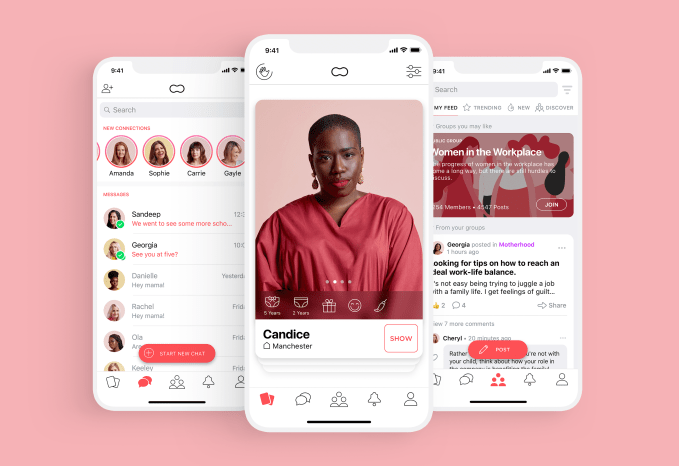
Peanut, an app that began as a tool for finding new mom friends, has evolved into a social network now used by 1.6 million women to discuss a range of topics, from pregnancy and parenthood to marriage and menopause, and everything in between. On the heels of significant growth in online networking fueled by the COVID-19 pandemic, the company is today announcing the close of a $12 million Series A round of funding, led by EQT Ventures, a multi-stage VC firm that invests in companies across Europe and the U.S.

Index Ventures and Female Founders Fund also participated, bringing Peanut’s total raise to date to $21.8 million.

The round itself closed just weeks ago — arriving at a time when the coronavirus pandemic is impacting the startup world, often drying up venture capital for emerging companies. Some startups, as a result, have laid off employees to self-sustain, while others have sought exits or even folded.

Peanut, on the other hand, has seen rapid growth for its platform as women looked for a supportive online environment to discuss their own concerns over how COVID-19 was impacting their lives.

Many women participating in Peanut’s newer “Trying to Conceive” group, for example, worried about their canceled IVF rounds and how to plan for the future. Current moms-to-be wanted to hear from others about how COVID-19 would impact their hospital delivery plans. And others stuck working at home with kids looked for advice and coping strategies.

Since the outbreak, Peanut has seen engagement across its app increase by 30% and content consumption increase by 40%. Its total community also grew from 1 million users in December 2019 to now 1.6 million, as of April.

“We’re really lucky in that we’re growing and that we are, for the most part, untouched by what’s happening,” says Peanut founder and CEO Michelle Kennedy. “And actually, if anyone needed community more, it’s now,” she added.

Though the pandemic has sent the app’s usage skyrocketing, it has also readjusted Peanut’s priorities with regard to its roadmap.

Most notably, its friend-finding feature needs a rethink.

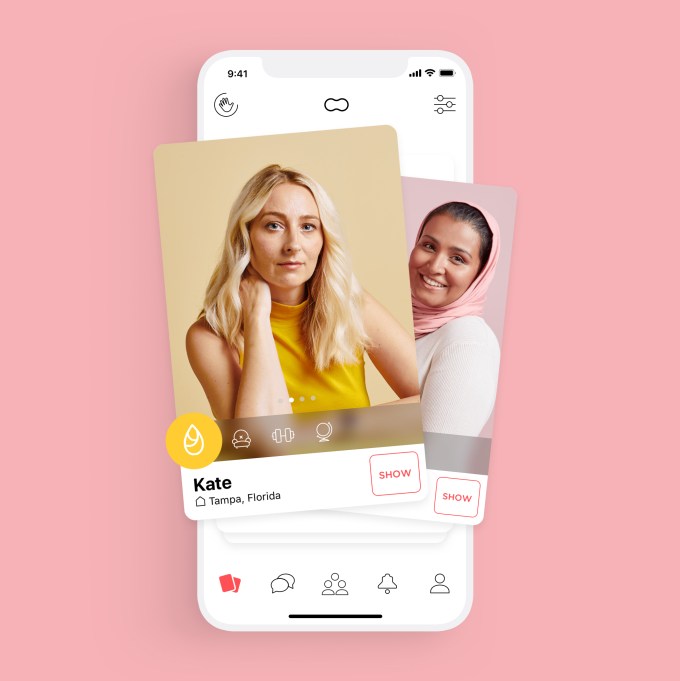
Peanut originally worked as a sort of “Tinder for mom friends” — an idea that arose from Kennedy’s personal experience with how difficult it was to forge female friendships after motherhood. As the former deputy CEO at dating app Badoo and an inaugural board member at Bumble, she brought her extensive experience in matchmaking apps to Peanut, which uses a similar swipe-based mechanism.

But COVID-19 has up-ended this side of Peanut’s business. Today, Peanut users are meeting in Zoom chat rooms to hangout or play games, but not in person.

Kennedy says the company will try to meet these users where they are with the development of more video networking features, potentially with technology built in-house. Other plans for the new capital include improvements to the social discovery aspects of its app, the development of a web version of Peanut, and the creation of more groups beyond those focused on fertility and motherhood, which have so far been core to the Peanut experience.

Specifically, the company soon plans to launch a new community focused on women living with menopause, an experience that will reach more than a billion women by 2025. Despite the fact that all women with ovaries will go through menopause, there are relatively few online communities dedicated to it — which Peanut sees as an untapped market.

Peanut’s real strength, however, is not in the types of communities it grows on its platform, but how they’re created.

There has not yet been a social network that focused on “building a platform for women, thinking about women’s needs and built by a women,” explains Kennedy. “So what we end up doing is using things that already exist — trying to twist them and mold them into what we need, and never getting it exactly right,” she says. “We can do better than that.”

One small example of this is the recent launch of Peanut’s “Mute Keywords” feature that allows women to remove certain types of discussions from their feeds and notifications. Some women used this to create a coronavirus-free news feed that focused on other aspects of motherhood. Others who were trying to conceive muted conversations around “pregnancy,” which they found emotionally triggering.

With the Series A’s close, Peanut says Naza Metghalchi from EQT Ventures joins the company’s majority-female board, alongside Hannah Seal from existing investor Index Ventures.

“Peanut’s user engagement metrics are a testament to the app’s ability to act as a true emotional companion throughout women’s journeys,” said Naza Metghalchi, venture lead and investment advisor at EQT Ventures, in a statement. “The EQT Ventures team is excited to partner with Michelle and continue to grow Peanut into a platform that serves all women at different life milestones, exploring topics beyond fertility and motherhood which have already seen such huge traction.”

The additional funding allows London-based Peanut to expand its business and hire more engineers to join its current team of just 16.

“I think having closed a round in this climate is great for the team,” says Kennedy. “It’s also great for the community because it means that we can grow the team, build quicker, build faster and develop the product more quickly,” she adds.


from RSSMix.com Mix ID 8176981 https://techcrunch.com/2020/05/05/social-network-for-women-peanut-raises-12m-series-a-amid-pandemic/
http://www.gadgetscompared.com
from Tumblr https://ikonografico.tumblr.com/post/617333692410544128
via http://www.gadgetscompared.com
Friday, May 1, 2020

An already struggling smartphone market takes a big hit from COVID-19

Quarter after quarter, familiar stories have appeared. The smartphone market, once seemingly bulletproof, has suffered. The list of factors is long, and I’ve written about them ad nauseam here, but the CliffsNotes version is: costs are too high, innovation is too incremental and most people already own a device that will be plenty good for the next few years.

But 2020 was going to be different. Smartphone makers were set to finally give consumers a reason to upgrade in the form of 5G. The first handsets appeared in earnest last year, but between a much wider carrier roll out, lower-cost 5G radios from Qualcomm and the arrival of a 5G iPhone, this was going to be the year the next-gen wireless technology helped reverse the smartphone slide.

And then COVID-19 disrupted everything. For many of us, life is on hold — and will likely continue to be for months. I’m writing this from my home in Queens, N.Y., the hardest-hit county in the hardest-hit country in the world. It still feels strange to type that, even though it’s been a reality for a month and half now.

Purchasing a smartphone is most likely the last thing on anyone’s mind during what is shaping up to be the worst global pandemic since the 1918 flu pandemic. With a number of key manufacturers reporting quarterly earnings this week, the numbers are starting to bear out this disconnect. Earlier this week, both Samsung and LG reported weak mobile numbers. Yesterday, Apple reported revenue of $28.96 billion, down from $31.1 billion the same time last year.

More troubling, all three companies appeared to be united in suggesting that the worst might be yet to come. Samsung suggested that both mobile and TV demand would “decline significantly” in the following quarter. LG used virtually the same exact wording, stating that, “market demand is expected to decline significantly YoY due to COVID-19 pandemic.” For its part, Apple simply didn’t issue guidance for the next quarter, a surefire indication of uncertainty in these uncertain times — to borrow a phrase from every commercial airing currently.


from RSSMix.com Mix ID 8176981 https://techcrunch.com/2020/05/01/an-already-struggling-smartphone-market-takes-a-big-hit-from-covid-19/
http://www.gadgetscompared.com
from Tumblr https://ikonografico.tumblr.com/post/616954829479329792
via http://www.gadgetscompared.com
Daily Crunch: iPhone sales decline in Q1

Apple’s earnings show the impact of COVID-19, NVIDIA’s top scientist shares an open source ventilator design and Amazon anticipates big spending in the coming months.

Here’s your Daily Crunch for May 1, 2020.

1. iPhone sales are down, ahead of uncertain times for the industry

Apple device sales have taken a hit, but the company’s services are doing swell, according to its latest earnings report. The iPhone, the longtime cornerstone of the company’s hardware portfolio, hit $28.96 billion in revenue for Q2, down from $31.1 billion from this time last year. The iPad and Mac lines saw drops for the quarter, as well.

In fact, a new Canalys report suggests that smartphone sales are down 13% globally.

2. NVIDIA’s top scientist develops open-source ventilator that can be built with $400 in readily-available parts

The mechanical ventilator design developed by NVIDIA’s Bill Daily can be assembled quickly, using off-the-shelf parts with a total cost of around $400 – making it an accessible and affordable alternative to traditional, dedicated ventilators which can cost $20,000 or more.

3. Amazon Q1 beats on net sales of $75.5B but posts net income of $2.5B, down $1B on a year ago

The company’s net sales were up 26% year-year-over. Of those sales, $41 billion was attributable to product sales and $33 billion to services (which includes AWS, but also streaming and other non-physical goods). CEO Jeff Bezos acknowledged the challenges the company is facing, but he also reiterated that it plans to double down on spending in Q2.

4. Walmart is piloting a pricier 2-hour ‘Express’ grocery delivery service

Walmart now hopes to capitalize on the increased demand for speedier delivery with the introduction of a new service that allows consumers to pay to get to the front of the line. The retailer confirmed today it’s launching a new Walmart Grocery service called “Express,” which promises orders in two hours or less for an upcharge of $10 on top of the usual delivery fee.

5. 5 tips for starting a business with a stranger

Co-founder and CEO Sam Pillar argues that his startup Jobber is proof that starting a company with a stranger isn’t just doable, it can even be an advantage. That’s because it allowed them to arrive at big decisions and have productive debate without the baggage and bias of a pre-existing relationship, establishing Jobber’s feedback-oriented culture. (Extra Crunch membership required.)

6. Cliqz pulls the plug on a European anti-tracking alternative to Google search

Cliqz, a Munich-based anti-tracking browser with private search baked in that has sought to offer a local alternative to Google powered by its own search index, is shutting down — claiming this arm of its business has been blindsided by the coronavirus crisis. However, the company is not closing down entirely, and a spokesman confirmed that Ghostery will continue.

7. JetBrains Academy for learning code launches for free during COVID-19 pandemic

Most online coding courses, either free or paid, essentially suggest you download a project or copy-paste code from their snippets going through their courses. Unlike JetBrains, they tend not to include Integrated Development Environments, which are more helpful in the learning process.

The Daily Crunch is TechCrunch’s roundup of our biggest and most important stories. If you’d like to get this delivered to your inbox every day at around 9am Pacific, you can subscribe here.


from RSSMix.com Mix ID 8176981 https://techcrunch.com/2020/05/01/daily-crunch-iphone-sales-decline-in-q1/
http://www.gadgetscompared.com
from Tumblr https://ikonografico.tumblr.com/post/616937827632070656
via http://www.gadgetscompared.com