Monday, May 18, 2020

Arm’s financials and the blurring future of the semiconductor sector

Amidst the blitz of SoftBank earnings news today comes the financials for all of SoftBank’s subsidiaries, which includes Arm Holdings, the most important chip design and research company in the world that SoftBank bought for $32 billion back in 2016. Arm produces almost all of the key designs for the chips that run today’s smartphones, including Apple’s A13 Bionic chip that powers its flagship iPhone. In all, 22.8 billion chips were shipped globally last year using Arm licenses according to SoftBank’s financials.

It’s a massively important company, and its finances show a complicated picture for itself — and the semiconductor industry at large.

We sat down with Arm Holding’s CEO Simon Segars last year to discuss the company’s growing appetite for ambitious research, fueled by SoftBank dollars and the bullish vision of the conglomerate’s chairman Masayoshi Son:


from RSSMix.com Mix ID 8176981 https://techcrunch.com/2020/05/18/arms-financials-and-the-blurring-future-of-the-semiconductor-sector/
http://www.gadgetscompared.com
from Tumblr https://ikonografico.tumblr.com/post/618497349370707968
via http://www.gadgetscompared.com

Buzzy Ethereum wallet app Argent comes out of stealth

Argent is launching the first public version of its Ethereum wallet for iOS and Android. The company has been available as a limited beta for a few months with a few thousand users. But it has already raised a seed and a Series A round with notable investors, such as Paradigm, Index Ventures, Creandum and Firstminute Capital. Overall, the company has raised $16 million.

I managed to get an invitation to the beta a few months ago and have been playing around with it. It’s a well-designed Ethereum wallet with some innovative security features. It also integrates really well with DeFi projects.

Many people leave their crypto assets on a cryptocurrency exchange, such as Coinbase or Binance. But it’s a centralized model — you don’t own the keys, which means that an exchange could get hacked and you’d lose all your crypto assets. Similarly, if there’s a vulnerability in the exchange API or login system, somebody could transfer all your crypto assets to their own wallets.

At heart, Argent is a non-custodial Ethereum wallet, like Coinbase Wallet or Trust Wallet. You’re in control of the keys. Argent can’t initiate a transaction without your authorization for instance.

But that level of control brings a lot of complexities. Hardware wallets, such as Ledger wallets, ask you to write down a seed phrase so that you can recover your wallet if you lose your device. It requires some discipline and it’s hard to understand if you’re not familiar with the concept of seed phrases.

Even Coinbase Wallet tells you to back up your seed phrase when you first create a wallet. “We see them as advanced tools for developers,” Argent co-founder and CEO Itamar Lesuisse told me.

That’s why a new generation of wallets tries to hide the complexity from the end user, such as ZenGo and Argent. Creating a wallet on Argent is one of the best experiences in the cryptocurrency space. Your wallet is secured by something called ‘guardians’.
Trust your friends

A guardian can be someone you know and trust, a hardware wallet (or another phone) or a MetaMask account. Argent also provides a guardian service, which requires you to confirm your identity with a text message and an email. If you lose your phone and you want to recover your wallet on another phone, you need to speak to your guardians and get a majority of confirmations. If they can all confirm that, yes, indeed, your phone doesn’t work anymore and you want to recover your crypto assets, the recovery process starts.

Let’s take an example. Here’s your list of guardians:

  • Argent’s own guardian service
  • Two friends who are also using Argent
  • A Ledger Nano S hardware wallet

In total, there are five different factors involved, you including. If you lose your phone, you can recover your wallet by downloading Argent on another phone (factor #1), asking Argent’s guardian service to send you a text and an email to confirm your identity (factor #2) and confirming your identity with the Ledger Nano S (factor #3).

You have reached a majority and the recovery process starts. You’ll get your funds in 36 hours so that you have enough time to cancel it it’s a hijacking attempt.

But you could also have downloaded the Argent app on another phone (factor #1) and pinged your two friends (factor #2 and #3) directly. If they can confirm the same sequence of characters (emojis in that case), the recovery process would start as well.

“I’m interested in social recovery, multi-key schemes,” Ethereum creator Vitalik Buterin said in a TechCrunch interview in July 2018. It’s not a new concept as social media apps already use social recovery systems. On WeChat, if you lose your password, WeChat asks you to select people in your contact list within a big list of names.

In Argent’s case, social recovery adds an element of virality as well. The experience gets better as more people around you start using Argent.

In addition to wallet recovery, Argent uses guardians to put some limits. Just like you have some limits on your bank account, you can set a daily transaction limit to prevent attackers from grabbing all your crypto assets. You can ask your guardians to waive transactions above your daily limits.

Similarly, you can ask your guardians to lock your account for 5 days in case your phone gets stolen.

Betting on Ethereum

Argent is focused on the Ethereum blockchain and plans to support everything that Ethereum offers. Of course, you can send and receive ETH. And the startup wants to hide the complexity on this front as well as it covers transaction fees (gas) for you and gives you usernames. This way, you don’t have to set the transaction fees to make sure that it’ll go through.

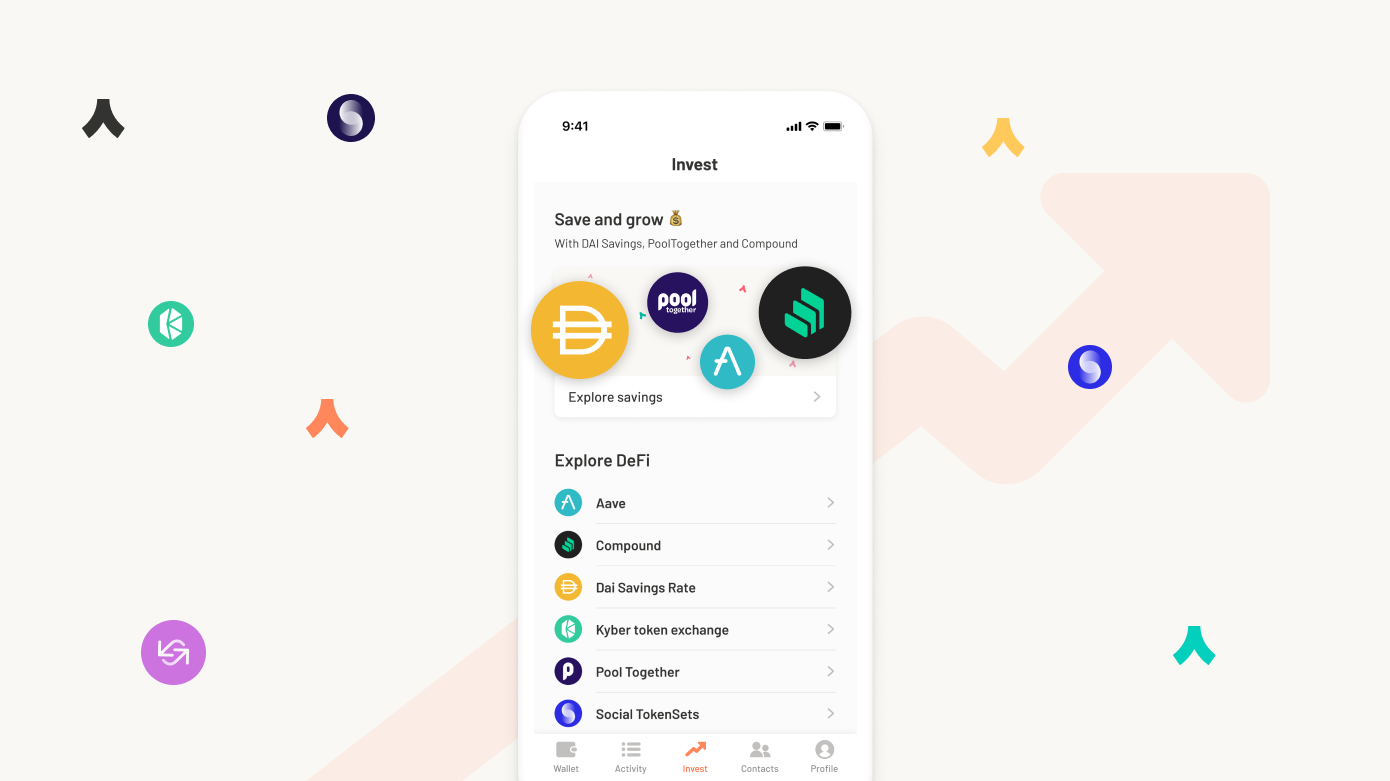
The startup plans to integrate DeFi projects directly in the app. DeFi stands for decentralized finance. As the name suggests, DeFi aims to bridge the gap between decentralized blockchains and financial services. It looks like traditional financial services, but everything is coded in smart contracts.

There are dozens of DeFi projects. Some of them let you lend and borrow money — you can earn interest by locking some crypto assets in a lending pool for instance. Some of them let you exchange crypto assets in a decentralized way, with other users directly.

Argent lets you access TokenSets, Compound, Maker DSR, Aave, Uniswap V2 Liquidity, Kyber and Pool Together. And the company already has plans to roll out more DeFi features soon.

Overall, Argent is a polished app that manages to find the right balance between security and simplicity. Many cryptocurrency startups want to build the ‘Revolut of crypto’. And it feels like Argent has a real shot at doing just that with such a promising start.


from RSSMix.com Mix ID 8176981 https://techcrunch.com/2020/05/18/buzzy-ethereum-wallet-app-argent-comes-out-of-stealth/
http://www.gadgetscompared.com
from Tumblr https://ikonografico.tumblr.com/post/618463380064305152
via http://www.gadgetscompared.com

Saturday, May 16, 2020

This Week in Apps: Houseparty battles Messenger, Telegram drops crypto plans, Instagram Lite is gone

Welcome back to This Week in Apps, the Extra Crunch series that recaps the latest OS news, the applications they support and the money that flows through it all.

The app industry is as hot as ever, with a record 204 billion downloads and $120 billion in consumer spending in 2019. People are now spending 3 hours and 40 minutes per day using apps, rivaling TV. Apps aren’t just a way to pass idle hours — they’re a big business. In 2019, mobile-first companies had a combined $544 billion valuation, 6.5x higher than those without a mobile focus.

In this Extra Crunch series, we help you keep up with the latest news from the world of apps, delivered on a weekly basis.

This week we’re continuing to look at how the coronavirus outbreak is impacting the world of mobile applications, including the latest news about COVID-19 apps, Facebook and Houseparty’s battle to dominate the online hangout, the game that everyone’s playing during quarantine, and more. We also look at the new allegations against TikTok, the demise of a popular “Lite” app, new apps offering parental controls, Telegram killing its crypto plans and many other stories, including a hefty load of funding and M&A.

Headlines

Contact tracing and COVID-19 apps in the news 

  • Global: WHO readies its coronavirus app for symptom-checking and possibly contact tracing. A WHO official told Reuters on Friday the new app will ask people about their symptoms and offer guidance on whether they may have COVID-19. Information on testing will be personalized to the user’s country. The organization is considering adding a Bluetooth-based, contact-tracing feature, too. A version of the app will launch globally, but individual countries will be able to use the underlying technology and add features to release their own versions. Engineers from Google and Microsoft have volunteered their time over the past few weeks to develop the app, which is available open-source on GitHub.
  • U.S.: Apple’s COVID-19 app, developed in partnership with the CDC, FEMA and the White House, received its first major update since its March debut. The new version includes recommendations for healthcare workers to align with CDC guidelines, best practices for quarantining if you’ve been exposed to COVID-19 and new information for pregnancy and newborns.
  • India: New Delhi’s contact-tracing app, Aarogya Setu, has reached 100 million users out of India’s total 450 million smartphone owners in 41 days after its release, despite privacy concerns. The app helps users self-assess if they caught COVID-19 by answering a series of questions and will alert them if they came into contact with someone who’s infected. The app has come under fire for how it stores user location data and logs the details for those reporting symptoms. The app is required to use Indian railways, which has boosted adoption.
  • Iceland: Iceland has one of the most-downloaded contact-tracing apps, with 38% of its population using it. But despite this, the country said it has not been a “game-changer” in terms of tracking the virus and only worked well when coupled with manual contact tracing — meaning phone calls that asked who someone had been in contact with. In addition, the low download rate indicates it may be difficult to get people to use these apps when they launch in larger markets.

Consumer advocacy groups say TikTok is still violating COPPA


from Tumblr https://ikonografico.tumblr.com/post/618299179932991488
via http://www.gadgetscompared.com

Thursday, May 14, 2020

Daily Crunch: Uber will require masks for drivers and passengers

Uber announces some COVID-19 related changes, Google’s Chrome browser is giving users a way to organize their tabs and the Senate rejects an amendment that would have raised the bar for law enforcement access to browsing data.

Here’s your Daily Crunch for May 14, 2020.

1. Here’s how your Uber ride will change, starting May 18

The changes — which include an online checklist for all rides, limits on the number of passengers in vehicles and a face mask verification feature for drivers — are designed to stop the spread of COVID-19, the company said Wednesday.

Riders and drivers, as well as delivery workers and even restaurants that use Uber Eats, will have the power to report unsafe COVID-19 behavior and give low ratings. For instance, a delivery worker can give feedback that a restaurant doesn’t have proper protocols in place, such as social distancing.

2. Google Chrome will finally help you organize your tabs

Google announced the launch of “tab groups” for the beta version of its web browser, which will allow you to organize, label and even color-code your tabs for easy access. The feature will make its way to the stable release of Chrome starting next week.

3. Senate narrowly rejects plan to require a warrant for Americans’ browsing data

Senators have narrowly rejected a bipartisan amendment that would have required the government first obtain a warrant before accessing Americans’ web browsing data. The amendment brought by Sens. Ron Wyden (D-OR) and Steve Daines (R-MT) would have forced the government to first establish probable cause (or reasonable suspicion of a crime) to obtain the warrant.

4. Kustomer acquires Reply.ai to enhance chatbots on its CRM platform

Reply.ai is a startup originally founded in Madrid that has built a code-free platform for companies to create customized chatbots to handle customer service inquiries. Its customers include Coca-Cola, Starbucks and Samsung.

5. Why we’re doubling down on cloud investments right now

Three investors at Bessemer Venture Partners argue that COVID-19 is a turning point for the cloud and cloud company founders, and that the cloud model offers businesses a promising future in the age of social distancing and beyond. (Extra Crunch membership required.)

6. Facebook, telcos to build huge subsea cable for Africa and Middle East

The project, called 2Africa, will see the companies lay cables that will stretch to 37,000km (22,990 miles) and interconnect Europe (eastward via Egypt), the Middle East (via Saudi Arabia) and 21 landings in 16 countries in Africa.

7. 7 top mobility VCs discuss COVID-19 strategies and trends

TechCrunch spoke to seven venture capitalists about how COVID-19 affected their portfolio and investment strategy, their current advice for startup founders and where they think the next hot opportunity will be. (Extra Crunch membership required.)

The Daily Crunch is TechCrunch’s roundup of our biggest and most important stories. If you’d like to get this delivered to your inbox every day at around 9am Pacific, you can subscribe here.


from RSSMix.com Mix ID 8176981 https://techcrunch.com/2020/05/14/daily-crunch-uber/
http://www.gadgetscompared.com
from Tumblr https://ikonografico.tumblr.com/post/618117662637195264
via http://www.gadgetscompared.com

Wednesday, May 13, 2020

Top members of Google’s Pixel team have left the company

Key Pixel team members Marc Levoy and Mario Queiroz are out at Google. The departures, first reported by The Information, have been confirmed on the pages of the former Distinguished Engineer and Pixel General Manager, respectively.

Both members were key players on Google’s smartphone hardware team before exiting earlier this year. Levoy was a key member of the Pixel imaging team, with an expertise in computational photography that helped make the smartphone’s camera among the best in class. Queiroz was the number two on the Pixel team.

The exits come as the software giant has struggled to distinguish itself in a crowded smartphone field. The products have been generally well-received (with the exception of the Pixel 4’s dismal battery life), but the Android-maker has thus far been unable to rob much market share from the likes of Samsung and Huawei.

The Information report sheds some additional light on disquiet among the Pixel leadership. Hardware head Rick Osterloh reportedly voiced some harsh criticism during an all-hands late last year. It certainly seems possible the company saw fit to shake things up a bit, though Google declined TechCrunch’s request for comment.

Breaking into the smartphone market has been a white whale for the company for some time. Google has explored the space through its Nexus partnerships, along with its short-lived Motorola Mobility acquisition (2012-2014). The Pixel is possibly the most successful of these projects, but Google’s struggles have coincided with an overall flattening of the market.

The company did find some success with last year’s budget Pixel 3A. The followup Pixel 4A was rumored for a late May launch, though the device has reportedly been delayed.


from RSSMix.com Mix ID 8176981 https://techcrunch.com/2020/05/13/top-members-of-googles-pixel-team-have-left-the-company/
http://www.gadgetscompared.com
from Tumblr https://ikonografico.tumblr.com/post/618040273549885440
via http://www.gadgetscompared.com

Xiaomi spinoff POCO’s F2 Pro undercuts Android rivals with low price and flagship features

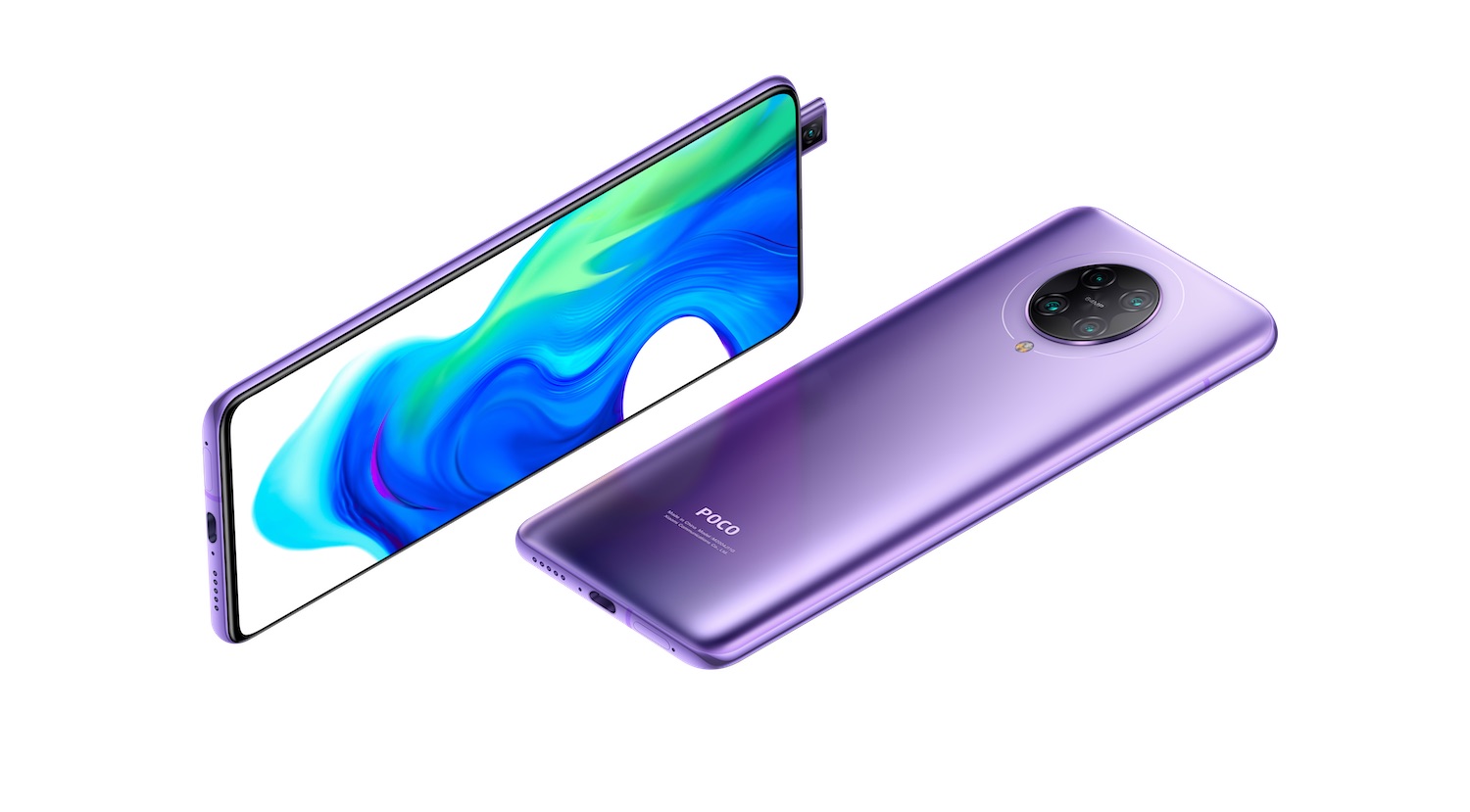
POCO, a brand that spun out of Chinese electronics giant Xiaomi earlier this year, today launched the POCO F2 Pro smartphone as it continues its new journey as an independent firm.

The POCO F2 Pro, like its two-year-old sleeper hit predecessor Pocophone F1 smartphone, punches above its price class. It features an all-screen 6.67-inch full-HD+ AMOLED display (with 2400×1080 pixels), in-screen fingerprint scanner, support for 5G, quad-core rear camera setup and a pop-up front camera that quietly tucks away when not in use. It also features a 3.5mm headphone jack.

The smartphone comes in two variants: one with 6GB of RAM and 128GB internal storage that is priced at €499 (roughly $540), and the other that features 8GB of RAM and 256GB internal storage that costs €599 (roughly $650).

Both the variants run Android 10 and are going on sale globally starting Tuesday through Gearbest and Aliexpress e-commerce sites. POCO said it will soon begin selling the POCO F2 Pro on Amazon, Lazada and Shopee among other e-commerce sites, including its official website.

The dual-SIM card-supported smartphone, a popular feature in several Asian markets, is powered by Qualcomm’s flagship octa-core Snapdragon 865 processor, coupled with Adreno 650GPU. POCO F2 Pro also sports what the company claims to be the largest vapor chamber in any smartphone to support LiquidCool, a technology that keeps the device cool even when a user is playing high-end games such as Fortnite and PUBG.

On the camera front, the POCO F2 Pro features a 64MP Sony IMX686 sensor, which serves as the primary camera, with a 13MP ultra wide-angle lens, a 5MP macro and one 2MP depth sensor. The pop-up camera, which serves as the selfie sensor, is a 20MP lens. The rear camera setup is capable of recording videos in 8K resolution at 24fps, and 4K in 60fps.

The POCO F2 Pro, which comes in Neon Blue, Electric Purple, Cyber Grey, Phantom White, houses a 4,700mAh battery with support for fast charging, and ships with a 33W charger in the box.

POCO listed a number of additional features that other flagship Android smartphones offer, such as support for HDR10+, display brightness of 500 nits, Corning Gorilla Glass 5 that protects the screen and an IR blaster. But its display lacks support for 120Hz refresh rate — as seen on OnePlus 8T Pro that makes viewing experience extra smooth.

POCO F2 Pro is the second smartphone from the company since it spun out of Xiaomi earlier this year. The company’s first product, called Pocophone F1, launched in 2018 and was well received by the market.

At the time of the launch, Xiaomi executives said they had big plans for the POCO brand but never launched anything afterward. During the period the company also saw a big departure when Jai Mani, a senior product executive, left the firm. Earlier this year, the company launched the mid-range POCO X2 smartphone in India.

POCO executives today shared little plans on what the future holds for the firm, but assured that they are here to stay. “We’re back. It’s been awhile, but we are back,” said Angus Ng, a product marketing manager at POCO.


from RSSMix.com Mix ID 8176981 https://techcrunch.com/2020/05/12/poco-f2-pro-smartphone/
http://www.gadgetscompared.com
from Tumblr https://ikonografico.tumblr.com/post/617979571358302208
via http://www.gadgetscompared.com

Tuesday, May 12, 2020

Slice, an online ordering and marketing platform for pizzerias, raises $43M

Global investment firm KKR is betting on the pizza business — it just led a $43 million Series C investment in Slice.

Formerly known as MyPizza, Slice has created a mobile app and website where diners can order a custom pizza delivery from their local, independent pizzeria.

And for those pizzerias, CEO Ilir Sela said Slice helps to digitize their whole business by also creating a website, improving their SEO and even allowing them to benefit from the “economies of scale” of the larger network, through bulk orders of supplies like pizza boxes.

Sela contrasted his company’s approach with other popular food delivery apps that he characterized as aggregators. For one thing, Slice “anchors” your favorite pizzerias in the app, giving them the top spots and making it easy to place your regular order with just a few taps. And it will be adding more loyalty features soon.

“Our job is to make loyal customers even more loyal,” he said.

In addition, while there’s been increased criticism of the high fees charged by services like Grubhub, Sela said Slice’s fee is capped at $2.25 per order, allowing pizzerias to get all the upside from large orders.

Of course, the environment for restaurants has changed dramatically in the last few months, thanks to COVID-19. But most pizzerias are already set up for takeout and delivery, and Sela said that more than 90% of the 12,000-plus pizzerias that work with Slice have stayed open.

He also pointed to the company’s Pizza vs Pandemic initiative, which raises funds for pizzerias to feed healthcare workers. The program has raised more than $470,000 and fed an estimated 140,000 workers.

“Local independent pizzerias have been feeding Americans across communities for decades and we are excited to put our resources behind Slice as they help to move these businesses online,” said KKR Principal Allan Jean-Baptiste in a statement. “Slice charges small business owners a fraction of the fees charged by food delivery apps and offers a suite of vertical specific solutions to solve the challenges faced by independent pizza makers.”

Slice had previously raised $30 million, according to Crunchbase. Sela said he’ll be using the new funding to bring on more pizzerias and continue building a “vertically integrated solution for the small businesses, in order to solve more and more of their challenges.”


from RSSMix.com Mix ID 8176981 https://techcrunch.com/2020/05/12/slice-series-c/
http://www.gadgetscompared.com
from Tumblr https://ikonografico.tumblr.com/post/617958813539172352
via http://www.gadgetscompared.com