Friday, June 5, 2020

PhotoRoom automagically removes background from your photo

Meet PhotoRoom, a French startup that has been working on a utility photography mobile app. The concept is extremely simple, which is probably the reason why it has attracted a ton of downloads over the past few months.

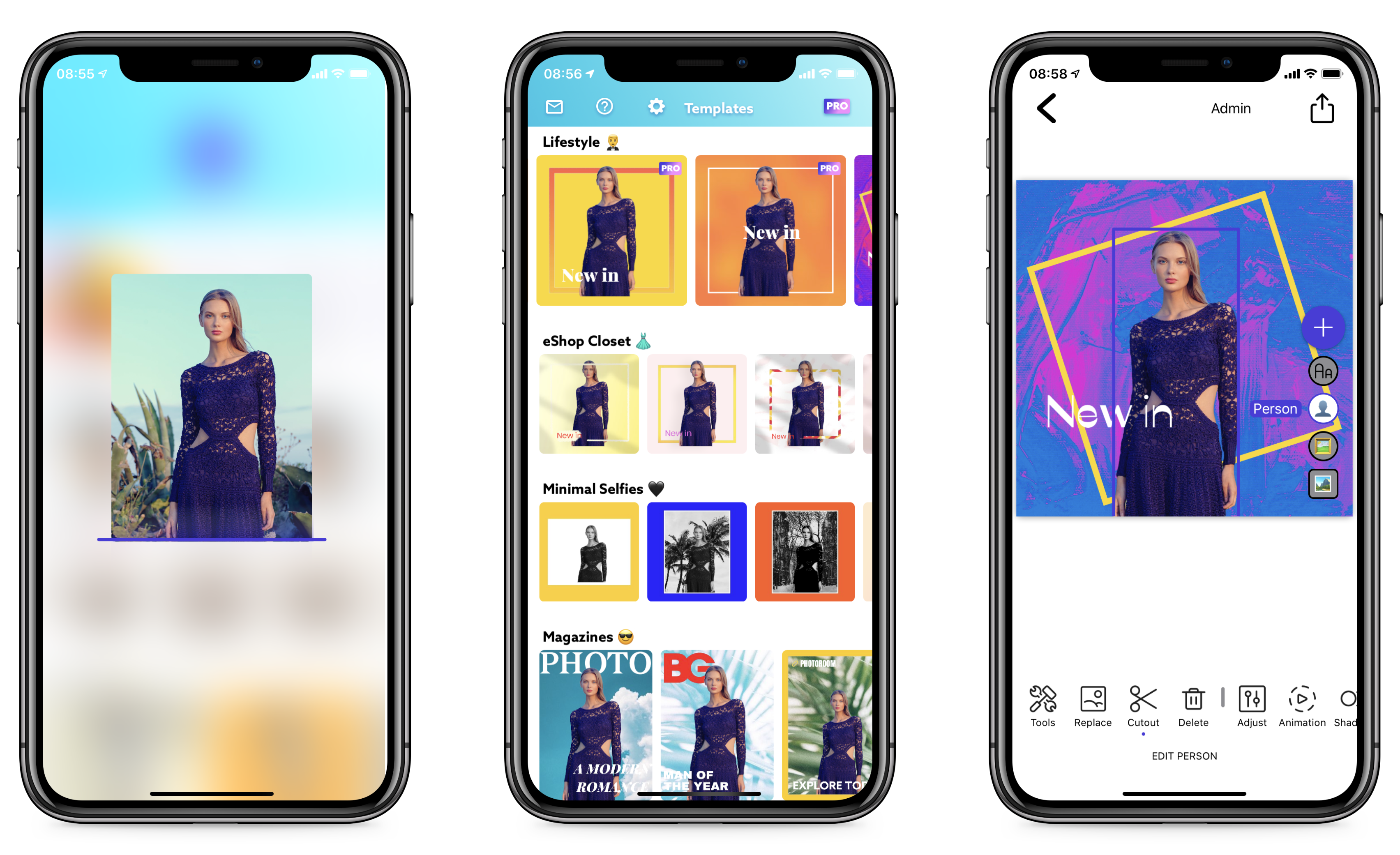
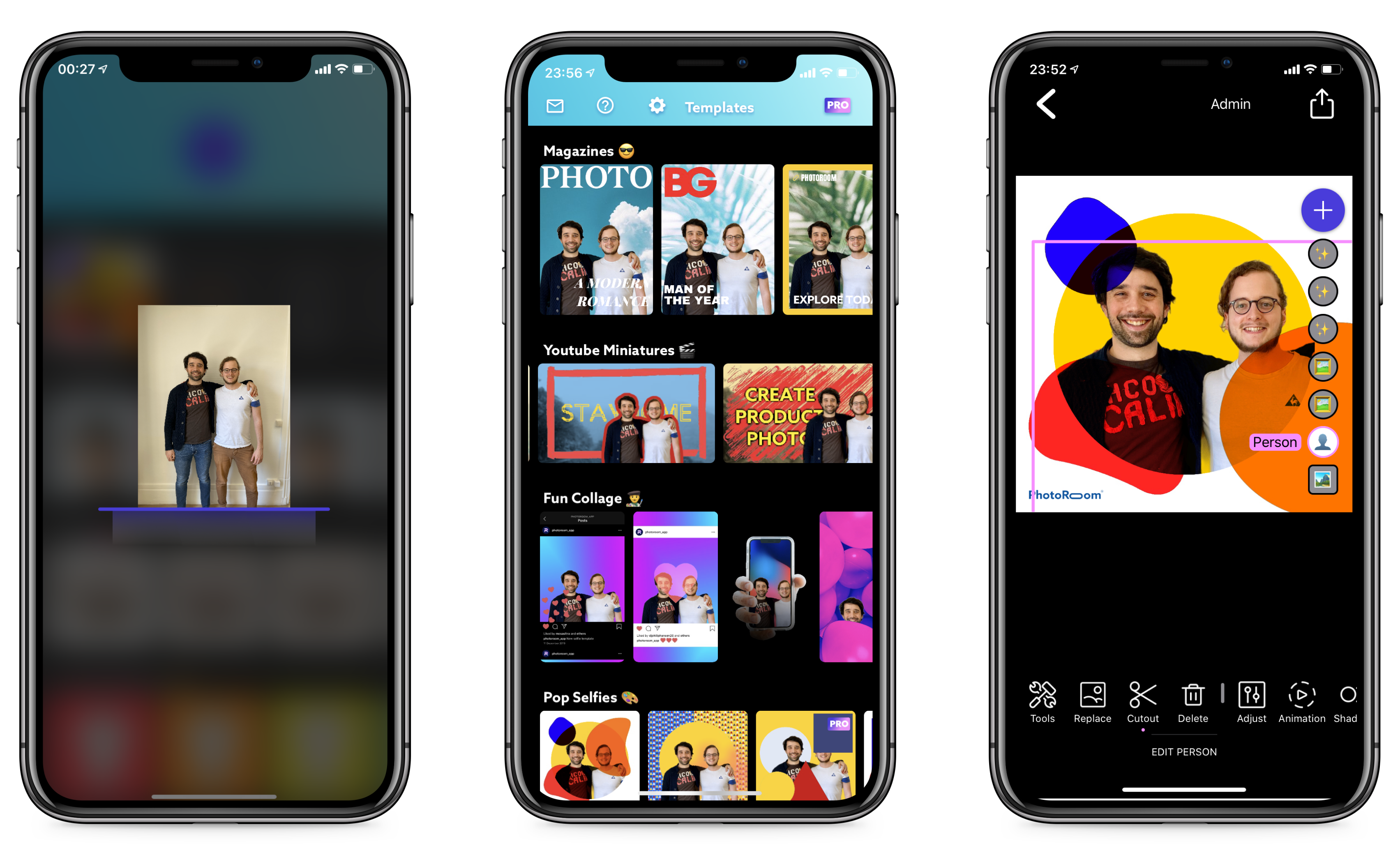
After selecting a photo, PhotoRoom removes the background from that photo and lets you select another background. When you’re done tweaking your photo, you can save the photo and open it in another app.
“My original vision comes from my time when I was working at GoPro,” co-founder and CEO Matthieu Rouif told me. “I often had to remove the background from images and when the designer was out of office, I would spend a ton of time doing it manually.”

And it turns out many people have been looking for a simple app that lets them go in and out as quickly as possible with an edited photo in their camera roll.

For instance, people selling clothes and other items on peer-to-peer e-commerce platforms have been using PhotoRoom to improve their photos. PhotoRoom is often recommended in online discussions or YouTube tutorials about optimizing your Poshmark or Depop listings.

Downloads really started to take off around February. PhotoRoom now has 300,000 monthly active users. The app is only available on iOS for now. And if you’re a professional using it regularly, you can pay for a subscription ($9.49 per month or $46.99 per year) to remove the watermark and unlock more features.

“Subscriptions are what works best on mobile for photo and video apps,” Rouif said.

Behind the scene, PhotoRoom uses machine learning models to identify objects on a photo. And the vision goes beyond removing backgrounds.

Photoshop, the clear leader in photo editing, was designed decades ago. There’s a steep learning curve if you want to use it professionally. It’s hard to understand layers, layer masks, channels, etc.

PhotoRoom wants to build a mobile-first photo-editing app that doesn’t lazily borrow Photoshop’s metaphors and interface elements. “What would be Photoshop if you could understand what’s on the photo,” Rouif said.

While the app relies heavily on templates, you can tweak your images by adding objects, moving them around, adding some shadow and editing elements individually. Image composition is 100% up to the user.

Like VSCO, Darkroom, PicsArt, Filmic Pro and Halide, PhotoRoom belongs to a group of prosumer apps that are tackling photo and video editing from different ways. A generation of users who grew up using visual social networks are now pushing the limits of those apps — they look simple when you first use them, but they offer a ton of depth when you learn what you can do with them. And they prove that smartphones can be great computers, beyond content consumption.

Rouif was the head of product at Stupeflix, a powerful video editing app that was acquired by GoPro back in 2016. PhotoRoom is just getting started as there are only four people working on the app, including two interns.


from RSSMix.com Mix ID 8176981 https://techcrunch.com/2020/06/05/photoroom-automagically-removes-background-from-your-photo/
http://www.gadgetscompared.com
from Tumblr https://ikonografico.tumblr.com/post/620107149578846208
via http://www.gadgetscompared.com


Thursday, June 4, 2020

Signal now has built-in face blurring for photos

Apps like Signal are proving invaluable in these days of unrest, and anything we can do to simplify and secure the way we share sensitive information is welcome. To that end Signal has added the ability to blur faces in photos sent via the app, making it easy to protect someone’s identity without leaving any trace on other, less secure apps.

After noting Signal’s support of the protests occurring all over the world right now against police brutality, the company’s founder Moxie Marlinspike writes in a blog post that “We’ve also been working to figure out additional ways we can support everyone in the street right now. One immediate thing seems clear: 2020 is a pretty good year to cover your face.”

Fortunately there are perfectly good tools out there both to find faces in photographs and to blur imagery (presumably irreversibly, given Signal’s past attention to detail in these matters, but the company has not returned request for comment). Put them together and boom, a new feature that lets you blur all the faces in a photo with a single tap.

This is helpful for the many users of Signal who use it to send sensitive information, including photos where someone might rather not be identifiable. Normally one would blur the face in another photo editor app, which is simple enough but not necessarily secure. Some editing apps, for instance, host computation-intensive processes on cloud infrastructure and may retain a copy of a photo being edited there — and who knows what their privacy or law enforcement policy may be?

If it’s sensitive at all, it’s better to keep everything on your phone and in apps you trust. And Signal is among the few apps trusted by the justifiably paranoid.

All face detection and blurring takes place on your phone, Marlinspike wrote. But he warned that the face detection isn’t 100 percent reliable, so be ready to manually draw or expand blur regions in case someone isn’t detected.

The new feature should appear in the latest versions of the app as soon as those are approved by Google and Apple.

Lastly Marlinspike wrote that the company is planning “distributing versatile face coverings to the community free of charge”; the picture shows a neck gaiter like those sold for warmth and face protection. Something to look forward to, then.


from RSSMix.com Mix ID 8176981 https://techcrunch.com/2020/06/04/signal-now-has-built-in-face-blurring-for-photos/
http://www.gadgetscompared.com
from Tumblr https://ikonografico.tumblr.com/post/620039196185378816
via http://www.gadgetscompared.com

Wednesday, June 3, 2020

Watchful is a mobile product intelligence startup that surfaces unreleased features

Meet Watchful, a Tel Aviv-based startup coming out of stealth that wants to help you learn more about what your competitors are doing when it comes to mobile app development. The company tries to identify features that are being tested before getting rolled out to everyone, giving you an advantage if you’re competing with those apps.

Mobile app development has become a complex task, especially for the biggest consumer apps, from social to e-commerce. Usually, mobile development teams work on a new feature and try it out on a small subset of users. That process is called A/B testing as you separate your customers in two buckets — bucket A or bucket B.

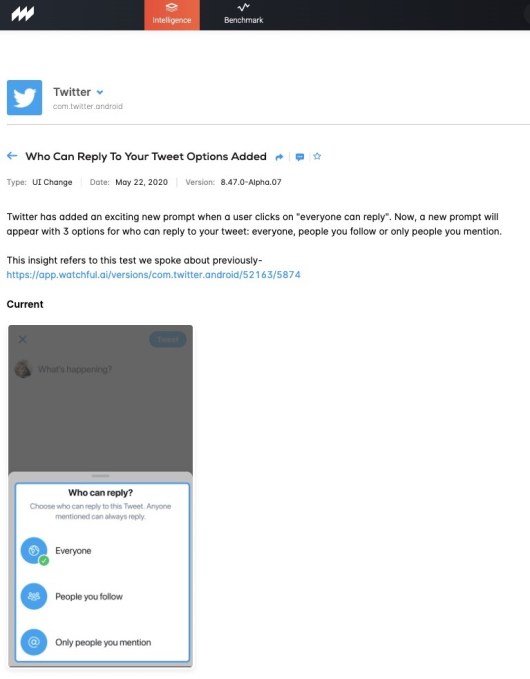
For instance, Twitter is trying out its own version of Stories called Fleets. The company first rolled it out in Brazil to track the reaction and get some data from its user base. If you live anywhere else in the world, you’re not going to see that feature.

There are other ways to select a group of users to try out a new feature — you could even take part in a test because you’ve been randomly picked.

“When you open the app, you’ll probably see a different version from the app I see. You’re in a different region, you have a different device,” co-founder and CEO Itay Kahana told me. He previously founded popular to-do app Any.do.

For product designers, it has become a nightmare as you can’t simply open an app and look at what your competitors are doing. At any point in time, there are many different versions of the same app as there are multiple A/B tests going on at the same time.

Watchful lets you learn from competition by analyzing all those different versions and annotating changes in user flows, flagging unreleased features and uncovering design changes.

It is different from other mobile intelligence startups, such as App Annie or Sensor Tower. Those services mostly let you track downloads and rankings on the App Store and Play store to uncover products that are doing well.

“We’re focused on everything that is open and visible to the users,” Kahana said.

Like other intelligence startups, Watchful needs data. App Annie acquired a VPN app called Distimo and a data usage monitoring app called Mobidia. When you activate those apps, App Annie captures data about your phone usage, such as the number of times you open an app and how much time you spend in those apps.

According to a BuzzFeed News report, Sensor Tower has operated at least 20 apps on iOS and Android to capture data, such as Free and Unlimited VPN, Luna VPN, Mobile Data and Adblock Focus. Some of those apps have been removed from the stores following BuzzFeed’s story.

I asked a lot of questions about Watchful’s source of data. “It’s all real users that give us access to this information. It’s all running on real devices, real users. We extract videos and screenshots from them,” Kahana said.

“It’s more like a panel of users that we have access to their devices. It’s not an SDK that is hidden in some app and collects information and do shady stuff,” he added.

You’ll have to trust him as the company didn’t want to elaborate further. Kahana also said that data is anonymized in order to remove all user information.

Images are then analyzed by a computer vision algorithm focused on differential analysis. The startup has a team in the Philippines that goes through all that data and annotates it. It is then sent to human analysts so that they can track apps and write reports.

Watchful shared one of those reports with TechCrunch earlier this year. Thanks to this process, the startup discovered that TikTok parent company ByteDance has been working on a deepfake maker. The feature was spotted in both TikTok and its Chinese sister app Douyin.

But Watchful’s customers aren’t news organizations. The company sells access to its service to big companies working in the mobile space. Kahana didn’t want to name them, but it said it is already working with “the biggest social network players and the biggest e-commerce players, mainly in the U.S.”

The startup sells annual contracts based on the number of apps that you want to track. It has raised a $3 million seed round led by Vertex Ventures.


from RSSMix.com Mix ID 8176981 https://techcrunch.com/2020/06/03/watchful-is-a-mobile-product-intelligence-startup-that-surfaces-unreleased-features/
http://www.gadgetscompared.com
from Tumblr https://ikonografico.tumblr.com/post/619922172415229952
via http://www.gadgetscompared.com

Tuesday, June 2, 2020

Podcast app Majelan pivots to premium audio content around personal growth

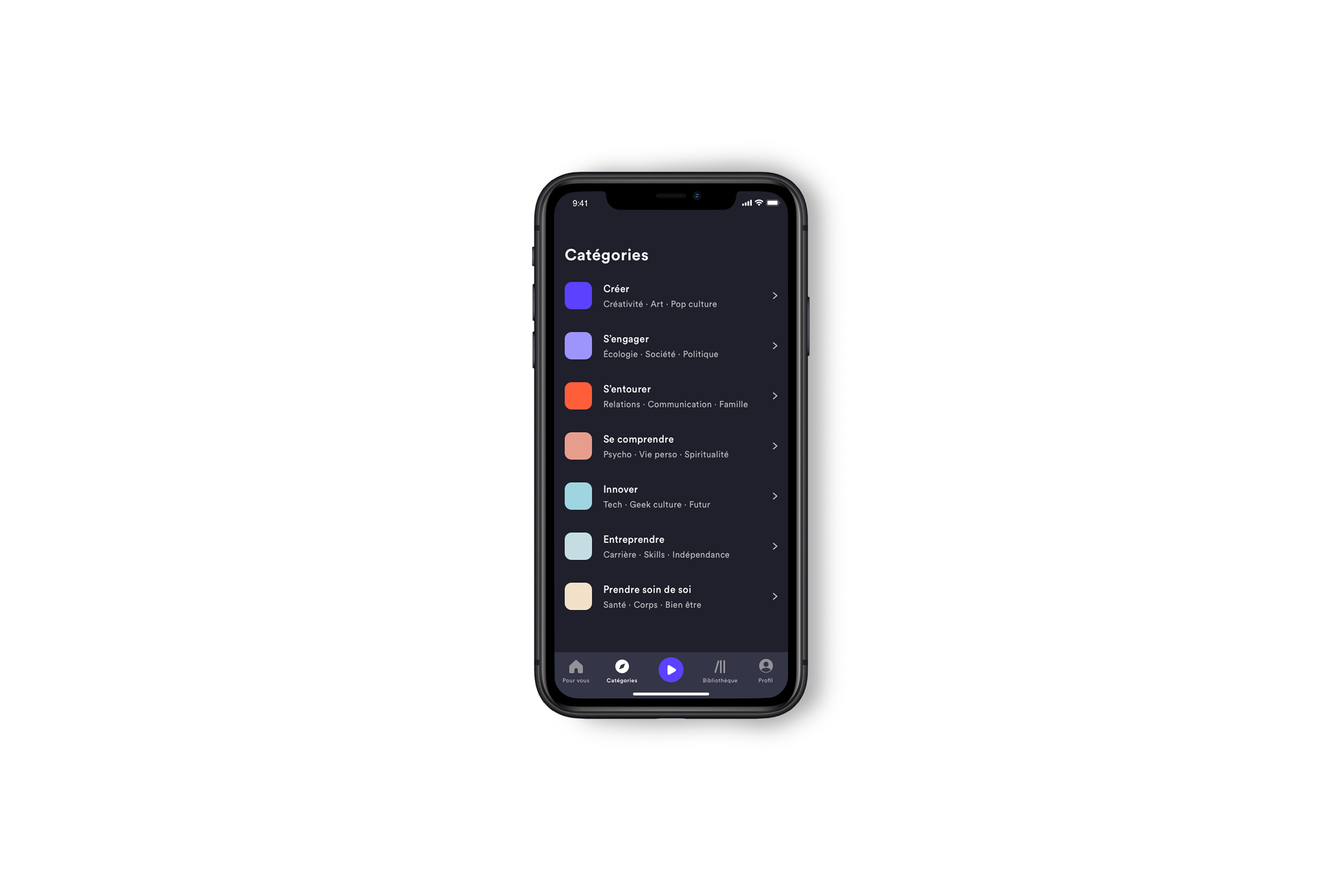
French startup Majelan is pivoting a year after launching a podcast player and service. The company, created by former Radio France CEO Mathieu Gallet and Arthur Perticoz, is ditching the podcast aggregation side of its business and focusing on premium audio content going forward.

Like many podcast startups, Majelan faced some criticism shortly after its launch. Aggregating free podcasts with premium content next to them à la Luminary is a controversial topic in the podcast community. Spotify has been going down the same path, but Spotify is also an order of magnitude bigger than any other podcast startup out there.

Some podcast creators have decided to remove their podcast feeds from Majelan to protest against that business model.

Podcasts remain an open format. Creators can create a feed, users can subscribe to that feed in their favorite podcast app. You don’t have to sign up to a particular service to access a particular podcast — everything is open.

“We have decided to stop aggregating free podcasts — free podcasts mean podcasts, period. For us, podcasts are RSS feeds, it’s an open world,” Perticoz said in a podcast episode. “We need an app that is more focused on payment. We can’t aggregate free podcasts given that our strategy is paid content.”

The result is a more focused service that is going to launch on July 7th in France. After a free trial, you have to subscribe for €5 to €7 per month, depending on the length of your subscription. You can then access a library of premium audio content — Majelan rightfully doesn’t call them podcasts.

“Going forward, we’re going to focus on original content, we’re going to focus 100% on paid content,” Gallet said in the same podcast episode.

And in order to be even more specific, Majelan will focus on personal growth, such as creativity, activism, mindfulness, innovation, entrepreneurship and health. According to the co-founders, some content will be produced in house, some content will be co-produced with other companies, and the startup will also acquire existing podcasts and repackage them for Majelan.

That move has been in the works for a while. The startup pitched it to its board of investors back in December. Premium subscriptions have worked well for movies, TV and music. Now let’s see if subscriptions will also take off with spoken-word audio.


from RSSMix.com Mix ID 8176981 https://techcrunch.com/2020/06/02/podcast-app-majelan-pivots-to-premium-audio-content-around-personal-growth/
http://www.gadgetscompared.com
from Tumblr https://ikonografico.tumblr.com/post/619850460825878528
via http://www.gadgetscompared.com
Decrypted: iOS 13.5 jailbreak, FBI slams Apple, VCs talk cybersecurity

It was a busy week in security.

Newly released documents shown exclusively to TechCrunch show that U.S. immigration authorities used a controversial cell phone snooping technology known as a “stingray” hundreds of times in the past three years. Also, if you haven’t updated your Android phone in a while, now would be a good time to check. That’s because a brand-new security vulnerability was found — and patched. The bug, if exploited, could let a malicious app trick a user into thinking they’re using a legitimate app that can be used to steal passwords.

Here’s more from the week.


THE BIG PICTURE

Every iPhone now has a working jailbreak


from RSSMix.com Mix ID 8176981 https://techcrunch.com/2020/06/02/decrypted-ios-jailbreak-fbi-apple-venture-capital/
http://www.gadgetscompared.com
from Tumblr https://ikonografico.tumblr.com/post/619839138672295936
via http://www.gadgetscompared.com
Monday, June 1, 2020

Android update delivers new ‘Bedtime’ features focused on improving sleep

At Google’s 2018 I/O developer conference, the company debuted a new suite of “digital well-being” aimed at helping Android users better manage their screen time. At its 2019 event, it expanded its tools’ capabilities and improved the related parental controls. Although Google I/O isn’t taking place this year due to the COVID-19 pandemic, the company is once again refreshing its well-being toolset. This year, the focus is a timely one, as Google will roll out new bedtime tools to help people get better sleep.

Google reports seeing a rise in sleep-related search queries like “insomnia” and “can’t sleep” in April and May, as the coronavirus crisis led to increased stress and anxiety, which can disrupt sleep.

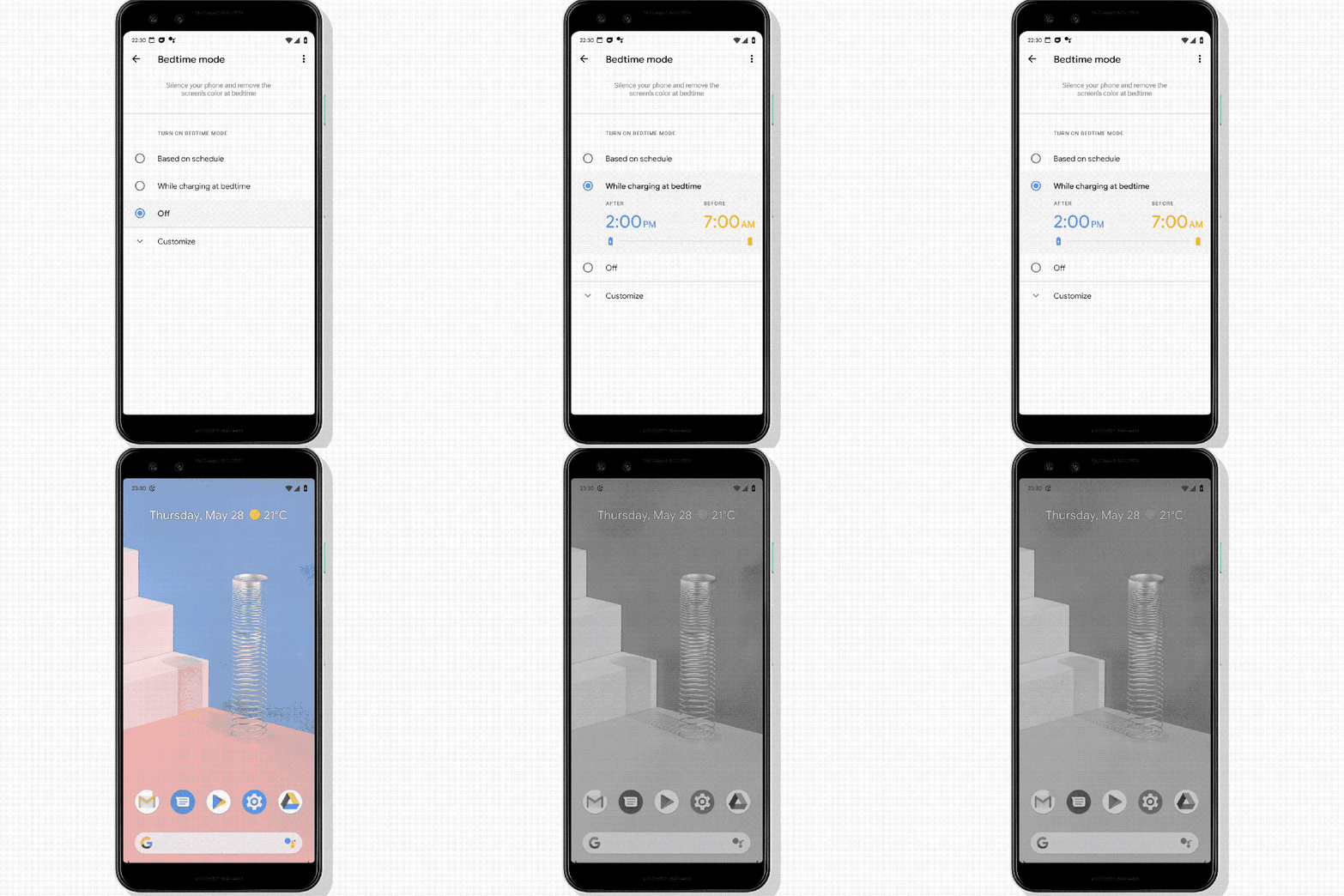
Android’s “Bedtime” mode, previously known as “Wind Down,” uses Do Not Disturb to silence calls, texts and notifications, while grayscale fades the colors on your phone to black and white, to reduce the draw to your screen. With the updates to this feature, Google is making it easier to customize when and how Bedtime mode is enabled.

Based on your bedtime schedule, you can now opt to have it automatically turn on after your phone is plugged into its charger. You can also add Bedtime mode to your Android phone’s Quick Settings, to instantly turn it on or off with a single tap. And if you need a few more minutes, you can choose to pause Bedtime mode without needing to adjust your schedule.

The update to Digital Wellbeing, which included the ability to automatically enable Bedtime mode when the phone is charging and add it to Quick Settings, actually rolled out earlier in May. But Google is announcing the features today as part of its other Bedtime mode changes.

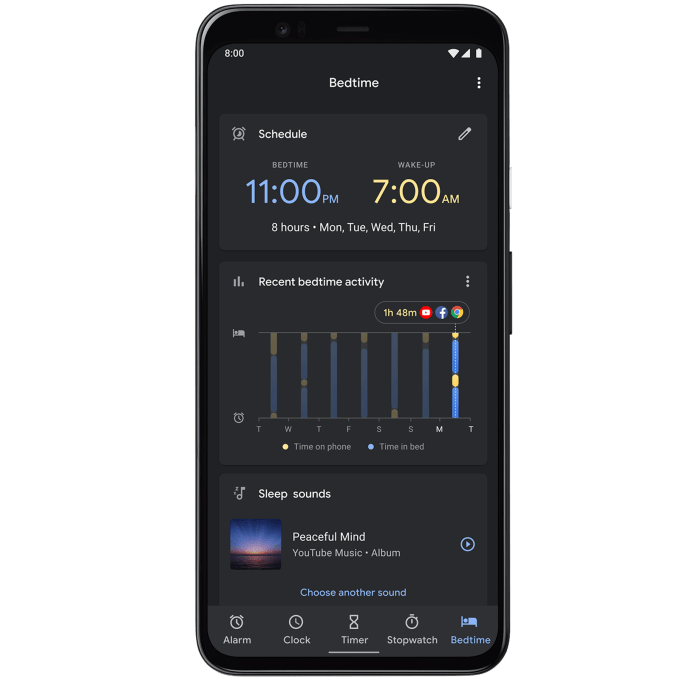
The Clock app on Android is also being updated with a new Bedtime tab.

Here, you can set daily sleep and wake times. In the app, you’ll be able to see a preview of your calendar for the next day, and then tally the total number of hours of sleep you’d get. This way, you can adjust your bedtime if needed to sync up with tomorrow’s schedule — even if that means diverting from your typical bedtime schedule.

In addition, users will receive a reminder before bedtime and have the option to play calming sounds from Calm, Spotify, YouTube Music and other sources. If they have Digital Wellbeing installed, they can pair with Bedtime mode to limit the interruptions during sleep.

The app will also display how much time you’re spending and which apps you’ve used after your set bedtime.

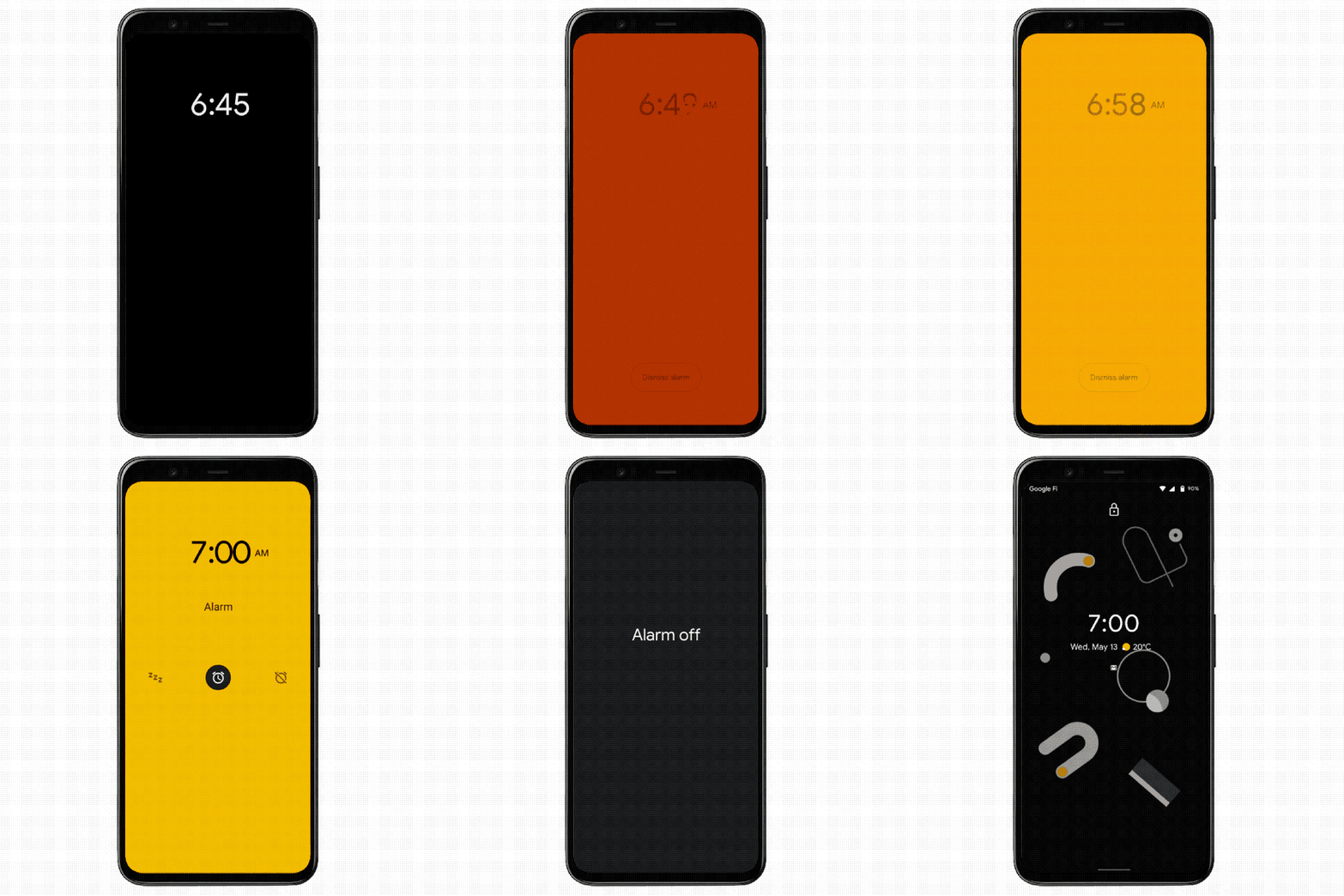
Google additionally suggested users looking for better sleep can try the “Sunrise Alarm” option that gradually brightens your screen to help you wake up more gently. This visual alarm system will begin 15 minutes prior to your audio alarm. Users can also set their favorite songs as an alarm to make the alarm less jarring, Google recommends.

The sunrise alarm was first introduced with the Pixel 3 and Pixel Stand in 2018. But with the update, you will no longer need the stand to use the feature — it’s a part of the new Bedtime tab in the Clock app.

Related to today’s launch of new bedtime features, Google noted it recently added new YouTube bedtime reminders. It also supports a daily bedtime schedule in Android’s parental controls feature, Family Link.

The updated Bedtime experience is launching first on Pixel devices starting today, and will roll out to the Clock app and on other Android devices later this summer. Pixel devices will be getting a handful of other updates, as well, including Adaptive Battery.

Pixel 2 devices and newer will notify the user when the battery is set to run out, while throttling background usage to save on life. The excellent Recorder app can now be triggered with a “Hey Google” and transcripts can be saved directly to Google Docs.

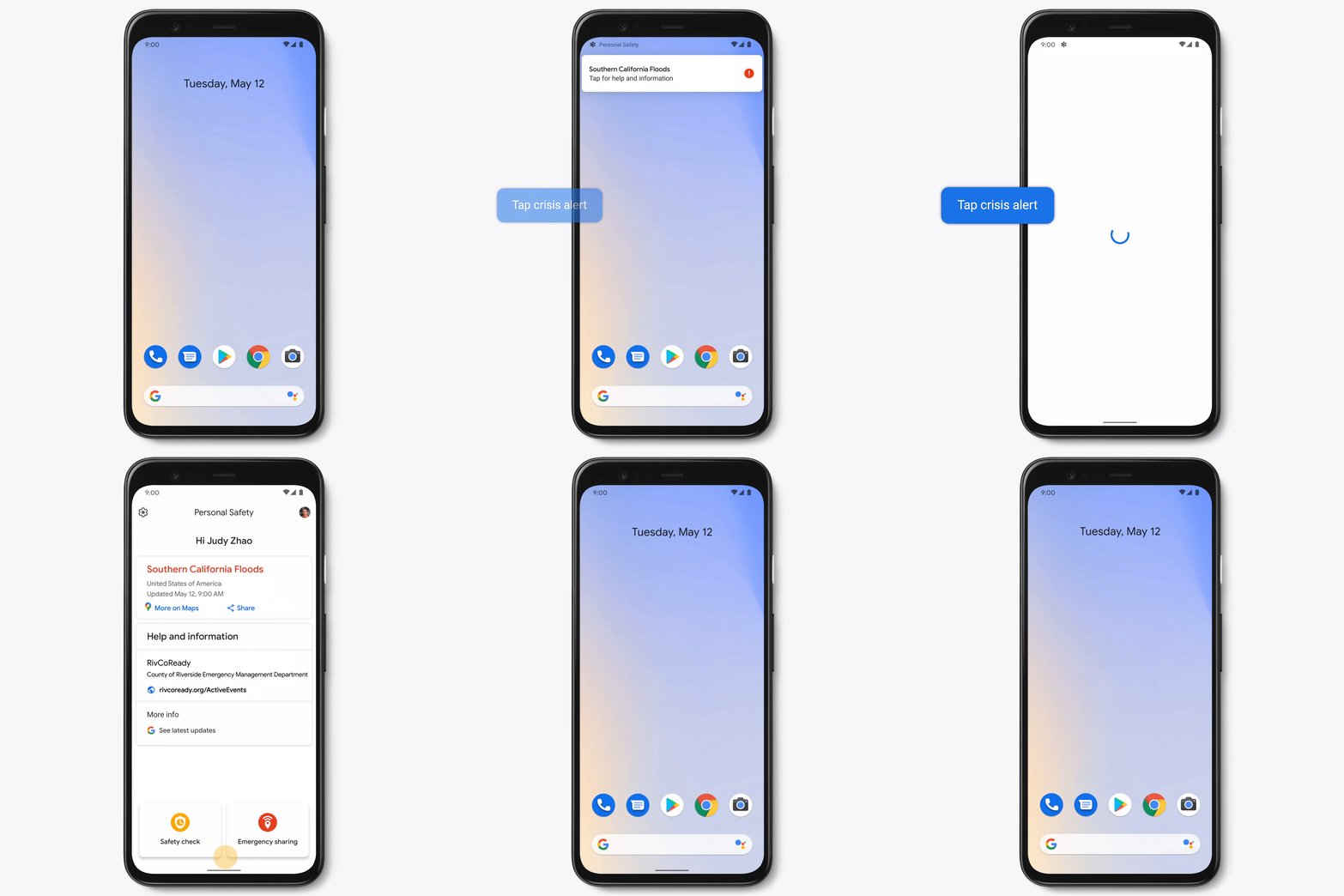
The Personal Safety app introduced on the Pixel 4 is now coming to all devices, while the Pixel 3 will get car crash detection. There’s also a new Safety Check feature designed to send out alerts in potentially dangerous situations. Per Google:

For example if you’re about to go on a run or hike alone, safety check will make sure you made it back safely. If you don’t respond to the scheduled check-in, the app will alert your emergency contacts. In the event that you need immediate help or are in a dangerous situation, emergency sharing notifies all of your emergency contacts and shares your real-time location through Google Maps so they can send help or find you.

The Personal Safety app will also let users set notifications for crises, including natural disasters and other public safety concerns.


from RSSMix.com Mix ID 8176981 https://techcrunch.com/2020/06/01/android-update-delivers-new-bedtime-features-focused-on-improving-sleep/
http://www.gadgetscompared.com
from Tumblr https://ikonografico.tumblr.com/post/619759855650111489
via http://www.gadgetscompared.com
Global smartphone sales plummeted 20% in Q1, thanks to COVID-19

More dismal numbers confirm what we already knew: Q1 2020 was real rough for an already struggling smartphone category. Gartner’s latest report puts the global market at a 20.2% slide versus the same time last year, thanks in large part to fallout from the COVID-19 pandemic.

Every single one of the global top-five manufactures saw large declines for the quarter, save for Xiaomi, which saw a slight uptick of 1.4%. The Chinese handset maker got a surprise bump, courtesy of international sales. Samsung and Huawei and Oppo all saw double-digit drop-offs at 22.7%, 27.3% and 19.1%, while Apple declined 8.2%. Other companies combined for a sizable 24.2% loss for Q1.

The reasons are ones we’ve gone over several times before, nearly all pertaining to the global pandemic. Chief among them are global stay at home orders and general economic uncertainly. Issues with the global supply chain have no doubt been a factor, as well, as Asia was the first to get hit with the virus.

All of this comes in addition to an already plateauing/declining smartphone market. Analysts had expected that the arrival of 5G would help stem the tide a bit — but, well, some stuff happened in there. Notably, Apple’s slide wasn’t as bad as it might have been thanks to a strong start to the year.

“If COVID-19 did not happen, the vendor would have likely seen its iPhone sales reached record level in the quarter. Supply chain disruptions and declining consumer spending put a halt to this positive trend in February,” Gartner’s Annette Zimmermann said in a release. “Apple’s ability to serve clients via its online stores and its production returning to near normal levels at the end of March helped recover some of the early positive momentum.”

Overall, I suspect that recovery won’t be instantaneous for the market. The future of COVID-19 still feels largely uncertain as countries have begun the process of reopening, and a pricey investment still may not be in the cards for many who are struggling to make ends meet. 


from RSSMix.com Mix ID 8176981 https://techcrunch.com/2020/06/01/global-smartphone-sales-plummeted-20-in-q1-thanks-to-covid-19/
http://www.gadgetscompared.com
from Tumblr https://ikonografico.tumblr.com/post/619729668185128960
via http://www.gadgetscompared.com