Tuesday, October 13, 2020

Apple’s iPhone 12, 12 mini, 12 Pro and 12 Pro Max: what’s the difference?

Gone are the days a company like Apple could simply roll out a single flagship handset or two. Consumer demands have evolved quite a bit in the more than 13 years since the company released its first smartphone, and its offerings have had to evolve with it. That means now, more than ever, offering a broad range of choice in terms of feature set, size and price.

Apple actually announced four phones at today’s event: the iPhone 12, 12 mini, 12 Pro and 12 Pro Max. Add to that the fact that the company is keeping the 11 around at a lower price point, and that leaves iOS devotees with more options than ever when it comes to purchasing a new handset, with starting prices ranging from $599 to $1,099. And, of course, configurations go up from there.

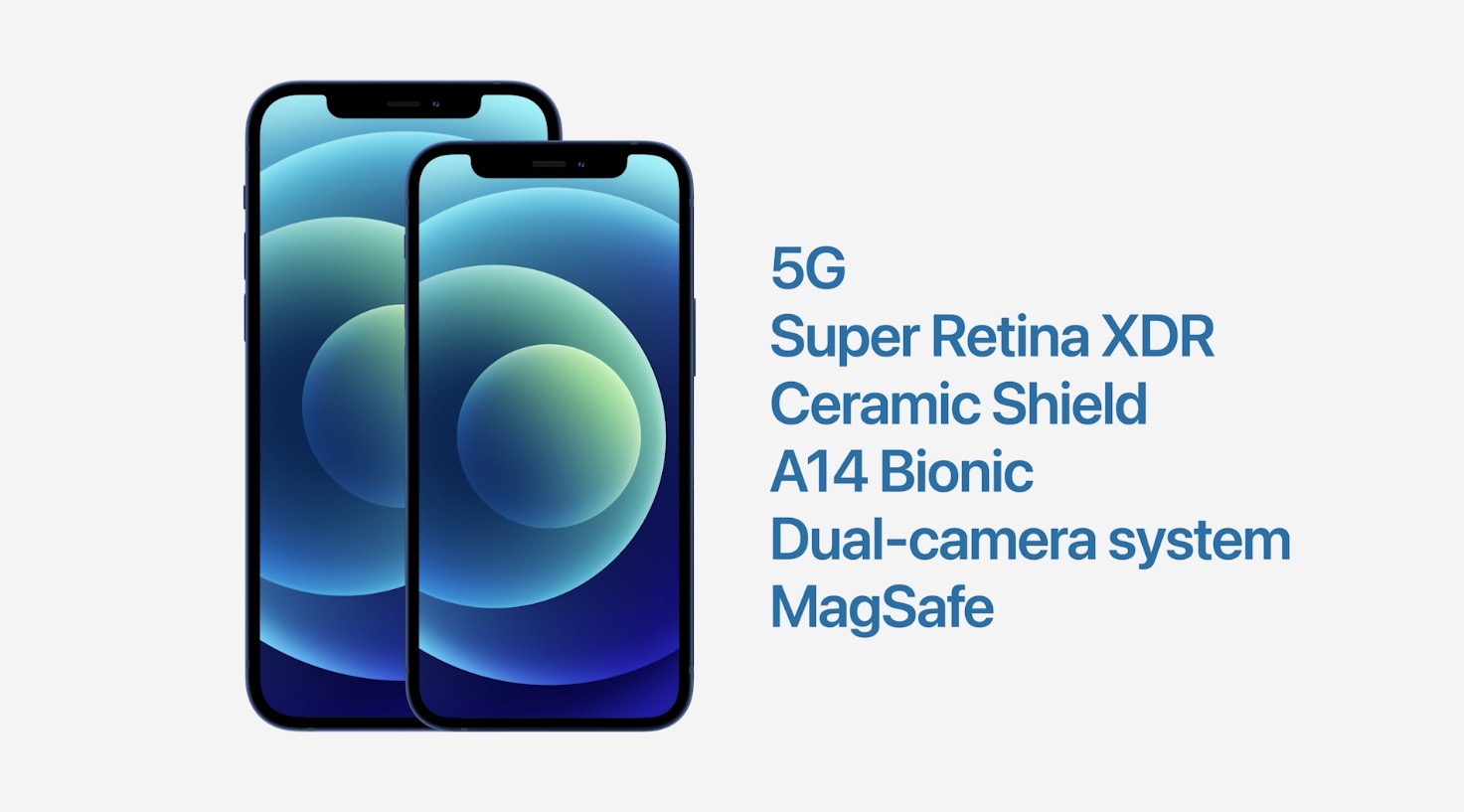
All of the new devices announced today share some key common features: 5G connectivity, the new magnetic MagSafe connector, OLED displays and the A14 chip, for starters. They also get the new iPad Pro-style design, complete with straight edges that allow for the placement of additional antennas for the next-gen wireless connectivity. From there, however, things get more complicated. There’s a range here in size, cameras and capacity for starters.

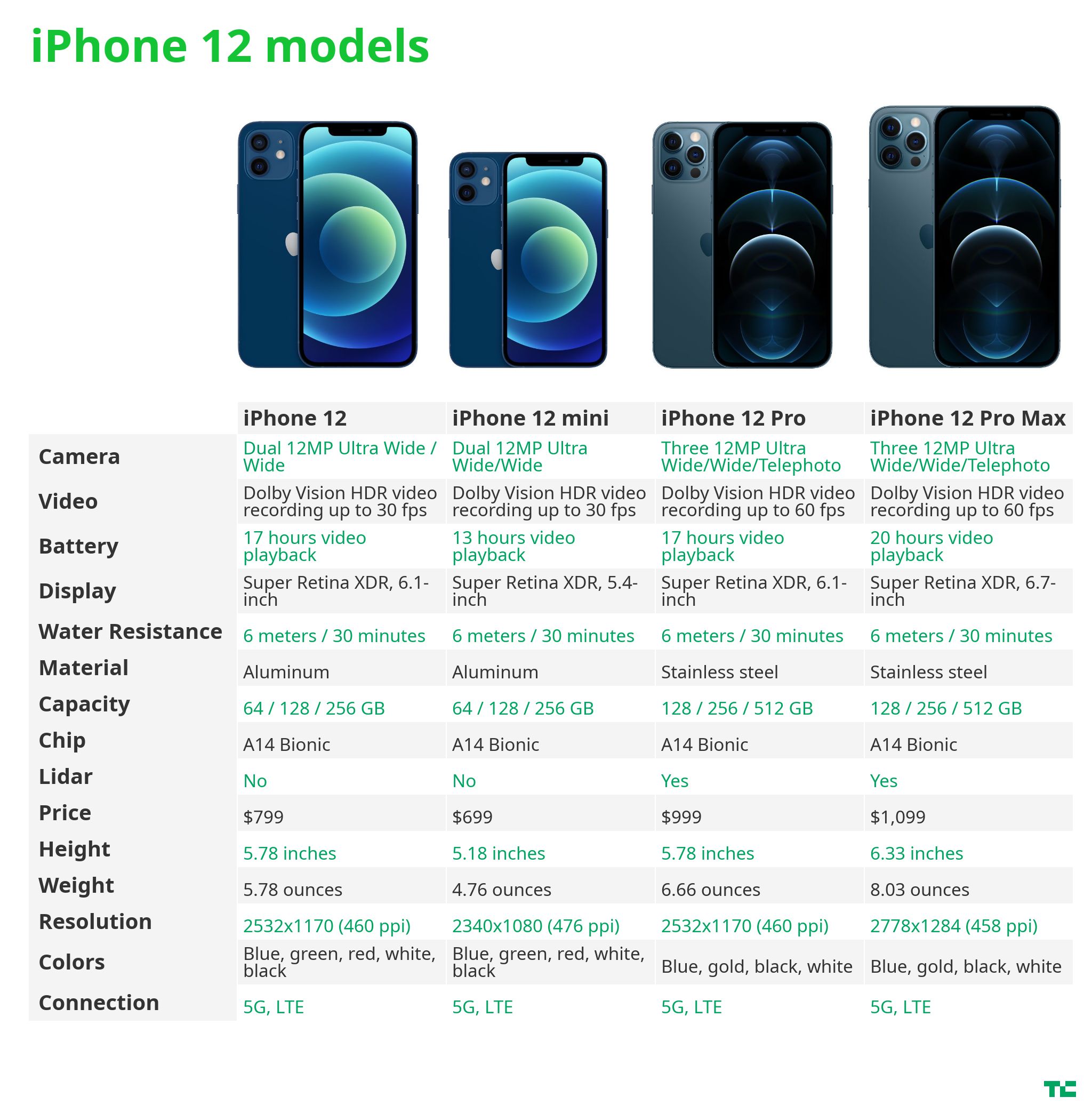
Here’s a handy chart to keep it all straight:

chart comparing iPhone 12 models

[click to enlarge]


from RSSMix.com Mix ID 8176981 https://techcrunch.com/2020/10/13/apples-iphone-12-12-mini-12-pro-and-12-pro-max-whats-the-difference/
http://www.gadgetscompared.com
from Tumblr https://ikonografico.tumblr.com/post/631907402447470593
via http://www.gadgetscompared.com

Apple’s iPhone 12 starts at $799, sporting 5G and a magnetic adapter

It took a bit longer than usual (thank COVID-19 for some insurmountable manufacturing delays), but the iPhone 12 is here. And as expected, it comes bearing 5G. The latest version of Apple’s smartphone also arrives in a variety of different sizes, as the company continues to adjust to changing consumer purchasing patterns around mobile devices.

The inclusion of next-gen wireless is, of course, the flagship feature here. Apple is far from the first company to offer 5G on a handset, but given a bit of a bottleneck in adoption given the extremely odd year we’ve been experiencing. According to recent numbers from Canalys, only 13% of handsets shipping in the first half of the year were 5G capable. That means there’s a long way to go, and Apple finally adopting the tech will certainly move the needle.

CEO Tim Cook kicked off the announcement by inviting Verizon (TC’s parent co.) on stage to sell the carrier’s UWB take on the tech and announce that it’s gone “nationwide.” 5G will be available on all of the new models announced today. The specifics of the 5G will vary based on location — here in the States, for example, mmwave will also be available.

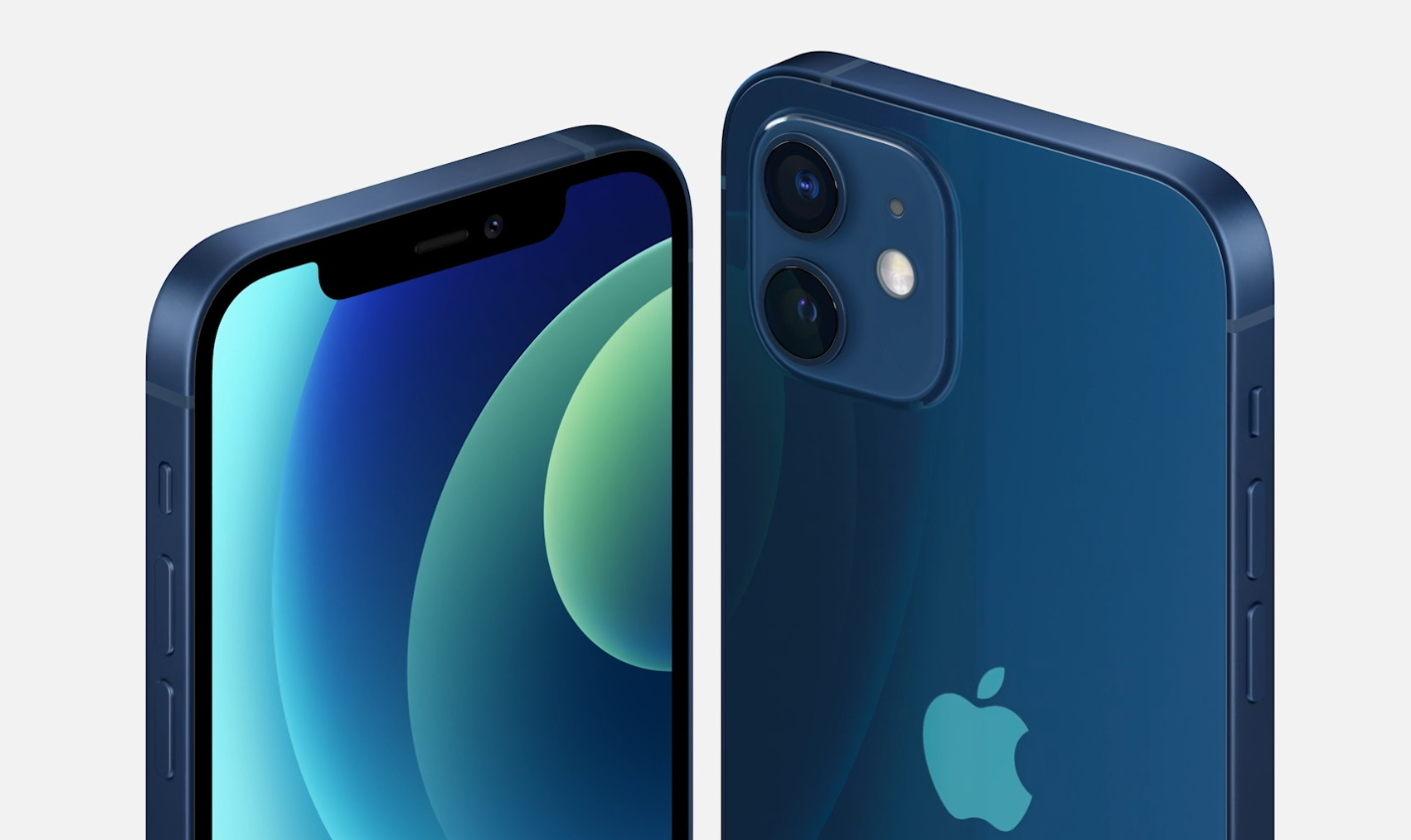
As expected, the line gets a full redesign, borrowing cues from the iPad Pro, including a flat edge more in line with older devices than the newer curved models. The device is also 11% thinner and lighter than its predecessor. The redesign also makes it possible for the company to pack more antennas into the edge of the device.

There’s a Corning glass display. Apple says it worked directly with with the Gorilla Glass maker to develop ceramic shield, which it states is around six-times more reliable in drop tests. The smartphone sports an OLED display (which appears to be consistent across the new devices, as well), with double the number of pixels as the iPhone 11.

The handset sports the already-announced A14 bionic chip. Apple’s silicon sports six-cores on its CPU and four on its GPU. The latter will go a ways toward extending its position in mobile gaming. The company used that opportunity to announce that it will be bringing Riot Games’ League of Legends: Wild Rift to the handset. As anticipated, the base model 12 sports a dual-camera rear — with 12-megapixel wide and ultra-wide lenses. Night Mode has been improved across the devices and added to the front camera.

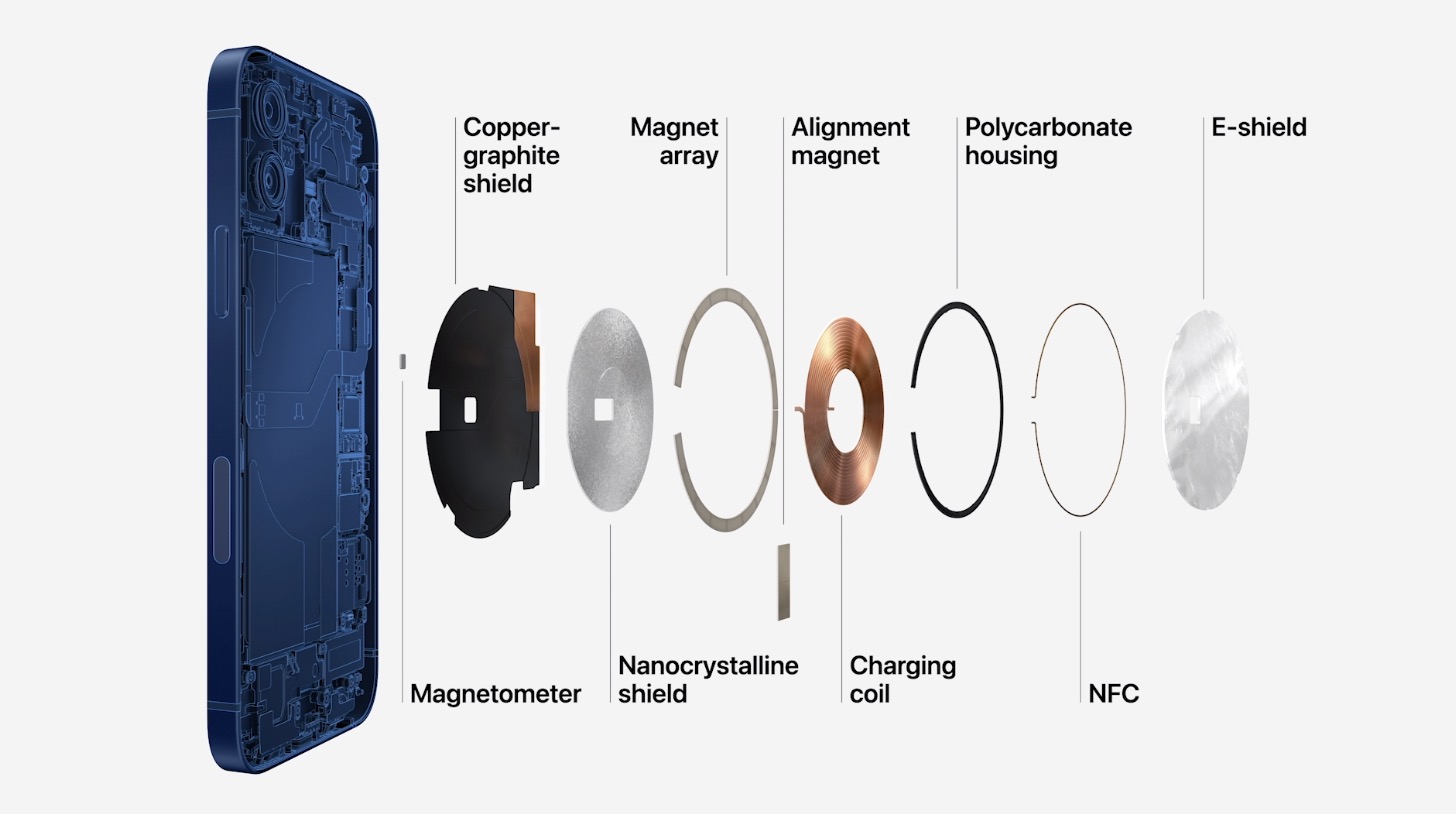
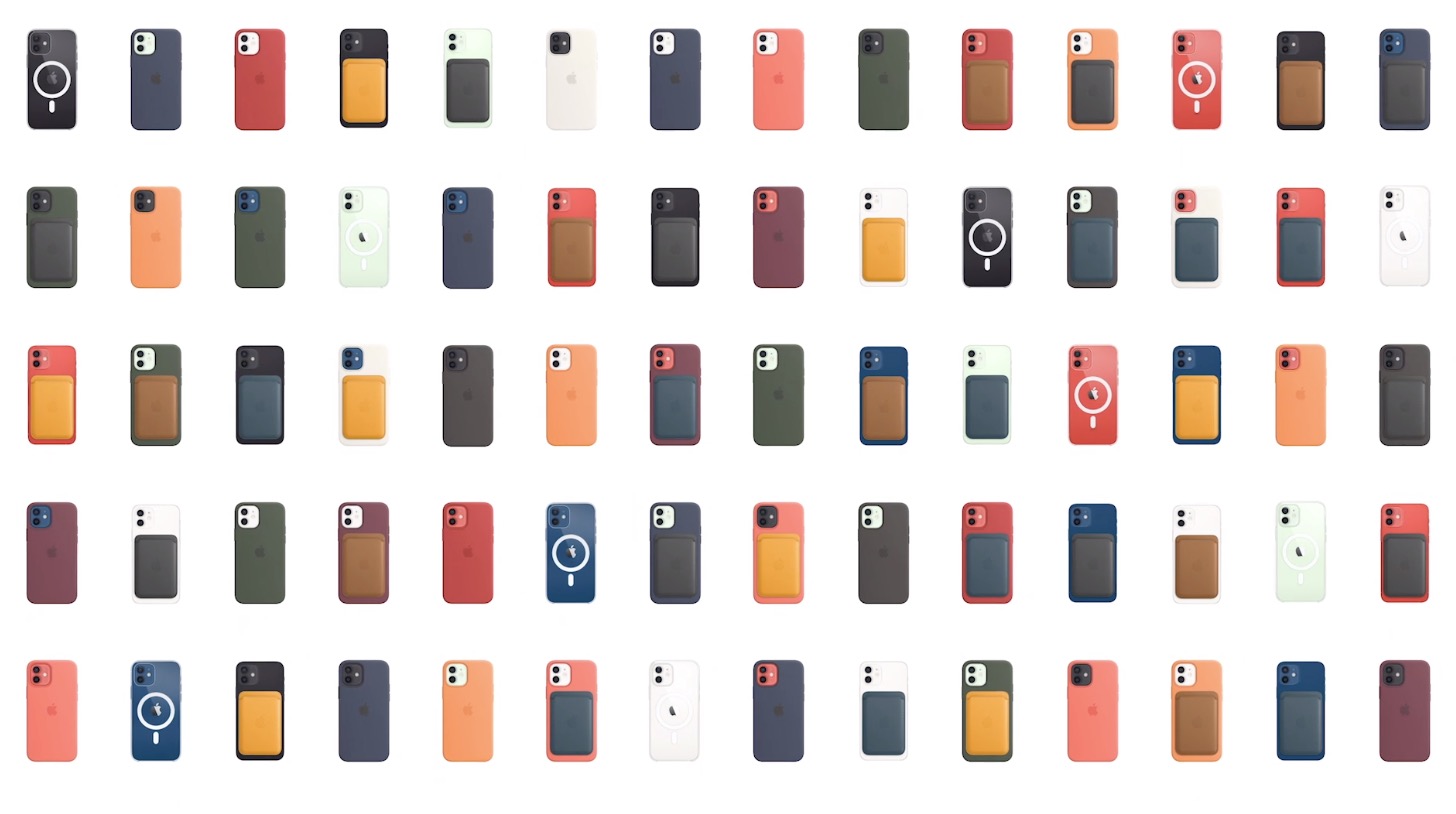
The MagSafe name is back — albeit far removed from the version we all fondly remember from the Mac. Here it refers to a magnetic system built into the rear of the device that lets compatible accessories snap directly onto the device. That includes a slew of different products from Apple and third-parties, including wireless charging pads and cases. The list includes Apple’s own combination phone/Watch charger — not quite AirPower, but still fun.
Speaking of charging, the Lightning port is still very much on-board, in-spite of dropping it on some iPad models. Speaking of dropping things, Apple is getting rid of a bunch of the inbox accessories, including Earpods and the adapter, ostensibly for environmental purposes.
The new iPhone starts at $799 — $100 more than the also-announced iPhone 12 mini. The model will also be joined by the higher-end Pro and Pro Max, priced up to $1,099.


from RSSMix.com Mix ID 8176981 https://techcrunch.com/2020/10/13/this-is-the-iphone-12/
http://www.gadgetscompared.com
from Tumblr https://ikonografico.tumblr.com/post/631896105501753344
via http://www.gadgetscompared.com

The iPhone 12 and HomePod mini leak ahead of today’s big Apple event

I guess maybe don’t read this if you like being surprised. Though you already read the headline and saw the first image, so you might as well keep keep going, right? And this is an Apple event we’re talking about, so surely there will be a surprise or two left. What we have here are a bunch of photos of the headliners of today’s big “Hi Speed” Apple event. Courtesy of perennial smartphone leaker Evan Blass, the shots appear to confirm the arrival of the iPhone 12 and HomePod Mini in a matter of hours.

There aren’t a lot of details attached — though, thanks to earlier rumors and leaks we seem to have a pretty good idea of what we’re in for at today’s event. Apple’s long-standing devotion to the notch is still front and center, and the flat-sided, iPad Pro design appears to be present, though we’re looking at the front and back straight on for all of these (more or less the same renderings, with subtle differences).

All four of the expected versions are present and accounted for: the 12, 12 mini, 12 Pro and 12 Pro Max. Prices are expected to range from $699 to $1,099. Screen sizes, meanwhile, go from 5.4 to 6.7 inches (which both the iPhone 12 and 12 Pro sitting in the middle at 6.1 inches). The Pro and Pro Max sport a three camera set up (versus the 12 and 12 mini’s two), along with an additional LiDAR sensor like the kind added to the iPad Pro earlier this year.

There are a number of color to chose from, including black, white and a navy Blue. There’s also a mint green on the lower-end models, along with Product (RED) versions, while the pricier models come in gold and graphite.

Image Credits: Evan Blass

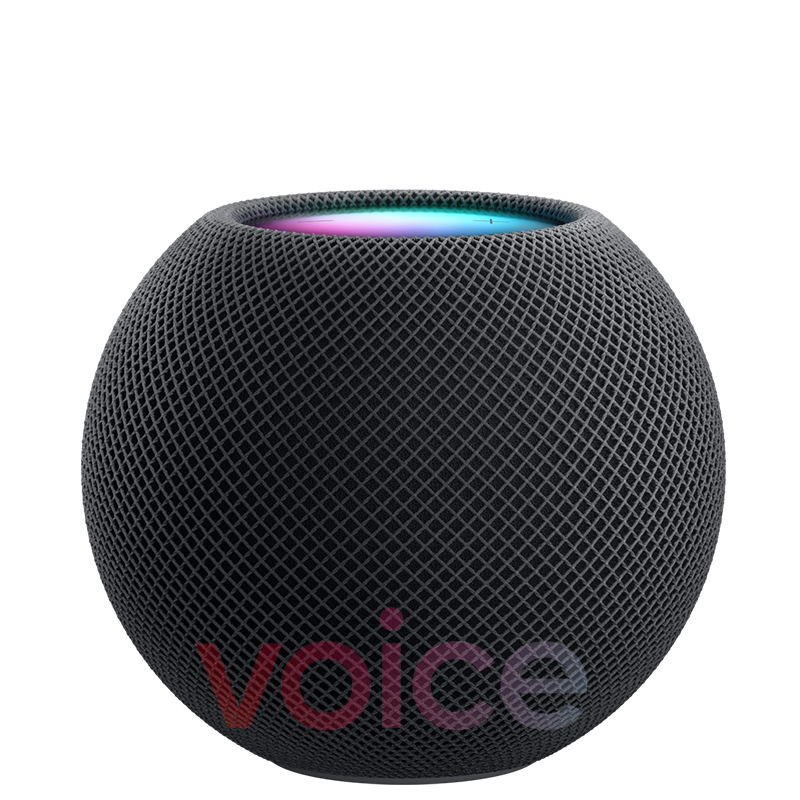
We’ve also got a good look at the profile of the new HomePod mini. Apple delivered great sound with its premium smart speaker, but the $349 Siri system was price prohibitive for many. Rumored to cost $99, the would offer a much more accessible method for getting the HomeKit Hub into homes — or, perhaps, augmenting existing HomePod set ups. Much like the mini versions of Google and Amazon’s own speakers, however, it seems fairly likely some of that room-filling sound will be sacrificed for size and price.

The model is spherical, like the new Echo and sports a similar mesh speaker grille as the standard HomePod. It also borrows that device’s colorful Siri light up top, along with a pair of volume buttons.


from RSSMix.com Mix ID 8176981 https://techcrunch.com/2020/10/13/the-iphone-12-and-homepod-mini-leak-ahead-of-todays-big-apple-event/
http://www.gadgetscompared.com
from Tumblr https://ikonografico.tumblr.com/post/631884752243359744
via http://www.gadgetscompared.com

Watch Apple unveil the new iPhone live right here

Apple is set to announce new iPhone models today. The company is holding a (virtual) keynote at 10 AM PT (1 PM in New York, 6 PM in London, 7 PM in Paris). And you’ll be able to watch the event right here as the company is streaming it live.

Rumor has it that there will be four versions of the iPhone 12, including a “mini” phone with a 5.4-inch display, an iPhone 12, 12 Pro and 12 Pro Max. The iPhone 12 and 12 Pro could share the same 6.1-inch display, while the iPhone 12 Pro Max could feature a 6.7-inch display.

You can expect some models with 5G networking capabilities. While the company will likely spend time explaining why 5G is faster than 4G, remember that many carriers have yet to roll out their 5G networks beyond some testing cities.

But that’s not all. Apple could also unveil a wireless charging pad. This time, it’s not going to be named AirPower. The company could bring back the name MagSafe for the accessory.

On the audio front, many people believe that Apple has been working on over-ear headphones. It would fit well in the AirPods lineup. Apple could also use this opportunity to launch a smaller, cheaper HomePod.

You can watch the live stream directly on this page, as Apple is streaming its conference on YouTube.

If you have an Apple TV, you can download the Apple Events app in the App Store. It lets you stream today’s event and rewatch old ones. The app icon was updated a few days ago for the event.

And if you don’t have an Apple TV and don’t want to use YouTube, the company also lets you live stream the event from the Apple Events section on its website. This video feed now works in all major browsers — Safari, Microsoft Edge, Google Chrome and Mozilla Firefox.


from RSSMix.com Mix ID 8176981 https://techcrunch.com/2020/10/13/apple-iphone-12-mini-pro-max-keynote-live-stream-livestream/
http://www.gadgetscompared.com
from Tumblr https://ikonografico.tumblr.com/post/631862207277318144
via http://www.gadgetscompared.com

Monday, October 12, 2020

What to expect from Apple’s ‘Hi Speed’ iPhone event

For starters, iPhones, of course. That one was easy. The company skipped out on new mobile devices during its recent Apple Watch event, owing to COVID-19-related delays. And, of course, the fact that the events are all pre-taped and virtual now means companies can more easily split them up in ways that were harder to justify when people were expected to fly in from all over the world.

That doesn’t mean we won’t be getting more than just a phone (or, more like multiple phones). While Apple’s been more inclined to host more, smaller events, there’s a decent chance this is going to be the last major event the company hosts before the holidays. That means it’s going to want to get a lot of bang for its buck this time out.

The iPhone 12 is expected to be the centerpiece, of course. The headline feature will almost certainly be 5G. Apple’s been a little behind the curve on that front versus its Android competitors (Samsung, for instance, has several devices with next-gen wireless), though another knock-on effect from the pandemic has been a slower than expected adoption of the tech. So in some ways, Apple’s really right on time here. In the U.S., the company is said to offer both the mmWave and sub-6Ghz 5G technologies. Availability may vary depending on the needs of a given market.

Rumors point to a bunch of different models. After all, gone are the days a company like Apple could just offer up a big premium device and be done with it. Sales for high-end devices were already drying up well before the virus came along to bring smartphone sales to a screeching halt there for a bit. People were already tired of paying in excess of $1,000 for new phones when the ones they already had still did the job perfectly fine.

There are supposedly four sizes arriving. There will be higher-end devices at 6.1 and 6.7 inches, and more budget-minded devices at 6.1 and 5.4 inches. It’s a pretty broad price range, from $699 for the “mini” to $1,099 and up for the Pro Max (sandwiched between are the $799 iPhone 12 and $999 Pro). Along with its recently expanded Watch line, Apple’s all about choice this time out.

Reportedly, however, the company will be bringing OLED tech to all of the models, marking a pretty big change from the days of LCD-sporting budget models. The new models are expected to get a welcome redesign, reportedly returning to something more in line with the iPhone 5. The rounded edges are expected to be dropped in favor of a flatter design, akin to what you get on the iPad Pro.

Other interesting potential additions include the return of the company’s dearly departed MagSafe life for a pair of wireless charging pads that will hopefully finally lay to rest any memory of the failed AirPower experiment. Available for one or two devices, the new pads will reportedly leverage magnets built into the phones to snap them in place.

Music has always been a cornerstone for the company, and it’s long overdue for some updates to audio products. This time out, we may finally get the long-awaited AirPods Studio, an over-ear addition to its line of headphones. The models are set to come in two variations, the largest variation being build materials. A smaller version of its smart speaker could be on the way, as well. The HomePod has long been cost-prohibitive for many, so a mini version could finally make it a bit more accessible.

Another long-rumored addition — AirTags — could finally arrive, as well. Apple’s product-tracking Tile competitor has been in the cards for some time now, but has repeatedly been delayed. That may still be the case — and same goes for a refresh to Apple TV. With the company’s subscription service about to celebrate its year anniversary, it could really use some updated hardware. New Macs with Apple-built chips could be on the table, as well, though the company is reportedly planning one more 2020 event for that big launch.

The event kicks off tomorrow at 10AM PT/1PM ET. We’ll be watching along with you, bringing you the news as it breaks.


from RSSMix.com Mix ID 8176981 https://techcrunch.com/2020/10/12/what-to-expect-from-apples-hi-speed-iphone-event/
http://www.gadgetscompared.com
from Tumblr https://ikonografico.tumblr.com/post/631809302272835585
via http://www.gadgetscompared.com

Sunday, October 11, 2020

Hands on with Telepath, the social network taking aim at abuse, fake news and, to some extent, ‘free speech’

There’s no doubt that modern social networks have let us down. Filled with hate speech and abuse, moderation and anti-abuse tools were an afterthought they’re now trying to cram in. Meanwhile, personalization engines deliver us only what will keep us engaged, even if it’s not the truth. Today, a number of new social networks are trying to flip the old model on its head — whether that’s attempting to use audio for more personal connections, like Clubhouse, eliminate clout chasing, like Twelv, or, in the case of new social network Telepath, by designing a platform guided by rules that focus on enforcing kindness, countering abuse, and disabling the spread of fake news.

Many of these early efforts are already facing challenges.

Private social network Clubhouse has repeatedly demonstrated that allowing free-flowing communication in the form of audio conversations is an area that’s notoriously difficult to moderate. The app, though still unavailable to the broader public, courted controversy in September when it allowed anti-Semitic content to be discussed in one of its chat rooms. In the past, it had also allowed users to harass an NYT reporter openly.

Meanwhile, Twelv, a sort of Instagram alternative, ditches the “Like” button concept and all the other features now overloading Instagram, which had once been just a photo-sharing network. But, unfortunately, this also means there’s no easy way to find and follow interesting users or trends on Twelv — you have to push friends to join the app with you or know someone’s username to look them up, otherwise it shows you no content. The result is a social network without the “social.”

Telepath, meanwhile, is a more interesting development.

It’s pursuing an even loftier goal in social networking — creating a hate speech-free platform where fake news can’t be distributed.

No social network to date has been able to accomplish what Telegraph claims it will be able to do in terms of content moderation. Its ambitions are optimistic and, as the network remains in private beta, they’re also untested at scale.

Though positioned as a different kind of social network, Telepath isn’t actually focused on developing a new sharing format that could encourage participation — the way TikTok popularized the 15-second video clip, for example, or how Snapchat turned the world onto “Stories.”

Instead, Telepath, at first glance, looks very much like just another feed to scroll through. (And given the amount of linked Twitter content in Telepath posts, it’s almost serving as a backchannel for the rival platform.)

The startup itself was founded by former Quora employees, including former Quora Business & Community head, Marc Bodnick, now Telepath Executive Chairman; and former Quora Product Lead, Richard Henry, now Telepath CEO. They’re aided by former Quora Global Writer Relations Lead, Tatiana Estévez, now Telepath Head of Community and Safety; and Ro Applewhaite, previously research staff for Pete Buttigieg for America, now Telepath Head of Outreach.

It’s backed by a couple million in seed funding, led by First Round Capital (Josh Kopelman). Other backers include Unusual Ventures (Andy Johns), Slow Ventures (Sam Lessin), and unnamed angels. Bodnick and his wife, Michelle Sandberg, also invested.
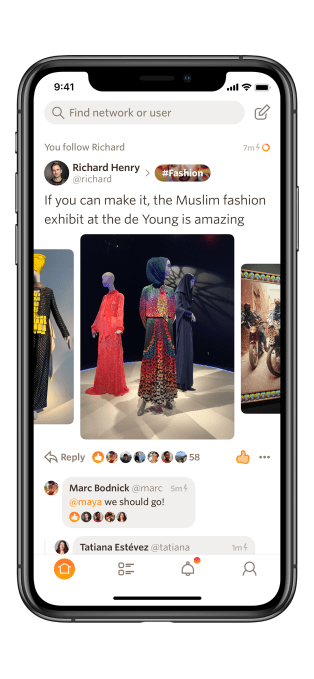
Image Credits: Telepath

When talking about Telepath, it’s clear the founders are nostalgic for the early days of the web — before all the people joined, that is. In smaller, online communities in years past, people connected and made internet friends who would become real-world friends. That’s a moment in time they hope to recapture.

“I’ve benefited a lot by meeting people through the internet, forming relationships and having conversations — that sort of thing,” says Henry. “But the internet just isn’t fun in the ways that it used to be fun.”

He suggests that the anonymity offered by networks like Reddit and Twitter make it more difficult for people to make real-world connections. Telepath, with its focus on conversations, aims to change that.

“If we facilitate a really fun, kind, and empathetic conversation environment, then lots of good things can happen. And it might be that you potentially find someone you want to work with, or you end up getting a job, or you meet new friends, or you end up meeting offline,” Henry says.

Getting Started

To get started on Telepath, you join the network with your mobile phone number and name, find and follow other users, similar to Twitter, then join interest-based communities as you would on Reddit. When you launch the app, you’re meant to browse a home feed where conversation topics from your communities and interesting replies are highlighted — orange for those replies from people you follow and gray for those that Telepath has determined are worth being elevated to the home screen.

As you read through the posts and visit the communities, you can “Thumbs Up” content you like, downvote what you don’t, reply, mute, block, and use @usernames to flag someone.
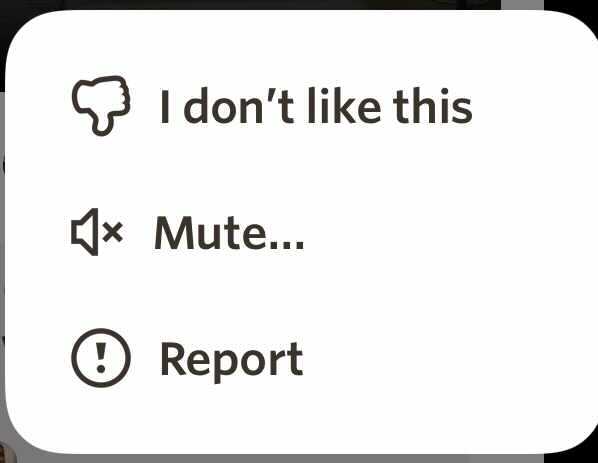
Image Credits: Telepath, screenshot via TechCrunch

Another interesting design choice: everything on Telepath disappears after 30 days. No one will get to dig through your misinformed posts from a decade ago to shame you in the present, it seems.

What’s most different about Telepath, however, is not the design or format. It’s what’s taking place behind the scenes, as detailed by Telepath’s rules.

Users who join Telepath must agree to “be kind,” which is rule number one. They must also not attack one another based on identity or harass others. They must use a real name (or their preferred name, if transgender), and not post violent content or porn. “Fake news” is banned, as determined by a publisher’s attempts at disseminating misinformation on a regular basis.

Telepath has even tried to formalize rules around how polite conversations should function online with rules like “don’t circle the drain” — meaning don’t keep trying to have the last word in a contentious debate or circumvent a locked thread; and “stay on topic,” which means don’t bombard a pro-x network with an anti-x agenda (and vice versa.)
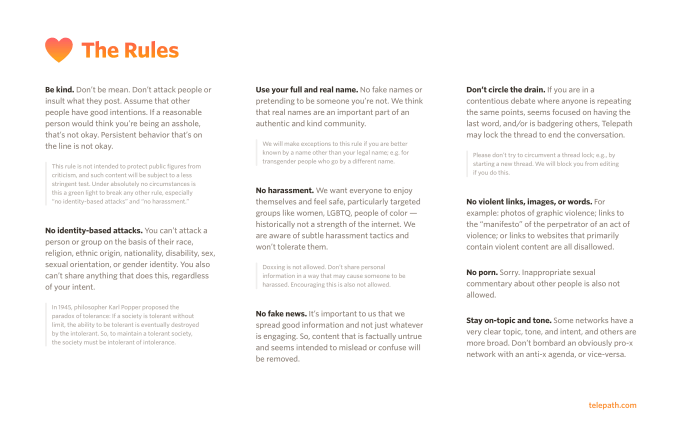
Image Credits: Telepath

To enforce its rules, Telepath begins by requiring users to sign up with a mobile phone number, which is verified as a “real” number associated with a SIM card, and not a virtual one — like the kind you could grab through a “burner” app.

In order to the create its “kind environment,” Telepath says it will sacrifice growth and hire moderators who work in-house as long-term, trusted employees.

“All the major social networks essentially grew in an unbounded way,” explains Henry. “They had 100 million-plus active users, then were like, ‘okay, now how do we moderate this enormous thing?’,” he continues. “We’re in a lucky position because we get to moderate from day one. We get to set the norms.”

Moderation

“Day one” was a long time in the making, however. The team rebuilt the product four times over a couple of years. Now, they say they’ve developed internal tools that provide moderators with visibility into the system.

According to moderator head Estévez, these include a reporting system, real-time content streams organized in to buckets (e.g. a bucket for “only new users”), as well as various searchable ways to get context around a report or a particular problematic user.

“Really good tools — including real-time streams of content, classifiers for problematic behavior, searchable context, and making it hard for banned users to return — mean that each moderator we hire will be quite scalable. We think that there are network effects around positive behavior,” she says.
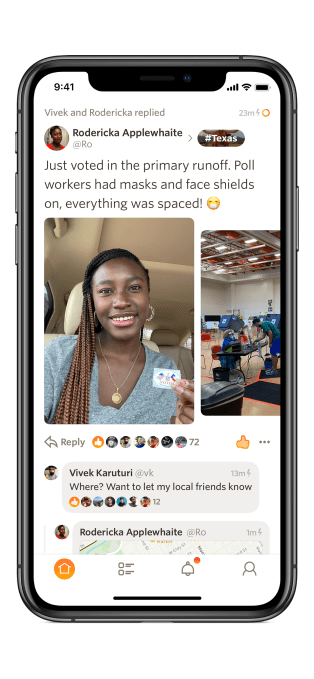
Image Credits: Telepath

“It’s our intention to scale up fast and high accuracy moderation decision-making, which means that we’re going to be investing a lot of engineering effort in getting these tools right,” she adds.

The founders have decided not to use any third-party systems to aid in moderation at this time, they told TechCrunch.

“We looked at a bunch of off-the-shelf [moderation systems], and we’re basically building everything that we need from scratch,” says Henry. “We just need more control over being able to tweak how these systems work in order to get the outcome that we want.”

The investment in human moderation over automation will also require additional capital to scale. And Telepath’s decision to not run ads means it will eventually need to consider alternative business models to sustain itself. The company, for now, is interested in subscriptions, but hasn’t made decisions on this front yet.

Banning the trolls

Though Telepath has only 4,000-plus users in its private beta, the two-person moderation team is already tasked with moderating posts from across the thousands of pieces of content shared on a daily basis. (The company doesn’t disclose how many violations it takes action against per day, on average.)

When a user breaks the rules, moderators may first warn them about the violation and may require them to take down or edit a specific post. No one is punished for making a mistake or being unaware of the rules — they’re first given a chance to fix it.

But if a user breaks the rules repeatedly or in a way that seems intentional, such as engaging in a harassment campaign around another user, they are banned entirely. Because of the phone number verification system, they also can’t easily return — unless they go out and purchase a new phone, that is.

These moderation actions don’t necessarily have to follow strict guidelines, like a “three strikes rule,” for example. Instead, the way the rules may be enforced are determined on a case-by-case basis. Where Telepath leans towards stricter enforcement is around intentional and flagrant violations, or those where there’s a pattern of bad behavior. (As with Reply Guys and sealioning behavior.)

In addition, unlike on Facebook and Twitter — platforms that sometimes seem to be caught off guard by viral trends in need of moderation — Telepath intends for nothing to go viral on its platform without having been seen by a human moderator, the company says.

Fake News

Telepath is also working to develop a reputation score for users and trust scores for publishers.

In the case of the former, the goal is help the company determine how likely the user is to break Telepath’s rules. This isn’t developed yet, but would be something used behind the scenes, not put on display for all to see.

For publishers, the trust score will be how factually correct they are what percentage of the time.

Image Credits: Thomas Faull (opens in a new window) / Getty Images

“For example, if the most popular article in terms of views from the publisher is just completely factually incorrect or intentionally misleading…that should have a bigger penalty on the trust score,” explains Henry. “The problem is that the incumbent platforms have rules against disinformation, but the problem is that they don’t enforce them out of this desire to appear balanced.”

Bodnick adds this challenge is not as insurmountable as it seems.

“Our view is that, actually, a handful of outlets are responsible for most of the disinformation…I don’t think our intent is to build out some modern-day truth system that will figure out if The Washington Post is slightly more accurate than The New York Times. I think the main goal will be to identify repeat disinformation publishers — determine that they are perpetual publishers of disinformation, and then crush their distribution,” says Bodnick.

This plan, however, involves setting rules on Telepath that fly in the face of what many today consider “free speech.” In fact, Telepath’s position is that free speech-favoring social networks are a failed system.

“The problem, in our view, is that when you take this free-speech centered approach that sort of says: ‘I don’t care how many disinformation posts Breitbart has published in the last — three years, three months, three weeks — we’re going to treat every new post as if it could be equally likely to be truthful as any other post in the system,‘” says Bodnick. “That is inefficient.”

“That’s how we will scale this disinformation rule — by determining which relatively small group of publishers — I’m guessing it’s hundreds, low hundreds — are responsible for publishing lots of disinformation. And then take their distribution down,” he says.

This opinion on free speech is shared by the team.

“We’re trying to build a community, which means that we have to make certain tradeoffs,” adds Estévez. “In the rules we refer to Karl Popper’s paradox of tolerance — to maintain a tolerant society, you have to be intolerant of intolerance. We have no interest in giving a platform to certain kinds of speech,” she notes.

This is the exact opposite approach that conservative social media sites are taking, like Parler and Gab. There, the companies believe in free speech to the point that they’ve left up content posted by an alleged Russian disinformation campaign, saying that no one filed a report about the threat, and law enforcement hadn’t reached out. These MAGA-friendly social networks are also filled with conspiracies, un-fact checked reports, and, frankly, a lot of vitriol.

The expectation is that if you go on their platforms, you’re in charge of muting and blocking trolls or the content you don’t like. But by their nature, those who join these platforms will generally find themselves among like-minded users.

Twitter, meanwhile, tries to straddle the middle ground. And in doing so, has alienated a number of users who think it doesn’t go far enough in counteracting abuse. Users report harassment and threats, then wait for days for their report to be reviewed only to be told the tweet in question didn’t break Twitter’s terms.

Telepath sits on the other end of the spectrum, aggressively moderating content, blocking and banning users if needed, and punishing publications that don’t fact check or those that peddle misinformation.

“Kindness” carve-outs

And yet, despite all this extra effort, Telepath doesn’t always feature only thoughtful and kind-hearted conversations.

That’s because it has carved out an exception in its kindness rule that allows users to criticize public figures, and because it doesn’t appear to be taking action on what could be problematic, if not violating, conversations.
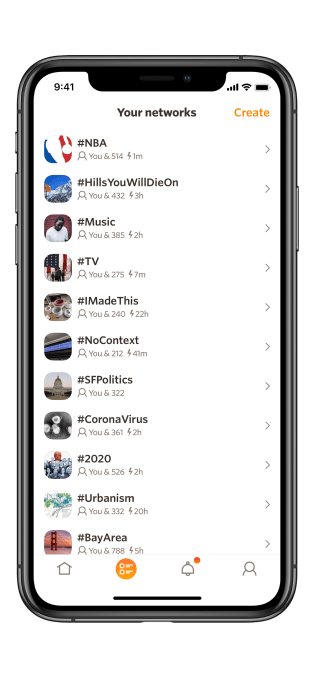
Image Credits: Telepath

A user’s experience in these “gray” areas may vary by community.

Telepath’s communities today focus on hobbies and interests, and can range from the innocuous — like Books or Branding or Netflix or Cooking, for example — to the potentially fraught, like Race in America. In the latter, there have been discussions about the capitalization of “Black” where it was suggested that maybe this wasn’t a useful idea. In another, sympathy is expressed for a person who was falsely pretending to be a person of color.

In a post about affordable housing, someone openly wondered if a woman who said she didn’t want to live near poor people was actually racist. Another commenter then noted that gang members can bring down property values.

A QAnon community, meanwhile, discusses the movement and its ridiculous followers from afar — which is apparently permitted — though supporting it in earnest would not be.

There are also nearly 20 groups about things that “suck,” as in GOPSucks or CNNSucks or QuibiSucks.

Anti-Trump content, meanwhile, can be found on a network called “DumbHitler.”

Meanwhile, online publishers who routinely post discredited information are banned from Telepath, but YouTube is not. So if feel you need to share a link to a video of Rudy Giuliani accusing Biden of dementia, you can do so — so long as you don’t call it the truth.

And you can post opinions about some terrible people in which you describe them as terrible, thanks to the public figure carve-out.

Cheater and deadbeat dad? Go ahead and call them a “disgusting human being.” VP Pence was referred to by a commenter as “SmugFace mcWhitey” and Ronny Jackson is described as “such a piece of sh**.”

Explains Estévez, that’s because Telepath’s “be kind” rule is not intended to protect public figures from criticism.

“It is important to note that toxicity on the internet around politics isn’t because people are using bad words, but because people are using bad faith arguments. They are spreading misinformation. They are gaslighting marginalised groups about their experiences. These are the real issues we’re addressing,” she says.

She also notes that online “civility” is often used to silence people from marginalized groups.

“We don’t want Telepath’s focus on kindness to be turned against those who criticize powerful people,” she adds.

In practice, the way this plays out on Telepath today is that it’s become a private, closed door network where users can bash Trump, his supporters and right-wing politicians in peace from Twitter trolls. And it’s a place where a majority agrees with those opinions, too.

It has, then, seemingly built the Twitter that many on the left have wanted, the way that conservative social media, like Gab and Parler, built what the right had wanted. But in the end, it’s not clear if this is the solution for the problems of modern social media or merely an escape. It also remains to be seen whether a mainstream user base will follow.

Telepath remains in a closed beta of indefinite length. You need an invite to join.


from RSSMix.com Mix ID 8176981 https://techcrunch.com/2020/10/11/hands-on-with-telepath-the-social-network-taking-aim-at-abuse-fake-news-and-to-some-extent-free-speech/
http://www.gadgetscompared.com
from Tumblr https://ikonografico.tumblr.com/post/631714895052881920
via http://www.gadgetscompared.com
Thursday, October 8, 2020

Revolut lets you track your subscriptions, adds savings bonus in the US

Fintech startup Revolut has rolled out a handful of additional features over the past few days. The financial app lets you track all your subscriptions that you pay with your Revolut account or your card. In the U.S., Revolut is adding a savings bonus based on your purchasing habits. Finally, business customers can now order metal cards.

Let’s start with subscription tracking. For customers in Europe, Revolut is trying to make it easier to stay on top of your various subscriptions. Direct debit or card transactions are automatically marked as recurring. You can also manually mark transactions as subscriptions in case they aren’t automatically marked.

After that, you can see all your recurring payments from the app and check how much you’re spending with each merchant. If you spot a subscription that you completely forgot, you can block it — future payments will be declined.

And if you don’t have a lot of money on your account, you receive a notification warning you that a subscription payment is coming up. Subscriptions can be accessed from the Payments tab under Scheduled.

If you have multiple bank accounts, some users might switch their payment information to their Revolut card just to keep all their subscriptions in Revolut. It could boost usage.

4.5% bonus on savings accounts in the U.S.

In some markets, Revolut offers savings vaults. As the name suggests, those sub-accounts let you put some money aside and earn interest. You can round up card transactions and save spare change in a vault, you can set up weekly or monthly transactions or you can transfer money manually whenever you want.

In the U.S., customers earn 0.25% annualized percentage yield (APY) with their savings vaults. If you pay for a premium subscription, you get 0.5% APY with a Revolut Premium or Revolut Metal plan.

During the COVID-19 pandemic, you get a generous bonus on top of your normal interest rate. Revolut calculates how much you spent with your Revolut debit card the previous month. That amount is eligible for a 4.5% APY bonus.

For instance, if you spent $400 with your card last month and you have $500 in your savings vault, you’ll receive the 4.5% bonus on $400. You’ll also earn 0.25% to 0.5% on the entire savings vault.

If your savings vault balance is lower than how much you spent with your card last month, your entire vault is eligible for the bonus. Interests are calculated daily using an annualized rate and paid out the first business day of the following month.

Once again, the new feature should boost engagement in the U.S. for both card transactions and savings vaults. Revolut has 13 million customers in total, including 150,000 in the U.S.

Metal cards for business customers

People care about metal cards. That’s why many fintech startups now offer expensive monthly plans with metal cards — N26, Bunq, Curve and Revolut.

But Revolut Business customers have been limited to plastic cards (or virtual cards). If you use Revolut Business for your company, you can now order metal cards depending on your plan.

Revolut Business customers with a free account or a freelancer account can’t order metal cards. Customers on the Grow, Scale or Enterprise plans receive one, two or five metal cards respectively.

And if you want to order more metal cards, it costs £49 per card. You can choose a card among five different colors — black, gold, rose gold, space grey and silver.

Other than a new look, metal cards don’t differ from standard cards. It’s a small perk that you get with a paid plan. Revolut has managed to attract 500,000 customers for its Revolut Business product.


from RSSMix.com Mix ID 8176981 https://techcrunch.com/2020/10/08/revolut-lets-you-track-your-subscriptions-adds-savings-bonus-in-the-us/
http://www.gadgetscompared.com

from Tumblr https://ikonografico.tumblr.com/post/631428017861885953
via http://www.gadgetscompared.com