Thursday, January 14, 2021

Medium acquires social book reading app Glose

Medium is acquiring Paris-based startup Glose for an undisclosed amount. Glose has been building iOS, Android and web apps that let you buy, download and read books on your devices.

The company has turned reading into a multiplayer experience as you can build a bookshelf, share notes with your followers and start conversations in the margins. Sure, there are social platforms that let you talk about books, such as Goodreads. But Glose’s differentiating point is that the social features are intrinsically linked with the reading features — those aren’t two separate platforms. There are also some gamification features that help you stay motivated as you read difficult books — you get streak rewards for instance.

In many ways, Glose’s one-tap highlighting and commenting features are reminiscent of Medium’s features on this front. You can highlight text in any reading app on your phone or tablet but you can’t do much with it.

More recently, Glose has launched a separate service called Glose Education. As the name suggests, that version is tailored for universities and high schools. Teachers can hand out assignments and you can read a book as a group.

Over 1 million people have used Glose and 25 universities have signed up to Glose Education, including Stanford and Columbia University.

But Glose isn’t just a software play. The company has also put together a comprehensive book store. The company has partnered with 20,000 publishers so that you can buy ebooks directly from the app.

And if you are studying Virginia Wolf this semester, Glose also provides hundreds of thousands of public domain books for free. Glose also supports audio books.

This is by far the most interesting part as Medium now plans to expand beyond articles and blogs. While Glose is sticking around for now, Medium also plans to integrate ebooks and audio books to its service.

It’s a smart move as many prolific bloggers are also book writers. Right now, they write a blog post on Medium and link to a third-party site if you want to buy their books. Having the ability to host everything written by an author is a better experience for both content creators and readers.

“We’re impressed not only by Glose’s reading products and technology, but also by their experience in partnering with book authors and publishers,“ Medium CEO Ev Williams said in a statement. “Books are a means of exploring an idea, a way to go deeper. The vast majority of the world’s ideas are stored in books and journals, yet are hardly searchable nor shareable. With Glose, we want to improve that experience within Medium’s large network of engaged readers and writers. We look forward to working with the Glose team on partnering with publishers to help authors reach more readers.”

The Glose team will remain in Paris, which means that Medium is opening its first office outside of the U.S. Glose will continue to honor its partnerships with authors, publishers, schools and institutions.


from RSSMix.com Mix ID 8176981 https://techcrunch.com/2021/01/14/medium-acquires-social-book-reading-app-glose/
http://www.gadgetscompared.com
from Tumblr https://ikonografico.tumblr.com/post/640329144641748992
via http://www.gadgetscompared.com

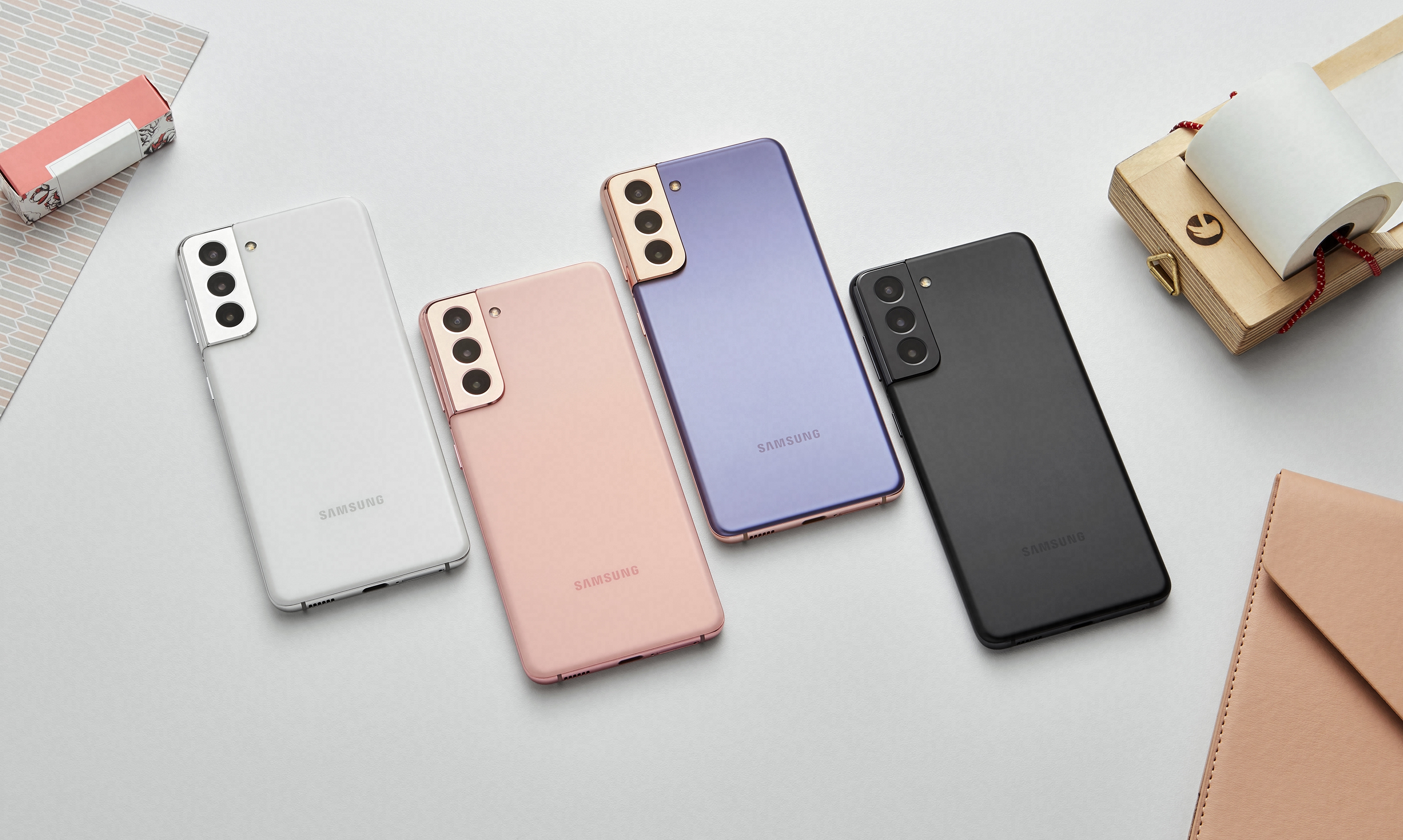
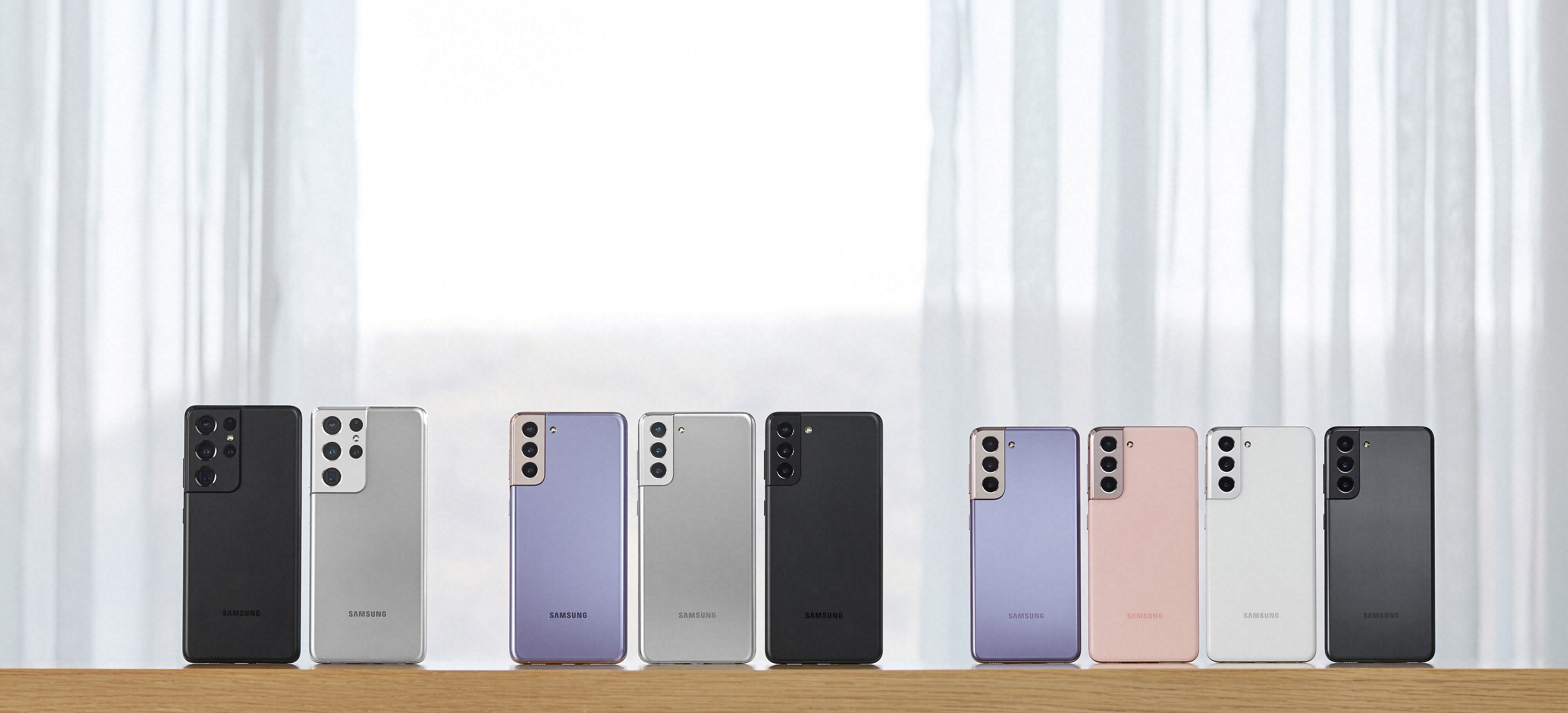
Samsung’s Galaxy S21 line arrives with camera bumps, price drops and S Pen compatibility

Samsung wasted no time this year. With Mobile World Congress pushed back six or so months, the hardware maker hitched its wagon to the tail end of the CES whirlwind — though unlike its press conference earlier in the week, the company is very much on its own for the latest Unpacked.

And why not? In spite of broader issues with the mobile industry (certainly not helped by the COVID-19 pandemic), the Galaxy line is still very much a draw. People may not be as eager to buy a flagship as they were a couple of years ago, but when they do, it’s frequently a Samsung device.

I tend to save pricing for the end of these kinds of posts, but it really bears mention up front. Samsung’s launching three key iterations of the S21 line today: the S21, S21+ and S21 Ultra. Those are priced at $799, $999 and $1,119 respectively, here in the States. That’s down from $999, $1,199 and $1,399 last year. While it’s true we’re still very much in the flagship price range here, a $200 drop is not insignificant.

Image Credits: Samsung

Rather, it points to a very conscious correction — one that goes beyond simply introducing a budget flagship or flagship lite to appease that segment of the market. Smartphone sales were already lagging before the pandemic, and the routine pricing of flagships above $1,000 was a considerable piece of that. Obviously the pandemic has only exacerbated the situation for myriad reasons, and 5G, which was expected to lead to a sales rebound didn’t move the needle nearly as much as anticipated.

Of course, 5G was a headliner feature for Samsung all the way back in 2019. The company has been all-in with the Galaxy line for a while now, and frankly, the feature is just kind of expected now. Perhaps unsurprisingly, Samsung is going back to imaging as a key differentiator.

Here’s what Mobile head TM Roh has to say about the new handsets:

We are living in a mobile-first world, and with so many of us working remotely and spending more time at home, we wanted to deliver a smartphone experience that meets the rigorous multimedia demands of our continuously changing routines. We also recognize the importance of choice, especially now, and that’s why the Galaxy S21 series gives you the freedom to choose the best device for your style and needs.

I absolutely understand why companies continue to go the “in these challenging times” route with these announcements, though I will say that, for the most part, the notion of device upgrades as a response to COVID-19 is really overstated here, beyond the aforementioned price drop. And I suspect that, with fewer people leaving the house these days, the dream of a smartphone as a primary productivity device has probably dampened of late.

Image Credits: Samsung

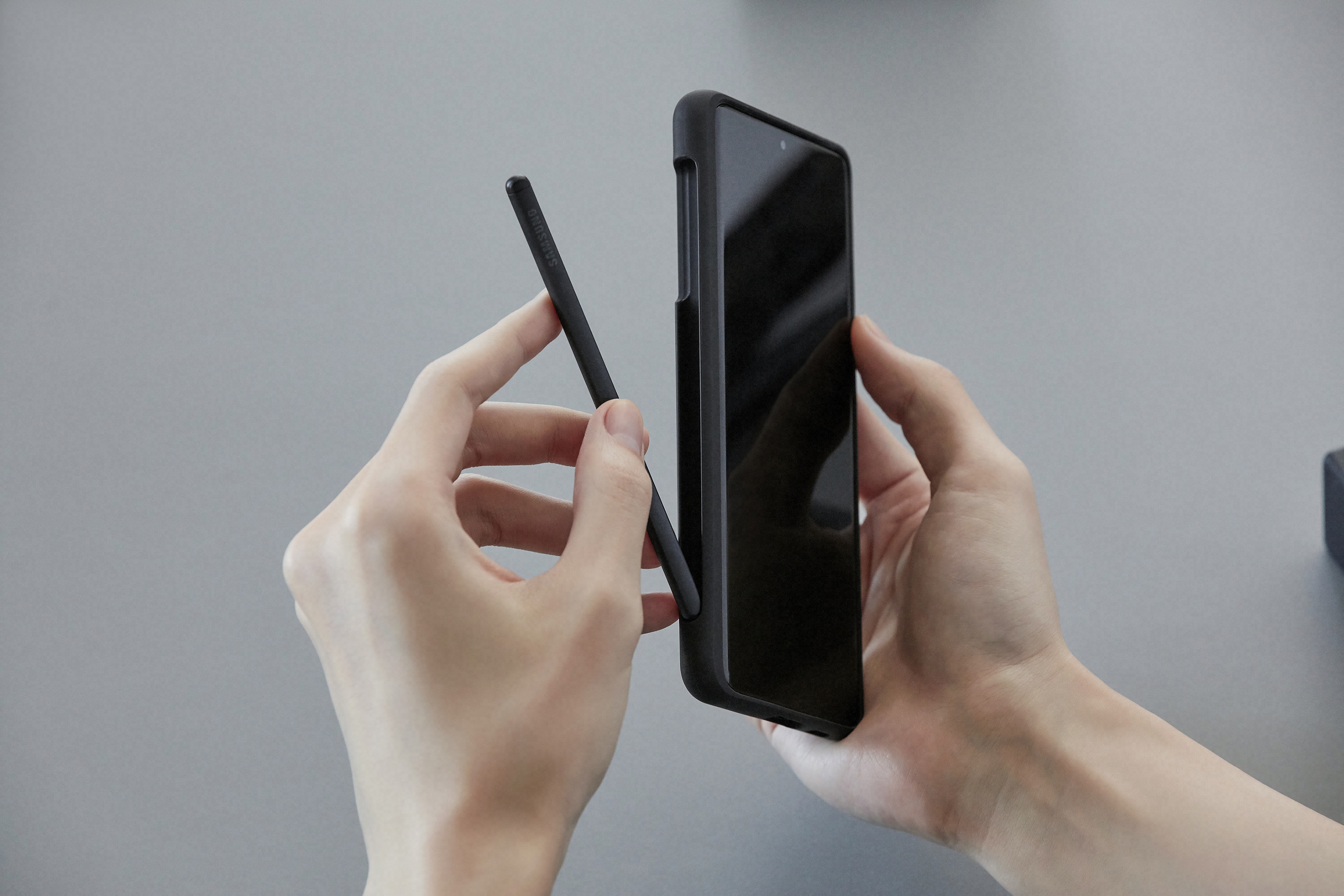
Still, the S21 Ultra, in particular, has one very important trick up its sleeve. Samsung is further blurring the line between the Galaxy S and Note by making the Ultra S Pen compatible. The experience will vary to some degree, but users will be able to use the stylus to write and draw on the handset. It’s sold separately and there’s no in-device housing for the pen, though Samsung will be offering a case that will hold it. It will be interesting to see if the company goes out of its way to distinguish the new Note, but it seems equally possible that the lines are simply converging. After all, the S Pen has long been the key distinguishing factor.

The devices also get Ultra-wideband capabilities, which will bring a number of capabilities, including the ability to unlock car doors and AR messages to find lost items. More detail on that soon, no doubt.

Visually, the biggest change here is the camera housing, which gets streamlined. I’m holding off judgement until I see it in person, but the new “Contour Cut” housing feels a bit more brutalist or perhaps industrial than the prior generation. The device also drops the expandable memory. A strong argument could be made that current on-board storage has made microSD redundant for many or most, but it was always a nice little differentiator.

The company has also removed the headphones charging adapter from the box, a move the world saw coming when the company deleted ads ribbing Apple from dropping accessories over what it said were environmental concerns. It’s the headphone jack all over again, because history rhymes.

Hardware-wise, the triple-camera situation is similar. On the S21 and 21+ you get a 12-megapixel ultrawide, 12-megapixel wide and 64-megapixel telephoto with 30x space zoom. The Ultra bumps that up to a 12-megapixel ultra-wide, 108-megapixel wide and a dual-telephoto lens system with 3x and 10x optical zoom. That’s the first time Samsung has offered a dual-telephoto setup. The Ultra also sports improved low-light shooting, courtesy of the Bright Night sensor.

Image Credits: Samsung

Software imaging updates include the ability to pull stills from 8K shooting, improved image stabilization and new modes like “Vlogger view,” which shoots from the front and rear camera simultaneously. I see limited use for that last bit in my own life, but I’m sure folks will find a creative use for it.

The screens measure in at 6.1, 6.7 and 6.8 inches (that last one is a decrease from the S20 Ultra’s 6.9 inches). All sport a 120Hz refresh rate that adapts based on usage. The phones also get the new Eye Comfort Shield, which reduces blue light as the day goes on.

Here in the States, all three phones sport the latest Qualcomm Snapdragon 888. The S21 and S21+ start at 8GB of RAM and 128GB of storage, while the Ultra starts at 12GB and 256GB. The batteries are pretty healthy, clocking in at 4000, 4800 and 5000mAh. They’re all available for pre-order now and start shipping January 29.


from RSSMix.com Mix ID 8176981 https://techcrunch.com/2021/01/14/samsungs-galaxy-s21-line-arrives-with-camera-bumps-price-drops-and-s-pen-compatibility/
http://www.gadgetscompared.com
from Tumblr https://ikonografico.tumblr.com/post/640317833332621312
via http://www.gadgetscompared.com
Wednesday, January 13, 2021

Amazon launches mobile-only Prime Video subscription in India

Amazon is doubling down on one of the biggest strengths of Prime Video streaming service: Aggressive pricing.

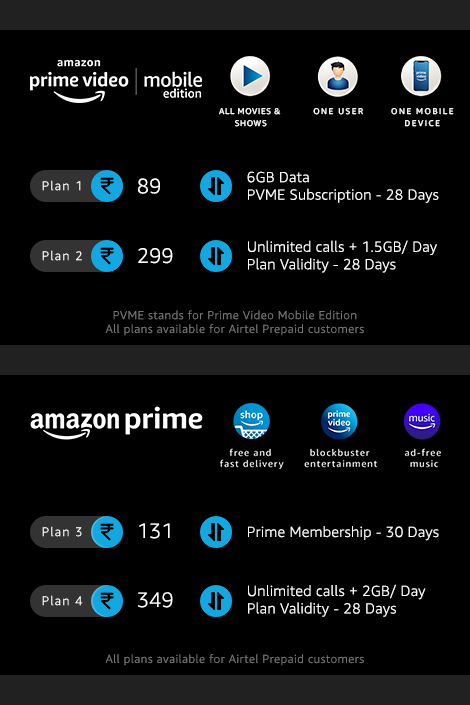
The e-commerce giant on Wednesday announced Prime Video Mobile Edition, an even more affordable tier of the on-demand video streaming service — now also bundling additional perks.

Prime Video Mobile Edition, for which Amazon has partnered with Indian telecom network Airtel, will feature 28-day mobile-only, standard definition (SD) access to customers in India for Rs 89 ($1.22). This tier will also include 6GB of mobile data that customers can consume during the subscription period. To anyone who subscribes to Prime Video Mobile Edition, Amazon says it will pick the tab for the first month.

Amazon Prime subscription costs $1.7 a month in India and includes access to Prime Video and Prime Music.

The service is currently only available in India. Its launch comes years after Netflix made available a similar plan in India.

“India is one of our fastest growing territories in the world with very high engagement rates. Buoyed by this response, we want to double-down by offering our much-loved entertainment content to an even larger base of Indian customers. Given high mobile broadband penetration in the country, the mobile phone has become one of the most widely used streaming devices,” said Jay Marine, Vice President, Amazon Prime Video Worldwide, in a statement.

More to follow…


from RSSMix.com Mix ID 8176981 https://techcrunch.com/2021/01/13/amazon-launches-mobile-only-prime-video-subscription-in-india/
http://www.gadgetscompared.com
from Tumblr https://ikonografico.tumblr.com/post/640197047217176576
via http://www.gadgetscompared.com

Tuesday, January 12, 2021

Rollables are the new foldables

Smartphone sales are bad — and have been for a couple of years now. Certainly this ongoing pandemic hasn’t helped. All the talk about how 5G and new form factors were going to cause a kind of bounce-back all fell by the wayside, as people put a pause on unnecessary luxuries.

Samsung is the only company that’s seen some success with the foldable form factor, and that whole thing got off to a…rough start. There were plenty of technical issues at first, leading to a less than auspicious first impression. These days, price continues to be a major hurdle — especially during a time when paying $1,000 and up on a phone is a major red flag for many.

In the world of phone form factors, two is, at the very least, the start of a trend. And on day one of CES both LG and TCL have offered their take on yet another form factor designed to offer more screen real estate in pocketable devices.

Image Credits: TCL

LG’s product is — for the moment — the more notable of the two, largely because the company plans to actually release the thing. In an interview published this morning, spokesperson Ken Hong told Nikkei, “As it is released at CES 2021, I can tell that it will be launched this year.”

And, indeed, LG’s a company not afraid to take chances with a wacky form factor. There are a number of examples of the phenomenon in recent years, most notably the swiveling screen on the LG Wing.

Still, the product didn’t amount to much more than a brief tease during a press conference (an excuse to transition between scenes, really), so you’d be forgiven for assuming that the tech still has a long way to go.

TCL, meanwhile, noted up front that the product is still firmly in the concept phase, but managed to give us a better look. I suppose it’s easier to parade concept than an unfinished real-world product. Details are still slim, but the company says the device is capable of expanding from 6.7 to 7.8 inches.

One imagines — or, at least, hopes — that the industry has learned from the issues stemming from the first batch of foldables. Sometimes the race to bring technology to market results in delivering something half-baked, an issue that came back to bite companies like Samsung and Motorola. Lab testing is one thing — the real world is a different thing entirely.


from RSSMix.com Mix ID 8176981 https://techcrunch.com/2021/01/12/rollables-are-the-new-foldables/
http://www.gadgetscompared.com
from Tumblr https://ikonografico.tumblr.com/post/640132870461095936
via http://www.gadgetscompared.com
Yelp will show user feedback about businesses’ health and safety practices

Moving forward, Yelp users won’t just be asked whether a business has good food or accepts credit cards — the platform is also allowing them to share feedback on whether the staff is wearing masks and enforcing social distancing.

Yelp’s head of consumer product Akhil Kuduvalli Ramesh suggested that this is the next phase of how the company is trying to help local businesses, after allowing them to highlight virtual services, manage their waitlists in accordance with new regulations and indicate the health and safety measures that they’re taking.

Of course, it’s one thing to see that a business claims to have strict mask-wearing and social distancing procedures, and another to hear other customers confirm that it’s true (or not). So Ramesh said it’s less about warning users away from certain businesses and more working “to continue to instill confidence in consumers to continue to connect with and support local businesses.”

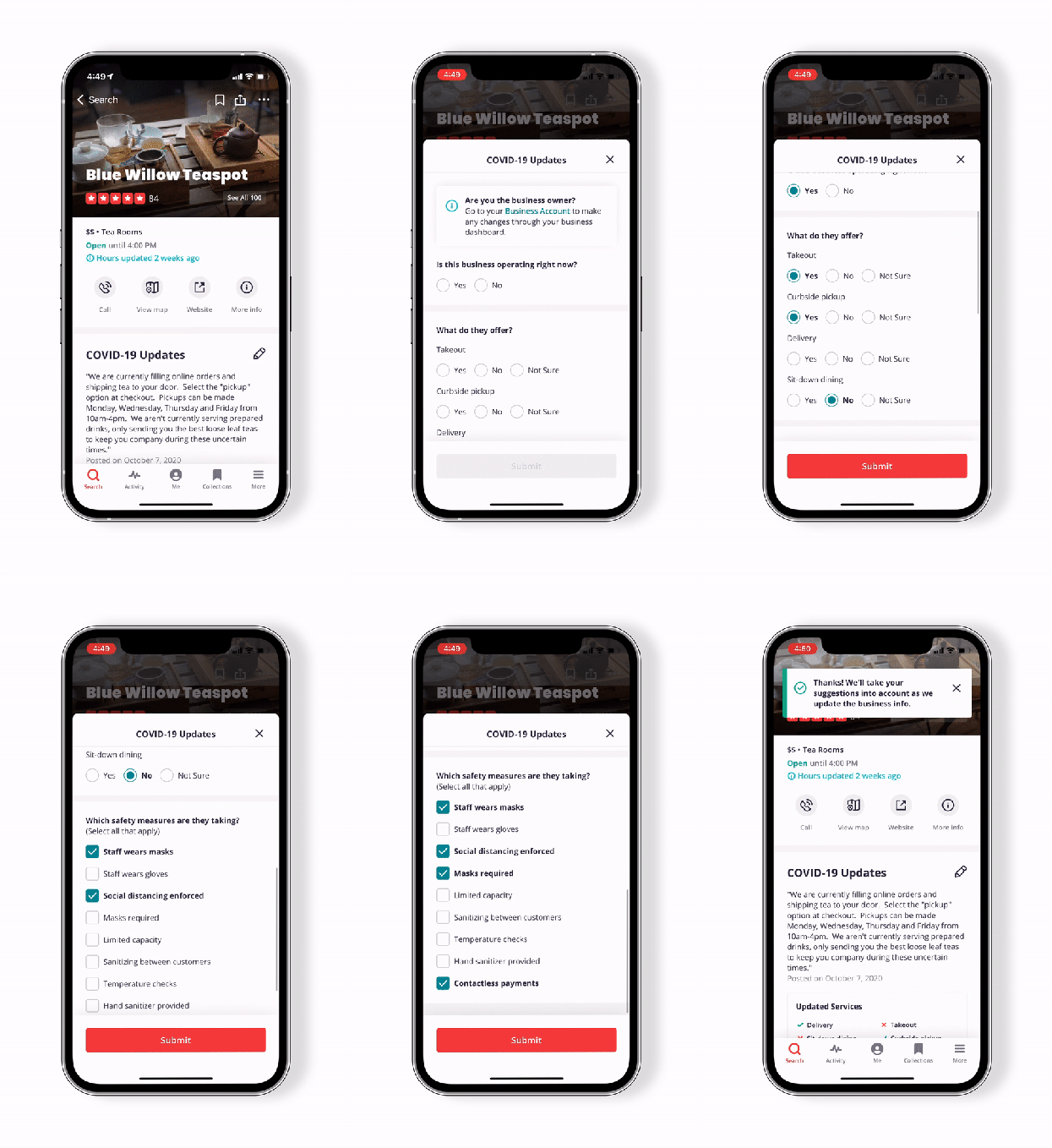
When users visit a business profile they’ll now be asked whether social distancing was enforced and whether the staff wore masks — Ramesh said other health and safety questions could be added in the future (and users can offer slightly more detailed feedback on safety measures by hitting the Edit button in a profile), but those are the ones that users seem to care about the most.

Yelp health and safety

Image Credits: Yelp

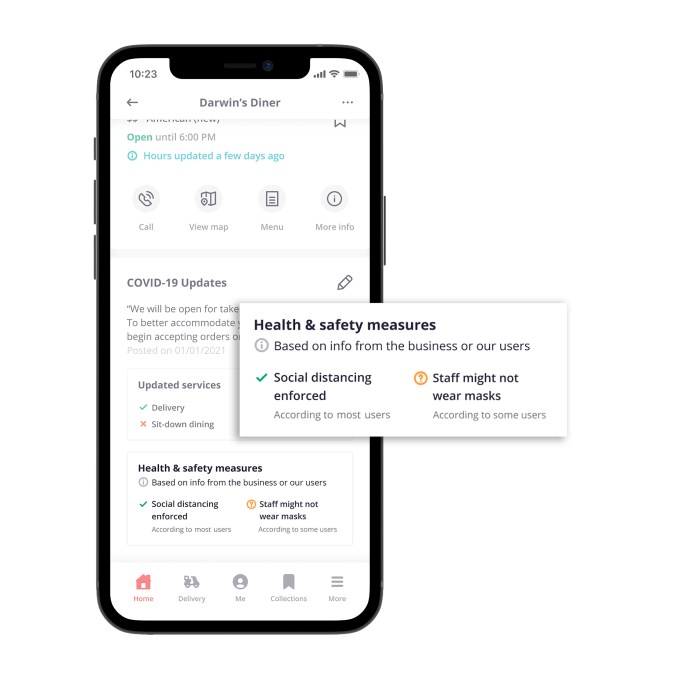
When Yelp receives enough answers to offer present meaningful data (the company, understandably, isn’t disclosing the exact threshold), it will add a message in the health and safety section of the profile: “Social distancing enforced according to most users” with a green checkmark, or “Social distancing might not be enforced according to most users” with an orange question mark, with similar messages for mask-wearing.

In cases where the responses are mixed, but there’s still “significant” feedback indicating that these practices aren’t followed, the message will be attributed to “some users” instead.

Ramesh said that Yelp has already been collecting this user feedback, and at launch, only “a couple hundred” of the millions of businesses on Yelp will be marked with an orange label, “which also means that many businesses are doing the right thing.”

GIF of Yelp Consumer Feedback

Image Credits: Yelp

He noted that in cases of multi-location businesses, the health and safety data will be specific to each location. Also, the labels will be based on feedback from the past 28 days — so if a business gets an orange label but starts doing better, their profile should eventually be updated to reflect that.

In addition, Yelp says it’s adding new service offerings and safety measures that businesses can include on their profiles, including checking staff for symptoms, disposable or contactless menus, heated outdoor seating and covered outdoor seating.


from RSSMix.com Mix ID 8176981 https://techcrunch.com/2021/01/12/yelp-health-and-safety/
http://www.gadgetscompared.com
from Tumblr https://ikonografico.tumblr.com/post/640125316802756608
via http://www.gadgetscompared.com
Monday, January 11, 2021

YouTube and WhatsApp inch closer to half a billion users in India

WhatsApp has enjoyed unrivaled reach in India for years. By mid-2019, the Facebook-owned app had amassed over 400 million users in the country. Its closest app rival at the time was YouTube, which, according to the company’s own statement and data from mobile insight firm App Annie, had about 260 million users in India then.

Things have changed dramatically since.

In the month of December, YouTube had 425 million monthly active users on Android phones and tablets in India, according to App Annie, the data of which an industry executive shared with TechCrunch. In comparison, WhatsApp had 422 million monthly active users on Android in India last month.

Factoring in the traction both these apps have garnered on iOS devices, WhatsApp still assumes a lead in India with 459 million active users1, but YouTube is not too far behind with 452 million users.

With China keeping its doors closed to U.S. tech giants, India emerged as the top market for Silicon Valley and Chinese companies looking to continue their growth in the last decade. India had about 50 million internet users in 2010, but it ended the decade with more than 600 million. Google and Facebook played their part to make this happen.

In the last four years, both Google and Facebook have invested in ways to bring the internet to people who are offline in India, a country of nearly 1.4 billion people. Google kickstarted a project to bring Wi-Fi to 400 railway stations in the country and planned to extend this program to other public places. Facebook launched Free Basics in India, and then — after the program was banned in the country — it launched Express Wi-Fi.

Both Google and Facebook, which identify India as their biggest market by users, have scaled down on their connectivity efforts in recent years after India’s richest man, Mukesh Ambani, took it upon himself to bring the country online. After he succeeded, both the companies bought multibillion-dollar stakes in his firm, Jio Platforms, which has amassed over 400 million subscribers.

Jio Platforms’ cut-rate mobile data tariff has allowed hundreds of millions of people in India, where much of the online user base was previously too conscious about how much data they spent on the internet, to consume, worry-free, hours of content on YouTube and other video platforms in recent years. This growth might explain why Google is doubling down on short-video apps.

The new figures shared with TechCrunch illustrate a number of other findings about the Indian market. Even as WhatsApp’s growth has slowed2 in India, it continues to enjoy an unprecedented loyalty among its users.

More than 95% of WhatsApp’s monthly active users in India use the app each day, and nearly its entire user base checks the app at least once a week. In comparison, three-fourths of YouTube’s monthly active users in India are also its daily active users.

The data also showed that Google’s eponymous app as well as Chrome — both of which, like YouTube, ship pre-installed3 on most Android smartphones — has also surpassed over 400 million monthly active users in India in recent months. Facebook’s app, in comparison, had about 325 million monthly active users in India last month.

When asked for comment, a Google spokesperson pointed TechCrunch to a report from Comscore last year, which estimated that YouTube had about 325 million monthly unique users in India in May 2020.

A separate report by research firm Media Partners Asia on Monday estimated that YouTube commanded 43% of the revenue generated in the online video market in India last year (about $1.4 billion). Disney+ Hotstar assumed 16% of the market, while Netflix had 14%.


1 For simplicity, I have not factored in the traction WhatsApp Business and YouTube Kids apps have received in India. WhatsApp and YouTube also maintain apps on KaiOS, which powers JioPhone feature handsets in India. At last count — which was a long time ago — more than 40 million JioPhone handsets had shipped in India. TechCrunch could not determine the inroads any app has made on this platform. Additionally, the figures of YouTube on Android (phones and tablets) and iOS (iPhone and iPad) will likely have an overlap. The same is not true of WhatsApp, which restricts one phone number to one account. So if I have WhatsApp installed on an iPhone with my primary phone number, I can’t use WhatsApp with the same number on an Android phone — at least not concurrently.
2 WhatsApp Business appears to be growing fine, having amassed over 50 million users in India. And some caveats from No. 1 also apply here.
3 Users still have to engage with the app for App Annie and other mobile insight firms to count them as active. So while pre-installing the app provides Google an unprecedented distribution, their apps still have to win over users.


from RSSMix.com Mix ID 8176981 https://techcrunch.com/2021/01/11/youtube-and-whatsapp-inch-closer-to-half-a-billion-users-in-india/
http://www.gadgetscompared.com
from Tumblr https://ikonografico.tumblr.com/post/640064902592184320
via http://www.gadgetscompared.com
Snap acquires location data startup StreetCred

Snapchat’s parent company Snap has acquired StreetCred, a New York City startup building a platform for location data.

Snap confirmed the news to TechCrunch and said the acquisition will result in four StreetCred team members — including co-founders Randy Meech and Diana Shkolnikov — joining the company, where they’ll be working on map and location-related products.

A big component of that strategy is the Snap Map, which allows users to view public snaps from a given area and to share their location with friends. Last summer, the Snap Map was added to Snapchat’s main navigation bar, and the company announced that the product was reaching 200 million users every month.

At the same time, Snapchat has been adding other products that tie into a user’s locations, such as Local Lenses, which allow developers to create geography-specific augmented reality lenses that interact with physical locations.

Meech and Shkolnikov should be bringing plenty of mapping experience to Snap — Meech was formerly CEO at Samsung’s open mapping subsidiary Mapzen, and before that the senior vice president of local and mapping products at TechCrunch’s parent company AOL (subsequently rebranded as Verizon Media). Shkolnikov, meanwhile, is the former engineering director at Mapzen.

StreetCred had raised $1 million in seed funding from Bowery Capital and Notation Capital. When I spoke to Meech in 2018, he said his goal was to “open up and decentralize” location data by building a blockchain-based marketplace where users are rewarded for helping to collect that data.

While the financial terms of the acquisition were not disclosed, the existing StreetCred platform will be shut down as part of the deal.


from RSSMix.com Mix ID 8176981 https://techcrunch.com/2021/01/11/snap-acquires-streetcred/
http://www.gadgetscompared.com
from Tumblr https://ikonografico.tumblr.com/post/640064902269222912
via http://www.gadgetscompared.com