Wednesday, August 11, 2021

Samsung’s latest Galaxy Fold adds stylus support, waterproofing and an under-display camera

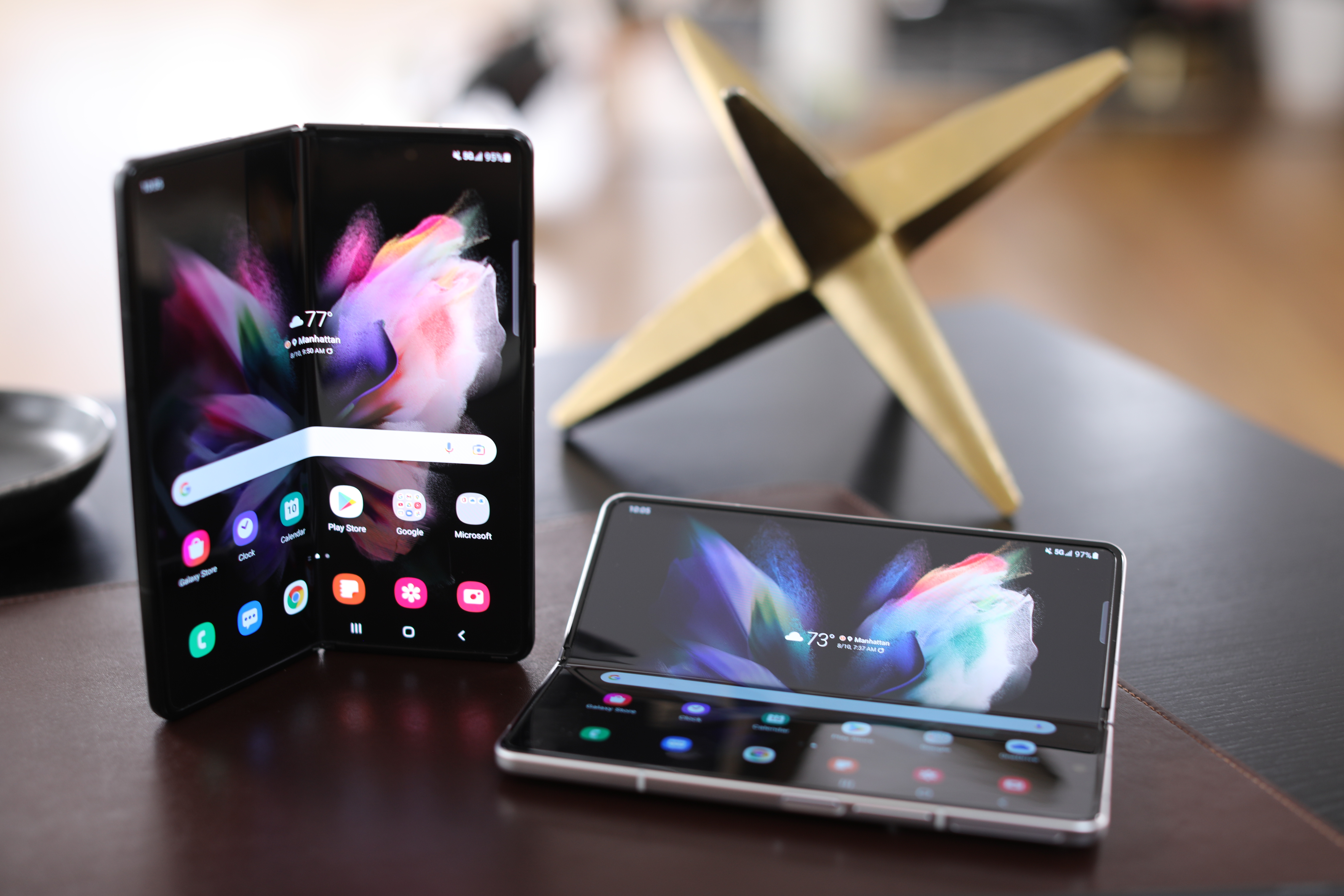
Behold, Samsung’s latest flagship. With the Galaxy Note out of the way — for this year, at least — the company used today’s Unpacked event to breathe added legitimacy into its foldable line. The original Galaxy Fold, introduced in 2019, represent a sort of experiment for the company (along with all the hiccups that entailed), as the first foldable from a major hardware manufacture, whereas last year’s Galaxy Z Fold 2 found the company correcting some of the glaring issues with its predecessor.

Today’s event finds the company making the case for Galaxy Z Fold 3 as something beyond an experiment or a curiosity. The task will almost certainly be an uphill battle for the next few generations. Unlike the latest version of the Flip, which starts at a price reduced considerably from its predecessor, the new Fold drops the entry price $200, down to $1,800. Any price reduction is a step in the right direction — and something that should be increasingly feasible as the technology continues to scale. But even in the world of premium flagships, that will continue to be a tough pill to swallow.

Image Credits: Brian Heater

What the upgraded Fold truly brings to the table, however, is a continued refinement to build materials that make the foldable screen a feasible option for day to day usage. This, of course, is precisely what hamstrung the original. Sure, the company did a lot of testing in controlled rooms, but once the product got out into the world (and into the hands of non-Samsung employees), problems of durability began cropping up, resulting in displays that were unintentionally damaged in a variety of imaginative ways.

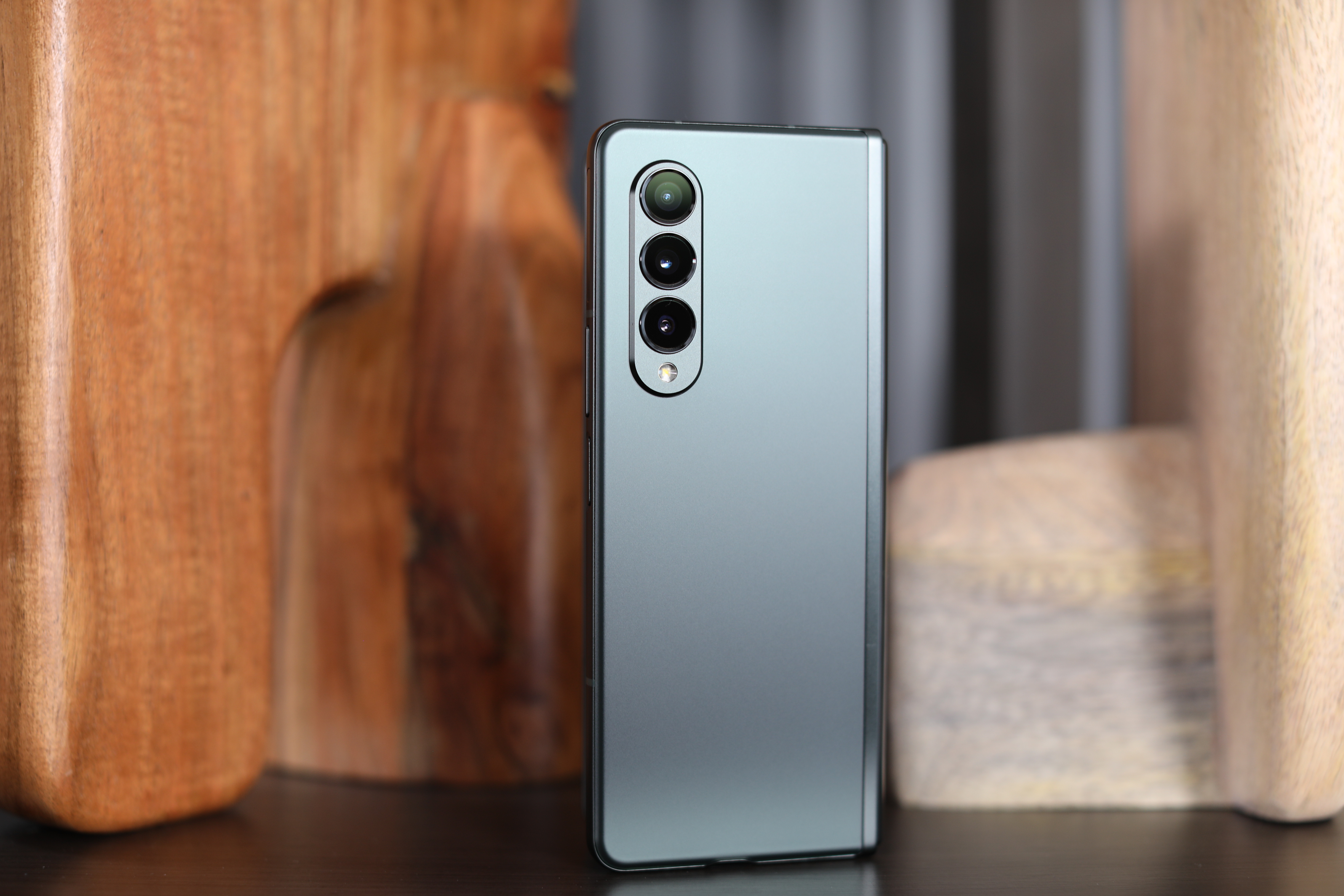
The Galaxy Z Fold features a stronger frame made of “Armor Aluminum,” new protective film for the foldable display, Gorilla Glass Victus on the front-facing screen and an IPX8 rating — representing the first waterproof rating for the company’s foldable. Waterproofing has, of course, become something of an industry standard, but obviously things complicate quickly when you add folding mechanisms into the equation.

In fact, that’s why the rating has an “X” stuck in the middle of it. It’s effectively protected from accidental dunks in water, but not dust and debris. This is due to the hinge mechanism created for earlier models that allows some particulate matter through, but sweeps it away with a built in brush that moves as the device opens. That effectively protects it from getting behind the screen, where it could damage the phone with a finger press on the other side.

Image Credits: Brian Heater

Of course, the stronger protective film is the thing. It’s what’s (hopefully) standing between you and damaging your phone’s biggest selling point with an overzealous finger press — or, for that matter, a stylus. The Fold, after all, is following in the footsteps of Samsung’s S series by blurring the line with the Note (which handily opted to sit this round out).

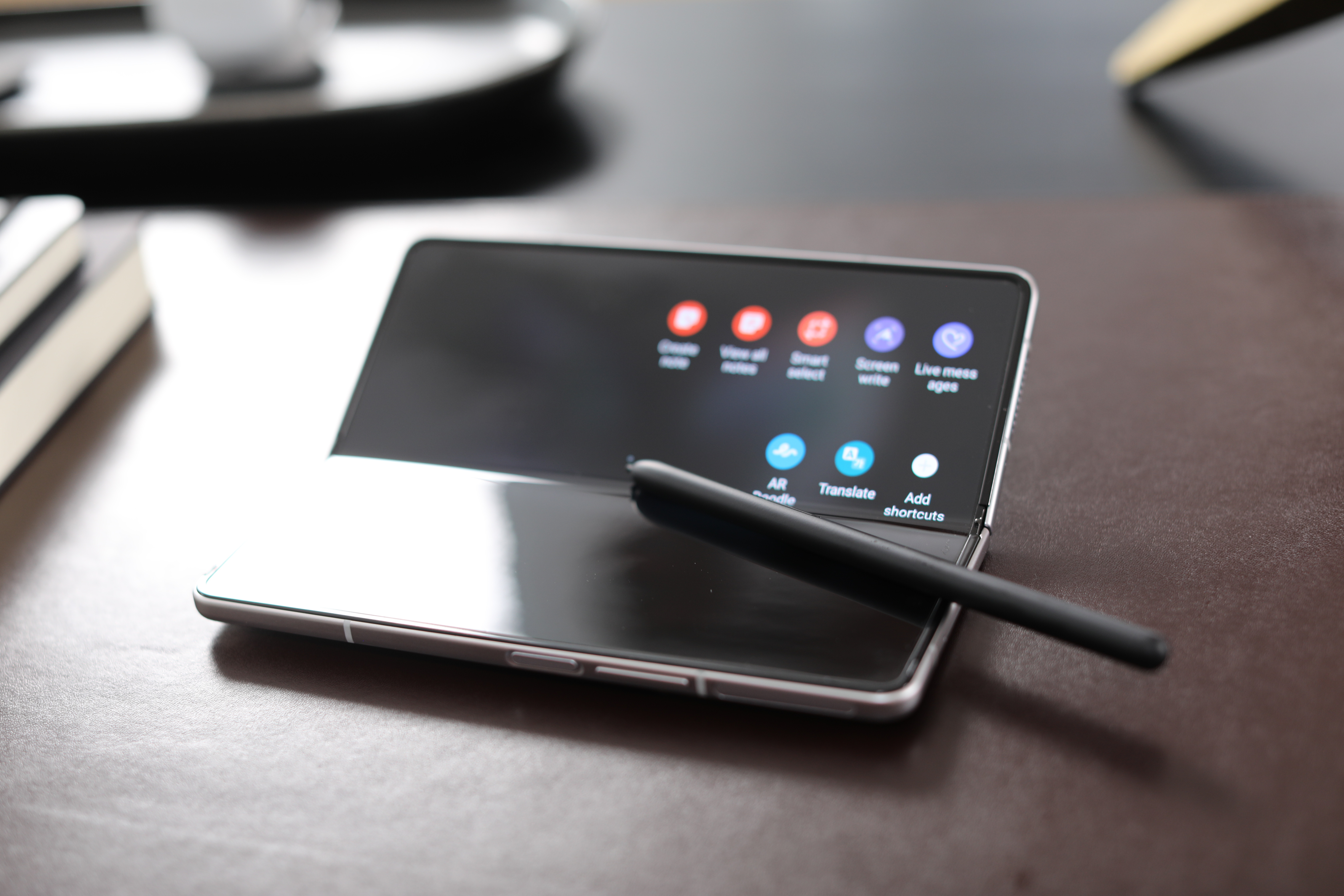
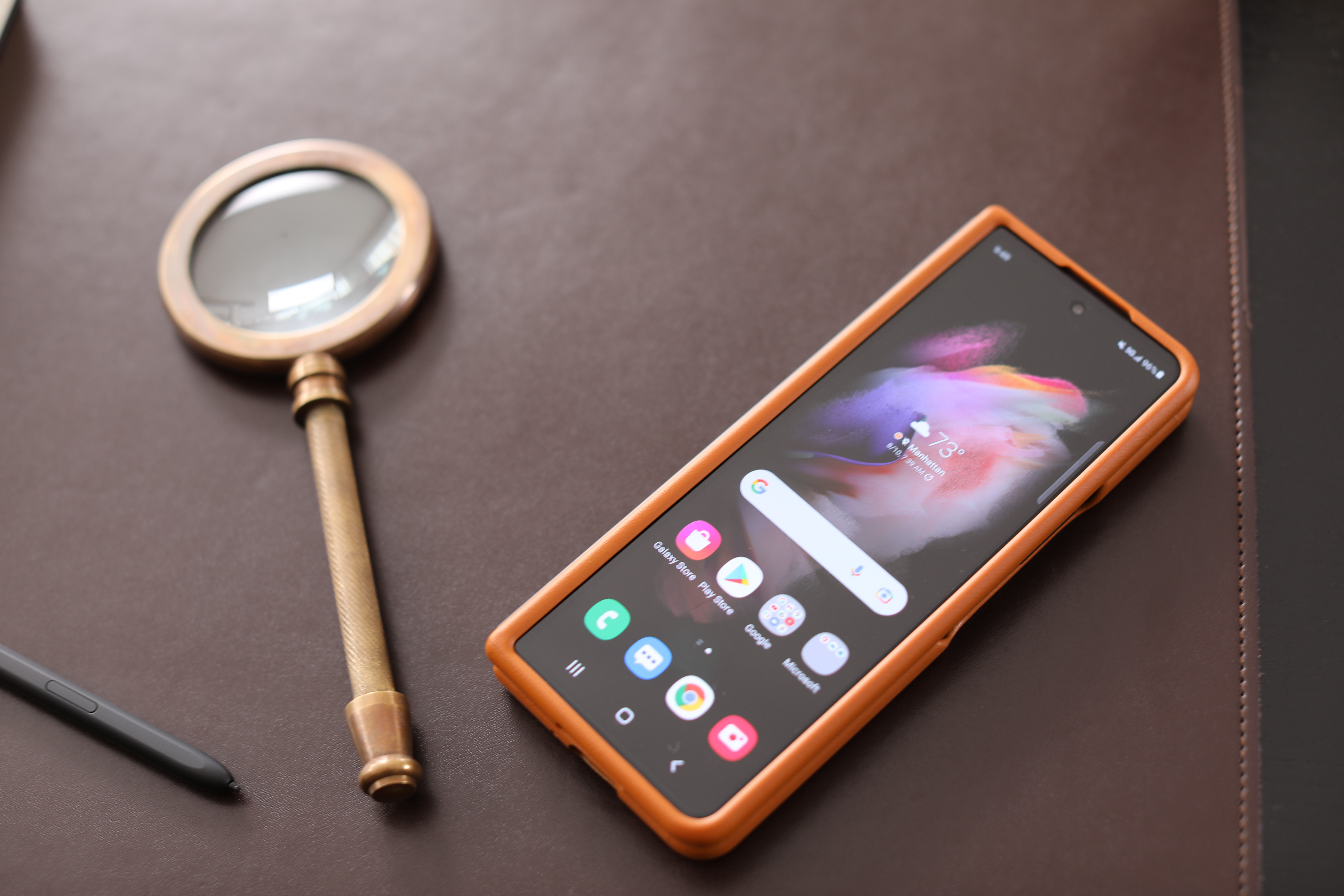
In fact, Samsung actually went out of its way to create a special Fold Edition of the S-Pen specially designed to not damage the Fold display. It’s optional, of course, and as with the S21, there’s slot for the stylus in the handset — that’s to be expected, given the relatively fragility of the product. There will, of course, be a case with a built-in S-Pen holster.

The Fold Edition S-Pen is smaller and features a spring-loaded tip designed to retract so you don’t damage the screen by writing/drawing too hard. Certainly the Fold is a clear candidate for stylus functionality, given its 7.6-inch canvas that puts even the Note Ultra’s 6.9-inch screen to shame. Of course, the feasibility of this combination has been severely hampered by structural integrity issues with the screen. It will be interesting to see how the company has managed to navigate that.

At 7.6 inches (2208 x 1768, 374 ppi), the primary screen is largely unchanged. The cover screen, too, is about the same, at 6.2 inches — though it now joins the main screen with a 120 Hz refresh rate. 

Image Credits: Brian Heater

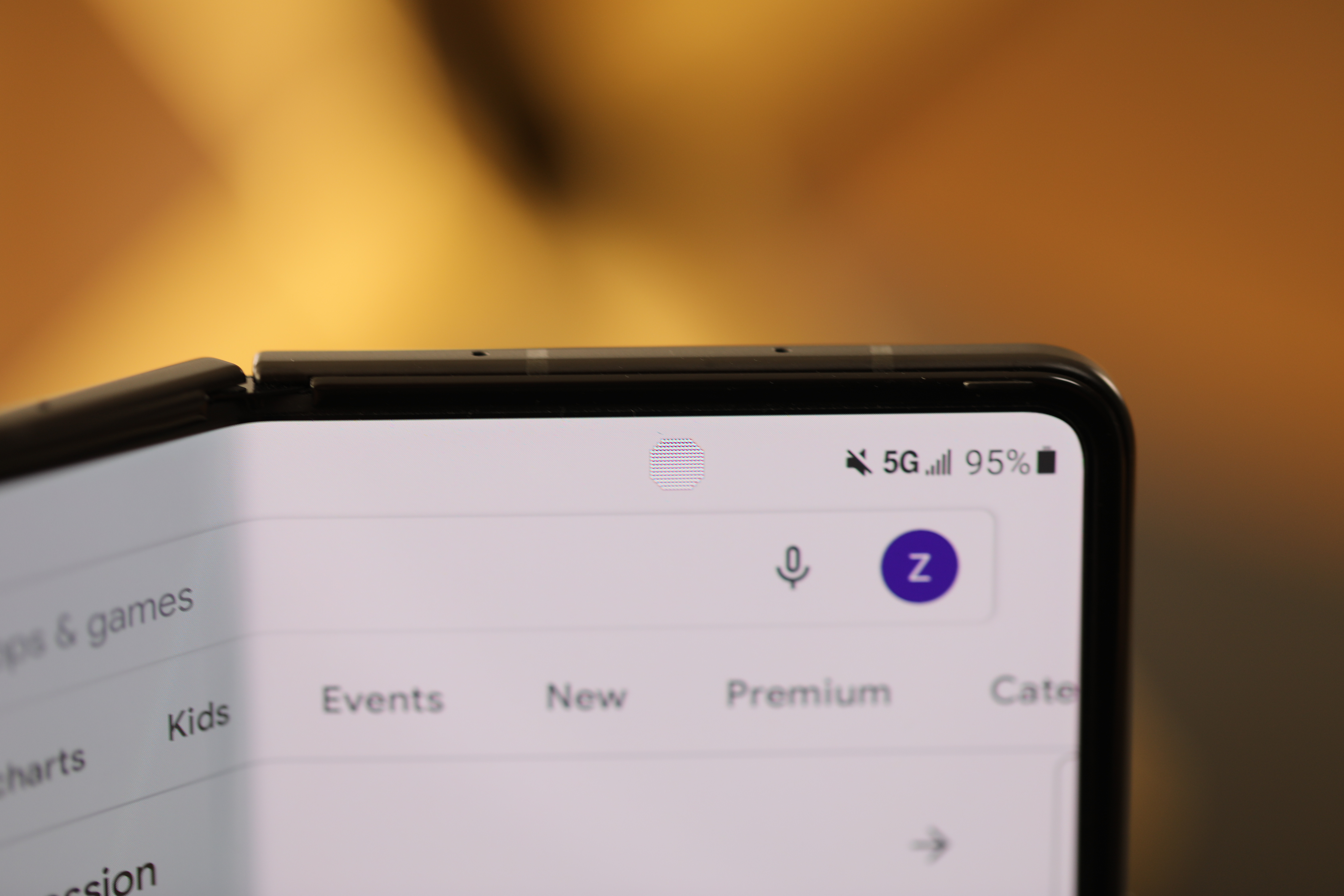
Notably, the Galaxy Z Fold 3 is the first Samsung device to add an under-display camera. That, along with foldable displays, has been one of the biggest holy grails in the smartphone category for the past several years. Samsung’s not the first to introduce the technology. A handful of Chinese manufacturers, including Xiaomi and Oppo, have either released or plan to release devices sporting the technology.

It’s telling that the company opted to test the water with the Fold. Aside from the obvious aspect of creating a contiguous display, it gives the company the opportunity to test out another mainstream technology. The dirty little secret about the first generation of under-screen cameras is that the picture quality tends to suck. Samsung surely knows this and has opted to stick it on a device that already has a selfie camera above its front display.

The company describes new tech as follows, “the minimum pixels applied on top of the camera hole, Z Fold 3 features an increased viewable area so users get an unbroken canvas for their favorite apps.” The thinking here is that the internal camera simply doesn’t get as much use, save for things like teleconferencing (which is, granted, something we’ve been doing a lot more of in the past year). As currently configured, it’s a bit of a compromise on both ends. Picture quality takes a hit and the camera hole is still semi-visible. So, either the best or worst of both worlds, depending on what you’re looking for.

Image Credits: Brian Heater

The under-display camera is four megapixels (when was the last time you saw one of those?), verses the 10-megapixel front/cover camera. The rear camera setup is virtually identical to its predecessor:

  • 12MP Ultra Wide. F2.2, Pixel size: 1.12μm, FOV: 123-degree
  • 12MP Wide-angle. Dual Pixel AF, OIS, F1.8, Pixel size: 1.8μm, FOV: 83-degree
  • 12MP Telephoto. PDAF, F2.4, OIS, Pixel size: 1.0μm, FOV: 45-degree

The battery has taken a bit of a hit, down from 4,500 to 4,400mAh (spread out over two modules, as is the foldable way). The Fold also supports fast charge/fast wireless and Wireless Powershare to use that 4,400mAh battery to power other gadgets. Samsung generally doesn’t offer battery estimates for phones prior to release, so wait on the review for that. The whole thing is powered by a Snapdragon 888 chip (market depending), coupled with 12GB of RAM and either 256 or 512GB of storage.

Image Credits: Brian Heater

Like the rest of the devices announced today, the Galaxy Z Fold 3 is up for preorder now and starts shipping on the 26th. The $1,800 price tag continues to be a roadblock toward more mainstream adoption, though the company has moved a number of these devices to early adopters already. Preorders get a $200 Samsung Credit.


from RSSMix.com Mix ID 8176981 https://techcrunch.com/2021/08/11/samsungs-latest-galaxy-fold-adds-stylus-support-waterproofing-and-an-underdisplay-camera/
http://www.gadgetscompared.com
from Tumblr https://ikonografico.tumblr.com/post/659244985466716160
via http://www.gadgetscompared.com

Tuesday, August 10, 2021

Jerry raises $75M at a $450M valuation to build a car ownership ‘super app’

Just months after raising $28 million, Jerry announced today that it has raised $75 million in a Series C round that values the company at $450 million.

Existing backer Goodwater Capital doubled down on its investment in Jerry, leading the “oversubscribed” round. Bow Capital, Kamerra, Highland Capital Partners and Park West Asset Management also participated in the financing, which brings Jerry’s total raised to $132 million since its 2017 inception. Goodwater Capital also led the startup’s Series B earlier this year. Jerry’s new valuation is about “4x” that of the company at its Series B round, according to co-founder and CEO Art Agrawal. 

“What factored into the current valuation is our annual recurring revenue, growing customer base and total addressable market,” he told TechCrunch, declining to be more specific about ARR other than to say it is growing “at a very fast rate.” He also said the company “continues to meet and exceed growth and revenue targets” with its first product, a service for comparing and buying car insurance. At the time of the company’s last raise, Agrawal said Jerry saw its revenue surge by “10x” in 2020 compared to 2019.

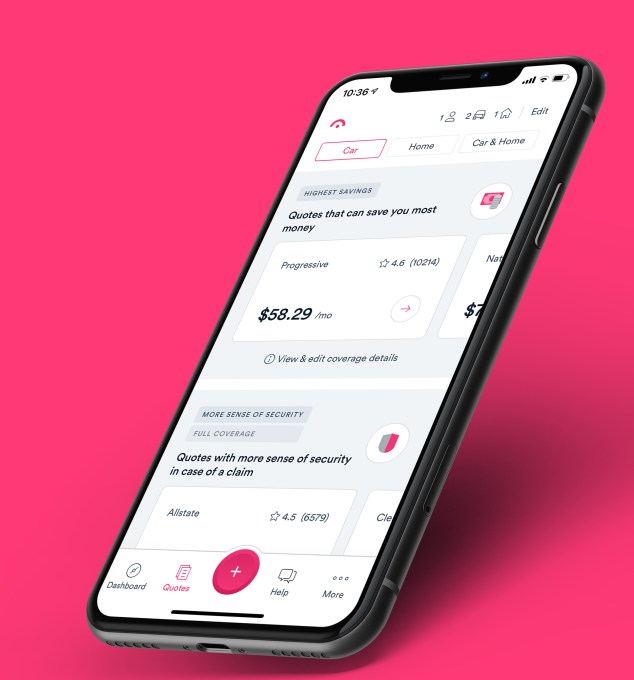
Jerry, which says it has evolved its model to a mobile-first car ownership “super app,” aims to save its customers time and money on car expenses. The Palo Alto-based startup launched its car insurance comparison service using artificial intelligence and machine learning in January 2019. It has quietly since amassed nearly 1 million customers across the United States as a licensed insurance broker.

“Today as a consumer, you have to go to multiple different places to deal with different things,” Agrawal said at the time of the company’s last raise. “Jerry is out to change that.”

The new funding round fuels the launch of the company’s “compare-and-buy” marketplaces in new verticals, including financing, repair, warranties, parking, maintenance and “additional money-saving services.” Although Jerry also offers a similar product for home insurance, its focus is on car ownership.

Agrawal told TechCrunch that the company is on track to triple last year’s policy sales, and that its policy sales volume makes Jerry the number one broker for a few of the top 10 insurance carriers.
“The U.S. auto insurance industry is an at least $250 billion market,” he added. “The market opportunity for our first auto financing service is $260 billion. As we enter more car expense categories, our total addressable market continues to grow.”

Image Credits: Jerry

“Access to reliable and affordable transportation is critical to economic empowerment,” said Rafi Syed, Jerry board member and general partner at Bow Capital, which also doubled down on its investment in the company. “Jerry is helping car owners make the most of every dollar they earn. While we see Jerry as an excellent technology investment showcasing the power of data in financial services, it’s also a high-performing investment in terms of the financial inclusion it supports.” 

Goodwater Capital Partner Chi-Hua Chien said the firm’s recurring revenue model makes it stand out from lead generation-based car insurance comparison sites.

CEO Agrawal agrees, noting that Jerry’s high-performing annual recurring revenue model has made the company “attractive to investors” in addition to the fact that the startup “straddles” the auto, e-commerce, fintech and insurtech industries.

“We recognized those investment opportunities could drive our business faster and led to raising the round earlier than expected,” he told TechCrunch. “We’re eager to launch new categories to save customers time and money on auto expenses and the new investment shortens our time to market.”

Agrawal also believes Jerry is different from other auto-related marketplaces out there in that it aims to help consumers with various aspects of car ownership (from repair to maintenance to insurance to warranties), rather than just one. The company also believes it is set apart from competitors in that it doesn’t refer a consumer to an insurance carrier’s site so that they still have to do the work of signing up with them separately, for example. Rather, Jerry uses automation to give consumers customized quotes from more than 45 insurance carriers “in 45 seconds.” The consumers can then sign on to the new carrier via Jerry, which can then cancel former policies on their behalf.

Jerry makes recurring revenue from earning a percentage of the premium when a consumer purchases a policy on its site from carriers such as Progressive.


from RSSMix.com Mix ID 8176981 https://techcrunch.com/2021/08/10/jerry-raises-75m-at-a-450m-valuation/
http://www.gadgetscompared.com
from Tumblr https://ikonografico.tumblr.com/post/659154422574841856
via http://www.gadgetscompared.com

Saturday, August 7, 2021

This Week in Apps: In-app events hit the App Store, TikTok tries Stories, Apple reveals new child safety plan

Welcome back to This Week in Apps, the weekly TechCrunch series that recaps the latest in mobile OS news, mobile applications and the overall app economy.

The app industry continues to grow, with a record 218 billion downloads and $143 billion in global consumer spend in 2020. Consumers last year also spent 3.5 trillion minutes using apps on Android devices alone. And in the U.S., app usage surged ahead of the time spent watching live TV. Currently, the average American watches 3.7 hours of live TV per day, but now spends four hours per day on their mobile devices.

Apps aren’t just a way to pass idle hours — they’re also a big business. In 2019, mobile-first companies had a combined $544 billion valuation, 6.5x higher than those without a mobile focus. In 2020, investors poured $73 billion in capital into mobile companies — a figure that’s up 27% year-over-year.

This Week in Apps offers a way to keep up with this fast-moving industry in one place, with the latest from the world of apps, including news, updates, startup fundings, mergers and acquisitions, and suggestions about new apps and games to try, too.

Do you want This Week in Apps in your inbox every Saturday? Sign up here: techcrunch.com/newsletters

Top Stories

Apple to scan for CSAM imagery

Apple announced a major initiative to scan devices for CSAM imagery. The company on Thursday announced a new set of features, arriving later this year, that will detect child sexual abuse material (CSAM) in its cloud and report it to law enforcement. Companies like Dropbox, Google and Microsoft already scan for CSAM in their cloud services, but Apple had allowed users to encrypt their data before it reached iCloud. Now, Apple’s new technology, NeuralHash, will run on users’ devices, to detect when a users upload known CSAM imagery — without having to first decrypt the images. It even can detect the imagery if it’s been cropped or edited in an attempt to avoid detection.

Meanwhile, on iPhone and iPad, the company will roll out protections to Messages app users that will filter images and alert children and parents if sexually explicit photos are sent to or from a child’s account. Children will not be shown the images but will instead see a grayed-out image instead. If they try to view the image anyway through the link, they’ll be shown interruptive screens that explain why the material may be harmful and are warned that their parents will be notified.

Some privacy advocates pushed back at the idea of such a system, believing it could expand to end-to-end encrypted photos, lead to false positives, or set the stage for more on-device government surveillance in the future. But many cryptology experts believe the system Apple developed provides a good balance between privacy and utility, and have offered their endorsement of the technology. In addition, Apple said reports are manually reviewed before being sent to the National Center for Missing and Exploited Children (NCMEC).

The changes may also benefit iOS developers who deal in user photos and uploads, as predators will no longer store CSAM imagery on iOS devices in the first place, given the new risk of detection.

In-App Events appear on the App Store
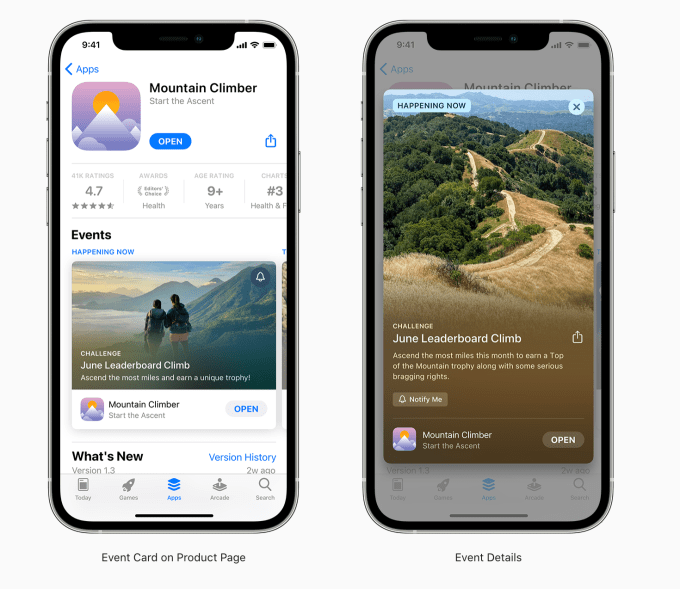
Image Credits: Apple

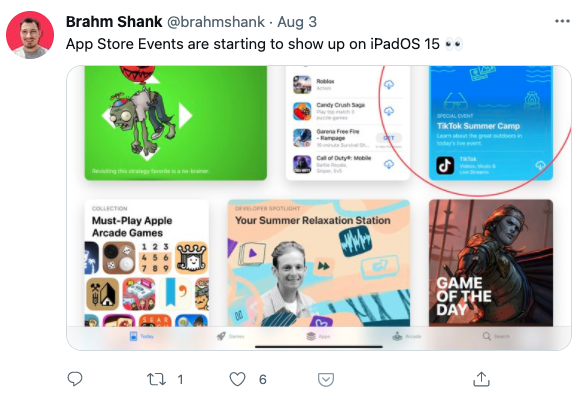
Though not yet publicly available to all users, those testing the new iOS 15 mobile operating system got their first glimpse of a new App Store discovery feature this week: “in-app events.” First announced at this year’s WWDC, the feature will allow developers and Apple editors alike to showcase directly on the App Store upcoming events taking place inside apps.

The events can appear on the App Store homepage, on the app’s product pages or can be discovered through personalized recommendations and search. In some cases, editors will curate events to feature on the App Store. But developers will also be provided tools to submit their own in-app events. TikTok’s “Summer Camp” for creators was one of the first in-app events to be featured, where it received a top spot on the iPadOS 15 App Store.
Weekly News

Platforms: Apple

Apple expands support for student IDs on iPhone and Apple Watch ahead of the fall semester. Tens of thousands more U.S. and Canadian colleges will now support mobile student IDs in the Apple Wallet app, including Auburn University, Northern Arizona University, University of Maine, New Mexico State University and others.

Apple was accused of promoting scam apps in the App Store’s featured section. The company’s failure to properly police its store is one thing, but to curate an editorial list that actually includes the scams is quite another. One of the games rounded up under “Slime Relaxations,” an already iffy category to say the least, was a subscription-based slime simulator that locked users into a $13 AUD per week subscription for its slime simulator. One of the apps on the curated list didn’t even function, implying that Apple’s editors hadn’t even tested the apps they recommend.

Tax changes hit the App Store. Apple announced tax and price changes for apps and IAPs in South Africa, the U.K. and all territories using the Euro currency, all of which will see decreases. Increases will occur in Georgia and Tajikistan, due to new tax changes. Proceeds on the App Store in Italy will be increased to reflect a change to the Digital Services Tax effective rate.

Game Center changes, too. Apple said that on August 4, a new certificate for server-based Game Center verification will be available via the publicKeyUrl.

Platforms: Google

Fintech

Robinhood stock jumped more than 24% to $46.80 on Tuesday after initially falling 8% on its first day of trading last week, after which it had continued to trade below its opening price of $38.

Square’s Cash app nearly doubled its gross profit to $546 million in Q2, but also reported a $45 million impairment loss on its bitcoin holdings.

Coinbase’s app now lets you buy your cryptocurrency using Apple Pay. The company previously made its Coinbase Card compatible with Apple Pay in June.

Social

An anonymous app called Sendit, which relies on Snap Kit to function, is climbing the charts of the U.S. App Store after Snap suspended similar apps, YOLO and LMK. Snap was sued by the parent of child who was bullied through those apps, which led to his suicide. Sendit also allows for anonymity, and reviews compare it to YOLO. But some reviews also complained about bullying. This isn’t the first time Snap has been involved in a lawsuit related to a young person’s death related to its app. The company was also sued for its irresponsible “speed filter” that critics said encouraged unsafe driving. Three young men died using the filter, which captured them doing 123 mph.

TikTok is testing Stories. As Twitter’s own Stories integrations, Fleets, shuts down, TikTok confirmed it’s testing its own Stories product. The TikTok Stories appear in a left-hand sidebar and allow users to post ephemeral images or video that disappear in 24 hours. Users can also comment on Stories, which are public to their mutual friends and the creator. Stories on TikTok may make more sense than they did on Twitter, as TikTok is already known as a creative platform and it gives the app a more familiar place to integrate its effects toolset and, eventually, advertisements.

Facebook has again re-arranged its privacy settings. The company continually moves around where its privacy features are located, ostensibly to make them easier to find. But users then have to re-learn where to go to find the tools they need, after they had finally memorized the location. This time, the settings have been grouped into six top-level categories, but “privacy” settings have been unbundled from one location to be scattered among the other categories.

A VICE report details ban-as-a-service operations that allow anyone to harass or censor online creators on Instagram. Assuming you can find it, one operation charged $60 per ban, the listing says.

TikTok merged personal accounts with creator accounts. The change means now all non-business accounts on TikTok will have access to the creator tools under Settings, including Analytics, Creator Portal, Promote and Q&A. TikTok shared the news directly with subscribers of its TikTok Creators newsletter in August, and all users will get a push notification alerting them to the change, the company told us.

Discord now lets users customize their profile on its apps. The company added new features to its iOS and Android apps that let you add a description, links and emojis and select a profile color. Paid subscribers can also choose an image or GIF as their banner.

Twitter Spaces added a co-hosting option that allows up to two co-hosts to be added to the live audio chat rooms. Now Spaces can have one main host, two co-hosts and up to 10 speakers. Co-hosts have all the moderation abilities as hosts, but can’t add or remove others as co-hosts.

Messaging

Tencent reopened new user sign-ups for its WeChat messaging app, after having suspended registrations last week for unspecified “technical upgrades.” The company, like many other Chinese tech giants, had to address new regulations from Beijing impacting the tech industry. New rules address how companies handle user data collection and storage, antitrust behavior and other checks on capitalist “excess.” The gaming industry is now worried it’s next to be impacted, with regulations that would restrict gaming for minors to fight addiction.

WhatsApp is adding a new feature that will allow users to send photos and videos that disappear after a single viewing. The Snapchat-inspired feature, however, doesn’t alert you if the other person takes a screenshot — as Snap’s app does. So it may not be ideal for sharing your most sensitive content.

Telegram’s update expands group video calls to support up to 1,000 viewers. It also announced video messages can be recorded in higher quality and can be expanded, regular videos can be watched at 0.5 or 2x speed, screen sharing with sound is available for all video calls, including 1-on-1 calls, and more.

Streaming & Entertainment

American Airlines added free access to TikTok aboard its Viasat-equipped aircraft. Passengers will be able to watch the app’s videos for up to 30 minutes for free and can even download the app if it’s not already installed. After the free time, they can opt to pay for Wi-Fi to keep watching. Considering how easy it is to fall into multi-hour TikTok viewing sessions without knowing it, the addition of the addictive app could make long plane rides feel shorter. Or at least less painful.

Chinese TikTok rival Kuaishou saw stocks fall by more than 15% in Hong Kong, the most since its February IPO. The company is another victim of an ongoing market selloff triggered by increasing investor uncertainty related to China’s recent crackdown on tech companies. Beijing’s campaign to rein in tech has also impacted Tencent, Alibaba, Jack Ma’s Ant Group, food delivery company Meituan and ride-hailing company Didi. Also related, Kuaishou shut down its controversial app Zynn, which had been paying users to watch its short-form videos, including those stolen from other apps.

Twitch overtook YouTube in consumer spending per user in April 2021, and now sees $6.20 per download as of June compared with YouTube’s $5.60, Sensor Tower found.
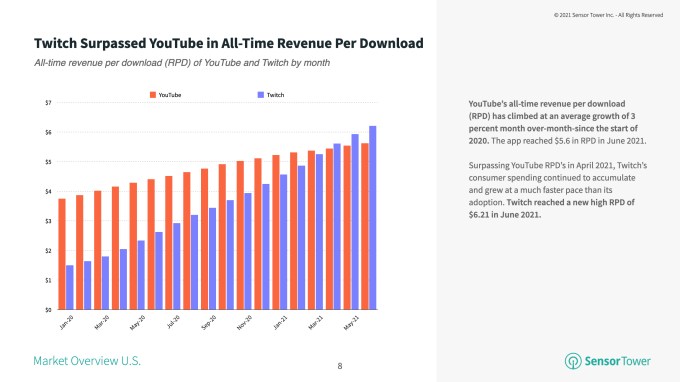
Image Credits: Sensor Tower

Spotify confirmed tests of a new ad-supported tier called Spotify Plus, which is only $0.99 per month and offers unlimited skips (like free users get on the desktop) and the ability to play the songs you want, instead of only being forced to use shuffle mode.

The company also noted in a forum posting that it’s no longer working on AirPlay2 support, due to “audio driver compatibility” issues.

Mark Cuban-backed audio app Fireside asked its users to invest in the company via an email sent to creators which didn’t share deal terms. The app has yet to launch.

YouTube kicks off its $100 million Shorts Fund aimed at taking on TikTok by providing creators with cash incentives for top videos. Creators will get bonuses of $100 to $10,000 based on their videos’ performance.

Dating

Match Group announced during its Q2 earnings it plans to add to several of the company’s brands over the next 12 to 24 months audio and video chat, including group live video, and other livestreaming technologies. The developments will be powered by innovations from Hyperconnect, the social networking company that this year became Match’s biggest acquisition to date when it bought the Korean app maker for a sizable $1.73 billion. Since then, Match was spotted testing group live video on Tinder, but says that particular product is not launching in the near-term. At least two brands will see Hyperconnect-powered integrations in 2021.

Photos

The Photo & Video category on U.S. app stores saw strong growth in the first half of the year, a Sensor Tower report found. Consumer spend among the top 100 apps grew 34% YoY to $457 million in Q2 2021, with the majority of the revenue (83%) taking place on iOS.
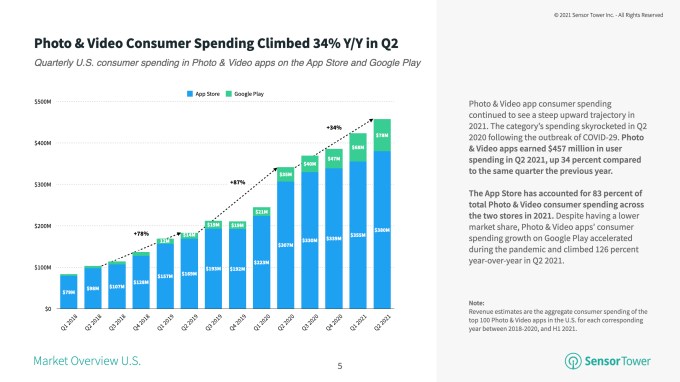
Image Credits: Sensor Tower

Gaming

Epic Games revealed the host of its in-app Rift Tour event is Ariana Grande, in the event that runs August 6-8.

Pokémon GO influencers threatened to boycott the game after Niantic removed the COVID safety measures that had allowed people to more easily play while social distancing. Niantic’s move seemed ill-timed, given the Delta variant is causing a new wave of COVID cases globally.

Health & Fitness

Apple kicked out an app called Unjected from the App Store. The new social app billed itself as a community for the unvaccinated, allowing like-minded users to connect for dating and friendships. Apple said the app violated its policies for COVID-19 content.

Google Pay expanded support for vaccine cards. In Australia, Google’s payments app now allows users to add their COVID-19 digital certification to their device for easy access. The option is available through Google’s newly updated Passes API which lets government agencies distribute digital versions of vaccine cards.

COVID Tech Connect, a U.S. nonprofit initially dedicated to collecting devices like phones and tablets for COVID ICU patients, has now launched its own app. The app, TeleHome, is a device-agnostic, HIPAA-compliant way for patients to place a video call for free at a time when the Delta variant is again filling ICU wards, this time with the unvaccinated — a condition that sometimes overlaps with being low-income. Some among the working poor have been hesitant to get the shot because they can’t miss a day of work, and are worried about side effects. Which is why the Biden administration offered a tax credit to SMBs who offered paid time off to staff to get vaccinated and recover.

Popular journaling app Day One, which was recently acquired by WordPress.com owner Automattic, rolled out a new “Concealed Journals” feature that lets users hide content from others’ viewing. By tapping the eye icon, the content can be easily concealed on a journal by journal basis, which can be useful for those who write to their journal in public, like coffee shops or public transportation.

Edtech

Recently IPO’d language learning app Duolingo is developing a math app for kids. The company says it’s still “very early” in the development process, but will announce more details at its annual conference, Duocon, later this month.

Educational publisher Pearson launched an app that offers U.S. students access to its 1,500 titles for a monthly subscription of $14.99. the Pearson+ mobile app (ack, another +), also offers the option of paying $9.99 per month for access to a single textbook for a minimum of four months.

News & Reading

Quora jumps into the subscription economy. Still not profitable from ads alone, Quora announced two new products that allow its expert creators to monetize their content on its service. With Quora+ ($5/mo or $50/yr), subscribers can pay for any content that a creator paywalls. Creators can choose to enable a adaptive paywall that will use an algorithm to determine when to show the paywall. Another product, Spaces, lets creators write paywalled publications on Quora, similar to Substack. But only a 5% cut goes to Quora, instead of 10% on Substack.

Utilities

Google Maps on iOS added a new live location-sharing feature for iMessage users, allowing them to more easily show your ETA with friends and even how much battery life you have left. The feature competes with iMessage’s built-in location-sharing feature, and offers location sharing of 1 hour up to 3 days. The app also gained a dark mode.

Security & Privacy

Controversial crime app Citizen launched a $20 per month “Protect” service that includes live agent support (who can refer calls to 911 if need be). The agents can gather your precise location, alert your designated emergency contacts, help you navigate to a safe location and monitor the situation until you feel safe. The system of live agent support is similar to in-car or in-home security and safety systems, like those from ADT or OnStar, but works with users out in the real world. The controversial part, however, is the company behind the product: Citizen has been making headlines for launching private security fleets outside law enforcement, and recently offered a reward in a manhunt for an innocent person based on unsubstantiated tips.

Funding and M&A

🤝 Square announced its acquisition of the “buy now, pay later” giant AfterPay in a $29 billion deal that values the Australian firm at more than 30% higher than the stock’s last closing price of AUS$96.66. AfterPay has served over 16 million customers and nearly 100,000 merchants globally, to date, and comes at a time when the BNPL space is heating up. Apple has also gotten into the market recently with an Affirm partnership in Canada.

🤝 Gaming giant Zynga acquired Chinese game developer StarLark, the team behind the mobile golf game Golf Rival, from Betta Games for $525 million in both cash and stock. Golf Rival is the second-largest mobile golf game behind Playdemic’s Golf Clash, and EA is in the process of buying that studio for $1.4 billion.

💰  U.K.-based Humanity raised an additional $2.5 million for its app that claims to help slow down aging, bringing the total raise to date to $5 million. Backers include Calm’s co-founders, MyFitness Pal’s co-founder and others in the health space. The app works by benchmarking health advice against real-world data, to help users put better health practices into action.

💰 YELA, a Cameo-like app for the Middle East and South Asia, raised $2 million led by U.S. investors that include Tinder co-founder Justin Mateen and Sean Rad, general partner of RAD Fund. The app is focusing on signing celebrities in the regions it serves, where smartphone penetration is high and over 6% of the population is under 35.

💰 London-based health and wellness app maker Palta raised a $100 million Series B led by VNV Global. The company’s products include Flo.Health, Simple Fasting, Zing Fitness Coach and others, which reach a combined 2.4 million active, paid subscribers. The funds will be used to create more mobile subscription products.

🤝 Emoji database and Wikipedia-like site Emojipedia was acquired by Zedge, the makers of a phone personalization app offering wallpapers, ringtones and more to 35 million MAUs. Deal terms weren’t disclosed. Emojipedia says the deal provides it with more stability and the opportunity for future growth. For Zedge, the deal provides🤨….um, a popular web resource it thinks it can better monetize, we suspect.

💰 Mental health app Revery raised $2 million led by Sequoia Capital India’s Surge program for its app that combines cognitive behavioral therapy for insomnia with mobile gaming concepts. The company will focus on other mental health issues in the future.

💰 London-based Nigerian-operating fintech startup Kuda raised a $55 million Series B, valuing its mobile-first challenger bank at $500 million. The inside round was co-led by Valar Ventures and Target Global.

💰 Vietnamese payments provider VNLife raised $250 million in a round led by U.S.-based General Atlantic and Dragoneer Investment Group. PayPal Ventures and others also participated. The round values the business at over $1 billion.

Downloads

Mastodon for iPhone
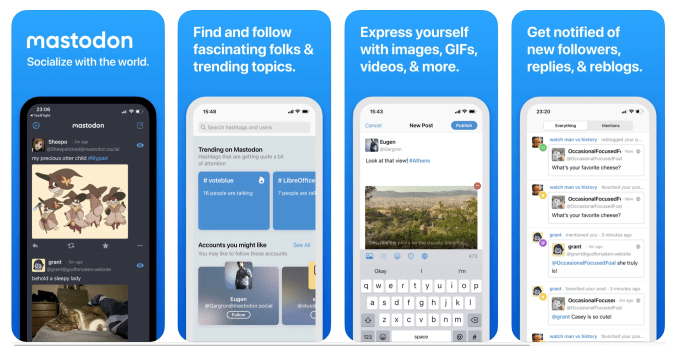
Fans of decentralized social media efforts now have a new app. The nonprofit behind the open source decentralized social network Mastodon released an official iPhone app, aimed at making the network more accessible to newcomers. The app allows you to find and follow people and topics; post text, images, GIFs, polls, and videos; and get notified of new replies and reblogs, much like Twitter.

Xingtu

@_666eveITS SO COOL FRFR do u guys want a tutorial? #fypシ #醒图 #醒图app♬ original sound – Ian Asher

TikTok users are teaching each other how to switch over to the Chinese App Store in order to get ahold of the Xingtu app for iOS. (An Android version is also available.) The app offers advanced editing tools that let users edit their face and body, like FaceTune, apply makeup, add filters and more. While image-editing apps can be controversial for how they can impact body acceptance, Xingtu offers a variety of artistic filters which is what’s primarily driving the demand. It’s interesting to see the lengths people will go to just to get a few new filters for their photos — perhaps making a case for Instagram to finally update its Post filters instead of pretending no one cares about their static photos anymore.

Tweets

Facebook still dominating top charts, but not the No. 1 spot:  

Not cool, Apple: 

This user acquisition strategy: 

Maybe Stories don’t work everywhere: 



from RSSMix.com Mix ID 8176981 https://techcrunch.com/2021/08/07/this-week-in-apps-in-app-events-hit-the-app-store-tiktok-tries-stories-apple-reveals-new-child-safety-plan/
http://www.gadgetscompared.com
from Tumblr https://ikonografico.tumblr.com/post/658893923311304704
via http://www.gadgetscompared.com
Friday, August 6, 2021

What to expect from Samsung’s next Unpacked

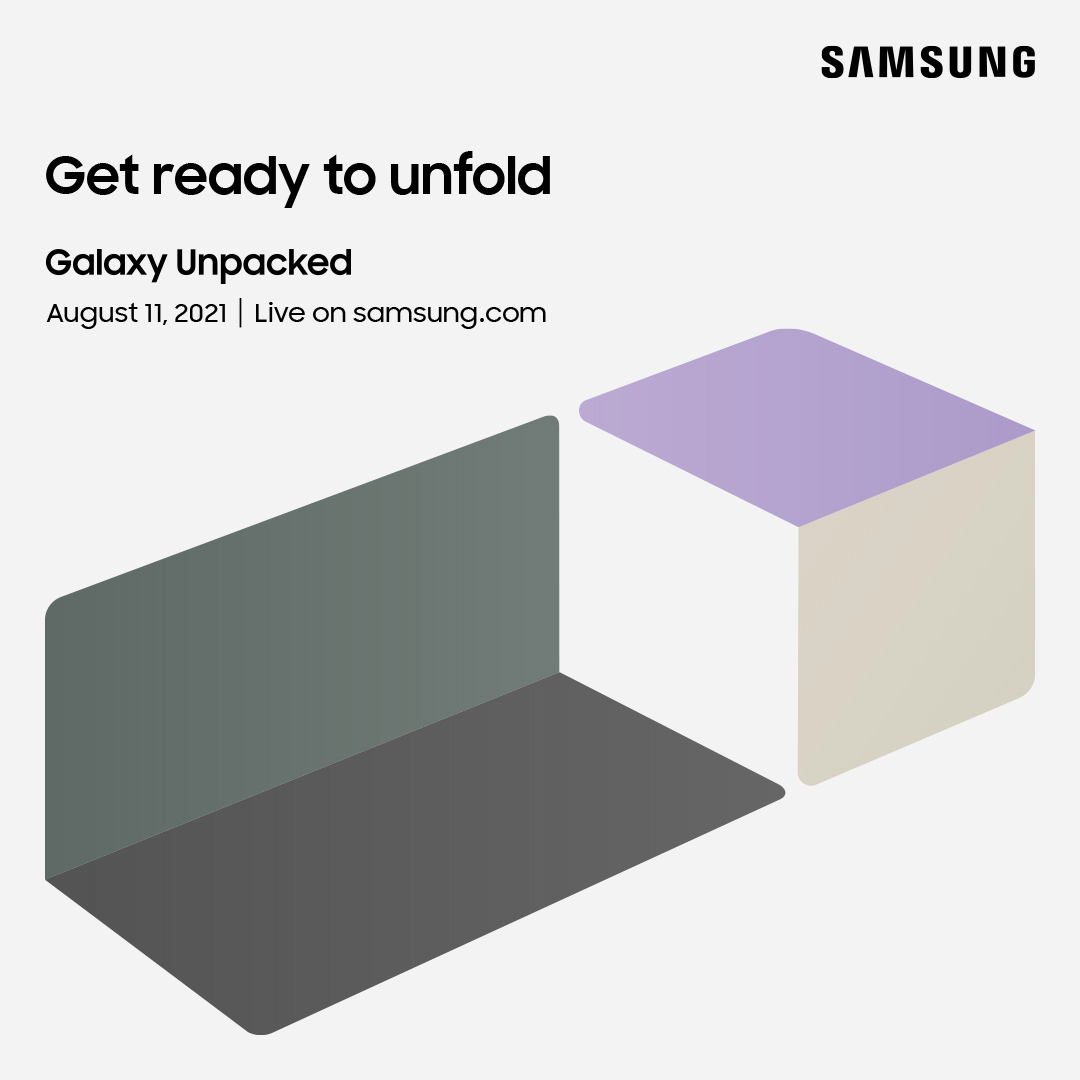
Foldables! Two, probably! Those are your headliners. Samsung tipped its hand with the event invite, which features a pair of geometrical objects that pretty clearly represent the new Galaxy Z Fold and Galaxy Z Flip.

The other headliner is what we won’t be seeing at the event (Deadliner? Endliner?). The company already confirmed via corporate blog that we won’t be seeing the next version of the Galaxy Note next week. That’s a big break from the device’s long-standing annual refresh cycle.

We still don’t know if this is the end-end of the line for the phablet. Samsung told TechCrunch, “We will not be launching new Galaxy Note devices in 2021. Instead, Samsung plans to continue to expand the Note experience and bring many of its popular productivity and creativity features, including the S Pen, across our Galaxy ecosystem. We will share more details on our future portfolio once we are ready to announce.”

Image Credits: Samsung

Rumors surfaced prior to this revelation that the company may have been forced to put the device on hold, as global supply chain issues continue to hamstring manufacturers. There’s also an argument to be made, however, that Samsung has gradually made the Note redundant over the past several Galaxy S updates.

It seems telling that the company referred to a forthcoming “flagship” in its official Unpacked copy. With the Note out of the picture and the Galaxy S about six months out from a refresh, this appears to refer to the Galaxy Fold gaining the (admittedly ceremonial) title. Whether that means two or three flagships in the company’s Armada remains to be seen.

What we do know, however, is that — like the Galaxy S before it — at least one of the forthcoming foldables will be blurring that Note line.

“I hope you’ll join us as we debut our next Galaxy Z family and share some foldable surprises — including the first-ever S Pen designed specifically for foldable phones,” the company’s president and head of Mobile Communications Business, TM Roh wrote. The executive also promised “even more refined style, armed with more durable, stronger material” on the new Galaxy Z Flip.

Previous — and subsequent — leaks have given us good looks at both the Galaxy Z Flip 3 and Galaxy Z Fold 3. Hell, it wouldn’t be a Samsung event if pretty much everything didn’t leak out prior to the event.

A series of tweets from EVLeaks has given us nearly every angle of the upcoming foldable smartphones, along with (European) prices that put the Fold and Flip starting at €1,899 and €1,099, respectively. Both mark a sizable decrease from the previous generation. That’s nice — if not entirely surprising. Samsung’s plan all along has clearly been a prolonged drop in pricing as foldable technology scaled. We’re still a long ways away from cheap here, but perhaps nudging our way toward the realm of possibility for more users.

Other leaked details for the Fold/Flip include a 7.6/6.7-inch internal display, a Snapdragon 888 processor (both) and 12MP triple/dual cameras, respectively. Interestingly, water resistance is also reportedly on board here.

With a year of virtual events under its belt, the company seems to have a better idea of pacing. Samsung — along with many other companies in the space — took liberties when events went more from in-person to online, meting out announcements event by event. Thankfully, next week’s Unpacked is a much bigger, self-contained event.

The other expected highlights are both wearables. First is the long-awaited fruits of the partnership between Samsung and Google that was announced at I/O. We didn’t get a lot of info at the time, beyond the fact that it will potentially be a boon for users and developers, with the ability to jointly create apps for both the beleaguered Wear OS and Samsung’s custom brand of Tizen.

Image Credits: Samsung

“Samsung and Google have a long history of collaboration, and whenever we’ve worked together, the experience for our consumers has been dramatically better for everyone,” Google SVP Sameer Samat said at a June follow-up to the I/O news. “That certainly holds true for this new, unified platform, which will be rolling out for the first time on Samsung’s new Galaxy Watch. In collaboration with Samsung, we’re thrilled to bring longer battery life, faster performance and a wide range of apps, including many from Google to a whole new wearable experience.”

The company held an (admittedly disappointing) event at MWC focused on the forthcoming watch. There was, however, one key thing missing: the watch. Based on pure speculation, I’d suggest that the wearable just didn’t come together on the timeline Samsung was expecting, but the company went ahead and did a virtual presser at the (mostly virtual) trade show.

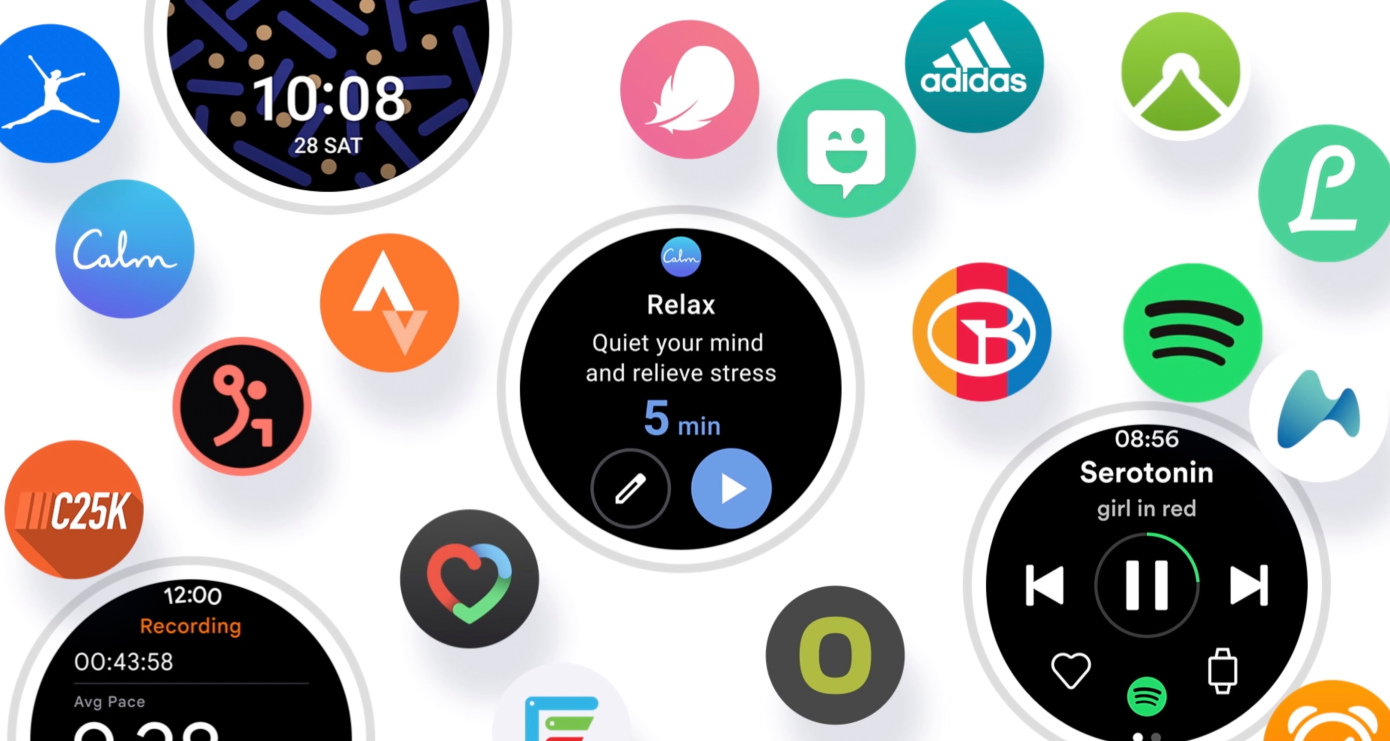
The company did, however, announced One UI Watch — a wearable version of its streamlined OS interface. Samsung notes in a press release:

One UI Watch together with the new unified platform will create an entirely new Galaxy Watch experience. As part of the new experience, once you install watch-compatible apps on your smartphone, they will be swiftly downloaded onto your smartwatch. If you’ve customized your clock app on your phone to show the time in different cities around the globe, this will be automatically reflected on your watch as well. And if you block calls and messages from your watch, they will now be blocked on your smartphone, too.

Leaks have also revealed the Galaxy Watch 4 and Galaxy Watch 4 Classic models along with (again) European pricing. They’re reportedly set to start at €279 and €379, respectively, with each featuring multiple sizing options. That last bit was always a sticking point for me with Samsung watches, which have traditionally been fairly massive, knocking out a good number of potential buyers in the process.

The last big piece of the puzzle are the Galaxy Buds 2. The latest upgrade to the company’s entry-level buds are said to be gaining active noise canceling.

Will there be surprises once things kick off at 7AM PT/10AM ET on August 11? Little, ones, probably. These leaks have a tendency to capture things in broad strokes but miss some of the key nuances in the process. And while the company is more than a little familiar with pre-show leaks, it’s still managed to surprise us in the past.


from RSSMix.com Mix ID 8176981 https://techcrunch.com/2021/08/06/what-to-expect-from-samsungs-next-unpacked/
http://www.gadgetscompared.com
from Tumblr https://ikonografico.tumblr.com/post/658788230190202880
via http://www.gadgetscompared.com
Tuesday, August 3, 2021

Revery gets $2M to improve mental health with mobile gaming techniques

In “Macbeth,” Shakespeare described sleep as the “chief nourisher in life’s feast.” But like his titular character, many adults aren’t sleeping well. Revery wants to help with an app that combines cognitive behavioral therapy (CBT) for insomnia with mobile gaming concepts.

Founded in 2021, Revery is currently in beta stealth mode and plans to launch its app in the United States later this year. The company announced today it has raised $2 million led by Sequoia Capital India’s Surge program. Participants included GGV Capital, Pascal Capital, zVentures (Razer’s corporate venture arm) and angel investors like MyFitnessPal co-founder Albert Lee; gaming entrepreneur Juha Paananen; CRED founder Kunal Shah; Mobile Premier League founder Sam Srinivas; Carolin Krenzer; and Josh Lee.

Lee, a mutual friend, first introduced Revery’s founders, Tammie Siew and Khoa Tran to one another. Before launching the startup, Siew worked at Sequoia Capital India, Boston Consulting Group and CRED, while Tran was a former product manager at Google.

Revery plans focus on other mental health issues in the future, but it’s starting with sleep because “it has such a strong correlation with mental health and we’re leveraging protocols, cognitive behavioral therapy for insomnia, that’s robust and has been tried and tested for 30 years,” Siew told TechCrunch. “That is the first indication, but the goal is to build multiple games for other wellness indications as well.”

A study by research firm Infinium found that about 30% to 45% of adults in the world experience insomnia, a problem exacerbated by the COVID-19 pandemic. Chronic lack of sleep is linked to a host of health issues, including high blood pressure, strokes, depression and lowered immunity.

For Revery’s team, which also includes former Zynga and King lead game designer Kriti Sawa and software engineer Stephanie Wong, their focus on sleep is personal.

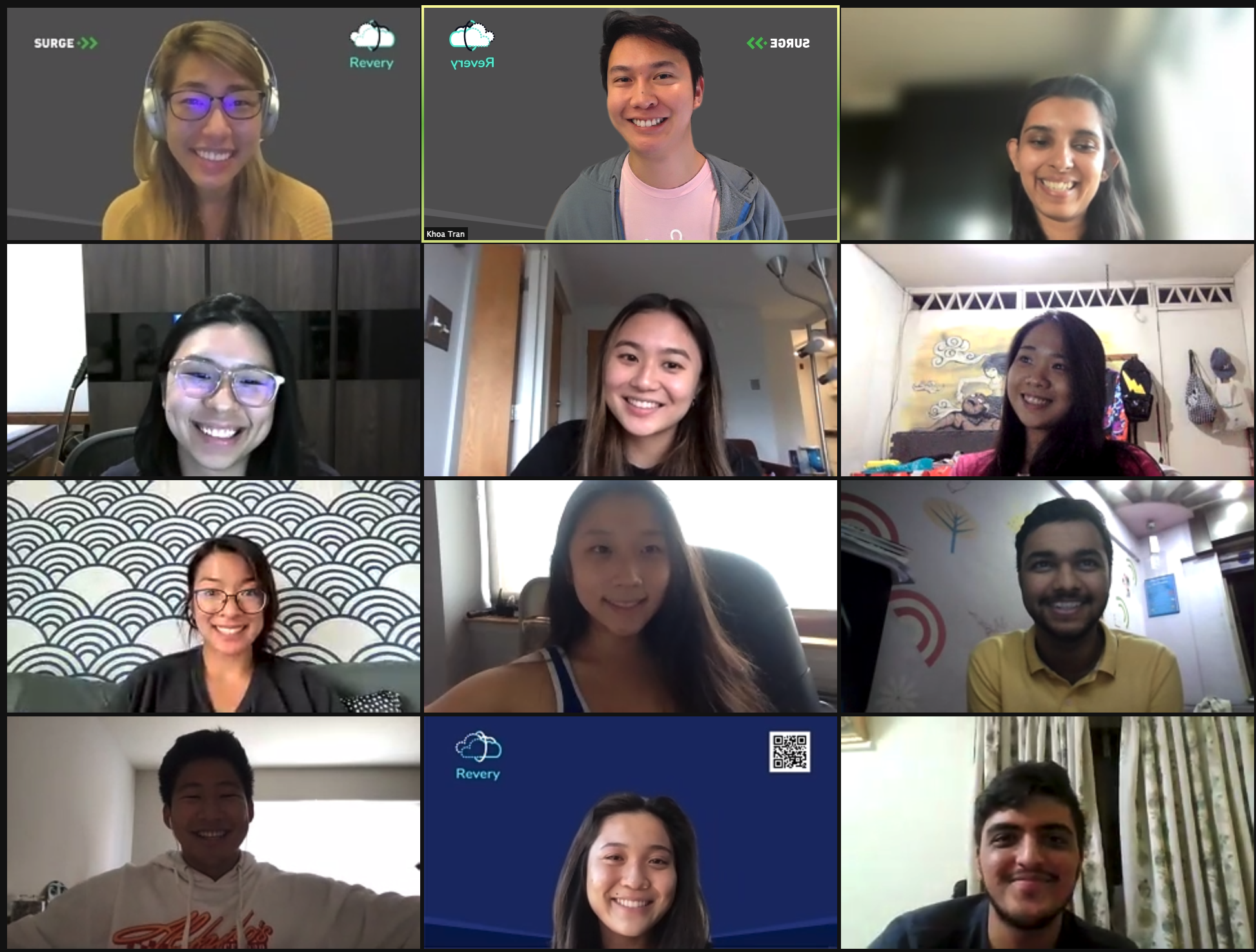
A Zoom screenshot of startup Revery's team

Revery’s team on a Zoom call

“Everyone on our team has a deeply personal connection to the mission, because everyone on our team has experienced, or had a family member or friends go through challenges in mental health,” said Siew. “They’ve seen how late intervention creates consequences that could have been avoided if they had gotten help earlier.”

When Tran was 15, he was diagnosed with hypertension and several other health conditions that needed medication. It wasn’t until he was 26 that Tran found out that sleep apnea was at the root of his medical issues. After getting surgery, Tran’s blood pressure became normal and many of his other conditions also improved.

“When I finally got treatment for my sleep disorder, only then did I realize the impact of sleep on mental health,” Tran said. “For me, I was really lucky that a doctor caught my sleep disorder and super lucky to have the time and resources to get treatment. For many people, it’s incredibly inaccessible.”

Revery’s medical advisory team includes the doctor who performed Tran’s surgery, Stanford Sleep Surgery Fellowship director Dr. Stanley Liu; Stanford professor and behavioral sleep medicine expert Dr. Fiona Barwick; and Dr. Ryan Kelly, a clinical psychologist who researches how video games can be used in therapy.

When people think of sleeping apps, ones that focus on meditation (Calm and Headspace, for example) or soothing noises usually come to mind. The Revery team isn’t sharing a lot of details about its app before launch, but says it draws from casual mobile games, which are designed to get people to return for short play sessions over a long period of time. The goal is to use gamification to make CBT practices interactive and fun, so it becomes part of users’ daily routines.

“That’s the same kind of gameplay that Zynga and King have used, which is why Kriti’s experience is super helpful,” said Siew. Casual games revolve around rewarding people for small actions, and for Revery app, that means positive reinforcement for habits that contribute to better sleep. For example, it will reward people for putting their phones down.

“I think a lot of people have the misconception that solving sleep is only at the time you fall asleep. They don’t realize that sleep is impacted by what you do throughout the day,” Siew said. “A big part is also what are your thoughts, behavior and the other things that you do, so in order to effectively and sustainably improve sleep, we also have to change your thoughts and behaviors outside of the time you’re trying to fall asleep.”

In a statement, GGV Capital managing director Jenny Lee said, “We are excited about the growing mental wellness market, and believe that Revery’s unique mobile game-based approach has the opportunity to create immense impact. We are happy to back such a mission-driven team in this space.”


from RSSMix.com Mix ID 8176981 https://techcrunch.com/2021/08/03/revery-gets-2m-to-improve-mental-health-with-mobile-gaming-techniques/
http://www.gadgetscompared.com
from Tumblr https://ikonografico.tumblr.com/post/658508897315913728
via http://www.gadgetscompared.com

Monday, August 2, 2021

Google is building its own chip for the Pixel 6

Google just dumped a whole bunch of news about its upcoming Pixel 6 smartphone. Maybe the company was looking to get out in front of August 11’s big Samsung event — or perhaps it’s just hoping to keep people interested in the months leading up to a big fall announcement (and beat additional leaks to the punch).

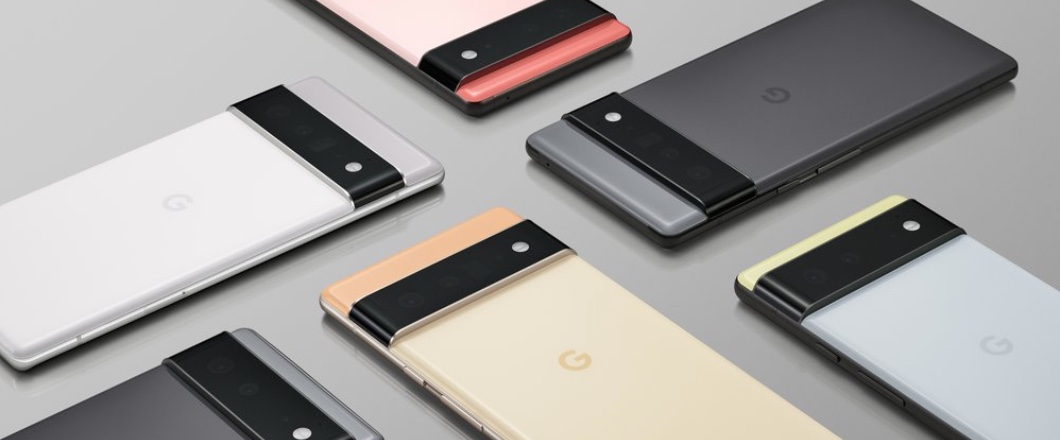
In either case, we got the first look at the upcoming Android smartphone, including a fairly massive redesign of the camera system on the rear. The company has traded its square configuration for a big, black bar that appears to indicate an even larger push into upgraded hardware after a couple of generations spent insisting that software/AI are the grounds on which it has chosen to fight.

More interesting, however, is the arrival of Tensor, a new custom SoC (system on a chip) that will debut on the Pixel 6 and Pixel 6 Pro. It’s an important step from the company, as it looks to differentiate itself in a crowded smartphone field — something the company has admittedly struggled with in the past.

That means moving away from Qualcomm chips on these higher-end systems, following in Apple’s path of creating custom silicon. That said, the chips will be based on the same ARM architecture that Qualcomm uses to create its otherwise ubiquitous Snapdragon chips, and Google will still rely on the San Diego company to supply components for its budget-minded A Series.

Image Credits: Google

The Tensor name is a clear homage to Google’s TensorFlow ML, which has driven a number of its projects. And unsurprisingly, the company sites AI/ML as foundational to the chip’s place in the forthcoming phones. The Pixel team has long pushed software-based solutions, such as computational photography, as a differentiator.

“The team that designed our silicon wanted to make Pixel even more capable. For example, with Tensor we thought about every piece of the chip and customized it to run Google’s computational photography models,” Google writes. “For users, this means entirely new features, plus improvements to existing ones.”

Beyond the upgraded camera system, Tensor will be central to improving things such as speech recognition and language learning. Details are understandably still thin (the full reveal is happening in the fall, mind), but today’s announcement seems geared toward laying out what the future looks like for a revamped Pixel team — and certainly these sorts of focuses play into precisely what Google ought to be doing in the smartphone space: focusing on its smarts in AI and software.

In May of last year, key members of the Pixel team left Google, pointing to what looked to be a transition for the team. Hardware head Rick Osterloh was reported to have had harsh words at the time.

“AI is the future of our innovation work, but the problem is we’ve run into computing limitations that prevented us from fully pursuing our mission,” Osterloh wrote in today’s post. “So we set about building a technology platform built for mobile that enabled us to bring our most innovative AI and machine learning (ML) to our Pixel users.”


from RSSMix.com Mix ID 8176981 https://techcrunch.com/2021/08/02/google-is-building-its-own-chip-for-the-pixel-6/
http://www.gadgetscompared.com
from Tumblr https://ikonografico.tumblr.com/post/658444762242744320
via http://www.gadgetscompared.com